If you want to increase home security in Cincinnati, OH this year, start with the parts of your house a burglar actually tests first: doors, windows, and the dark spots in between. Cincinnati's mix of hillside lots, older housing stock, and tree-lined side yards creates blind spots that national security guides rarely address. Below is a layered, room-by-room plan you can start this weekend, with the parts worth hiring out clearly marked.
Secure Entry Points First
Doors, not windows, are where most forced entries happen. Reported method-of-entry data from the FBI's national crime summary consistently lists forcible entry as the most common method of entry nationwide, which is why reinforcing doors produces the biggest security return for the money.
Start with these upgrades, in order of priority:
- Upgrade the deadbolt. Install a Grade 1 or Grade 2 deadbolt on every exterior door, including the one from the garage into the house.
- Reinforce the strike plate. Swap the short screws for 3-inch screws that reach the door frame stud, not just the trim.
- Add a smart lock where it helps. Keyless entry and activity logs are useful for families with kids, pet sitters, or short-term rentals.
- Check the garage service door. It's often the weakest lock in the house because homeowners forget it exists.
None of this requires a contractor, but if your frames are warped, rotted, or out of square (common in Cincinnati's older housing stock), that's a carpentry fix before it's a lock fix.
Lock Down Ground-Floor and Rear Windows
Window security matters most on the floor an intruder can reach without a ladder, and on the side of the house nobody can see from the street. In Cincinnati's older multi-story homes, that usually means the back and side windows facing a neighbor's fence line rather than the front picture window.
A few low-cost fixes close most of the gap:
- Add secondary window locks or pin locks on every window that opens.
- Apply security film to ground-floor glass to slow down breakage.
- Install window sensors tied into your alarm so the system triggers the moment a window is forced.
- Trim shrubs and low branches near windows so there's no hiding spot for someone casing the house. If your landscaping has grown past the point of a weekend trim, a outdoor space maintenance visit can restore sightlines around entry points in an afternoon.
Light Up the Exterior
A dark exterior gives an intruder time and cover. A well-lit one removes both. Motion-sensor lighting at entryways, side gates, and the path between the garage and the back door closes off the shadowed corners burglars rely on to approach a house unseen.
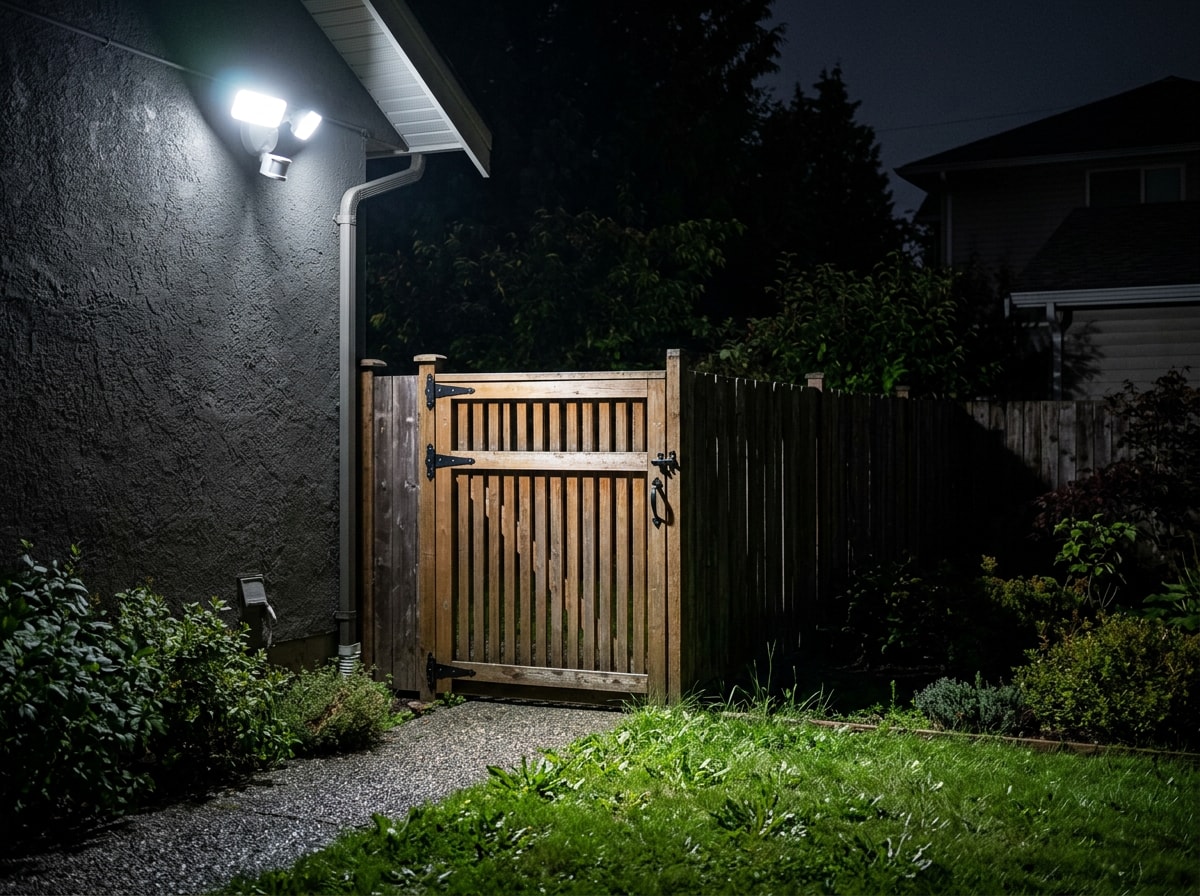
In the field, this is the upgrade homeowners underestimate most. After walking hundreds of Cincinnati properties for lighting assessments, the same blind spot shows up again and again: a side yard or back gate that never registers as a risk until a motion light switches on there for the first time and the homeowner realizes how dark it had been for years.
Priority zones for exterior lighting:
- Front and back entry doors
- Driveway and garage approach
- Side-yard gates and fence lines
- Dark corners along the foundation
If your current fixtures are patchy, flickering, or missing entirely, outdoor LED lighting installation covers new motion-activated fixtures in the zones above, while outdoor lighting repair and outdoor lighting maintenance keep an existing system actually working instead of slowly going dark fixture by fixture. Homes with an outdated layout often benefit from outdoor lighting upgrades that add coverage to the gaps a builder's original plan missed.
Add Security Cameras With Smart Monitoring
Cameras give you visibility lighting alone can't. Place them at entry points, driveways, and side gates, the same priority zones as your lighting plan, so the two systems cover each other.
Choose local or cloud storage based on how much footage history you want and whether a monthly fee fits your budget. Entry-point cameras paired with remote video monitoring let you check a live feed from your phone whether you're at work or across the country.
If you're not sure where cameras and lighting should overlap on your specific property, an outdoor lighting consultation walks the exterior with you and flags the coverage gaps before you buy equipment.
Self-Monitored vs. Professionally Monitored Alarms
A monitored alarm system is the backbone of most layered security plans, but "monitored" doesn't mean the same thing for every homeowner.
| Feature | Self-Monitored | Professionally Monitored |
|---|---|---|
| Monthly cost | Usually $0 to $15 | Usually $20 to $60 |
| Who calls 911 | You | A staffed monitoring center |
| Response during sleep hours | Depends on you noticing the alert | Center verifies and dispatches |
| Best for | Budget-conscious, tech-comfortable homeowners | Households that travel often or want hands-off response |
Visible alarm signage adds a layer of deterrence on its own. A widely cited University of North Carolina at Charlotte study of convicted burglars found that approximately 83 percent said they would try to determine if an alarm was present before attempting a burglary, and 60 percent said they would seek an alternative target if there was an alarm on-site . That alone makes a visible alarm panel or sign worth the five minutes it takes to put up.
Build Smart Security for Families on the Go
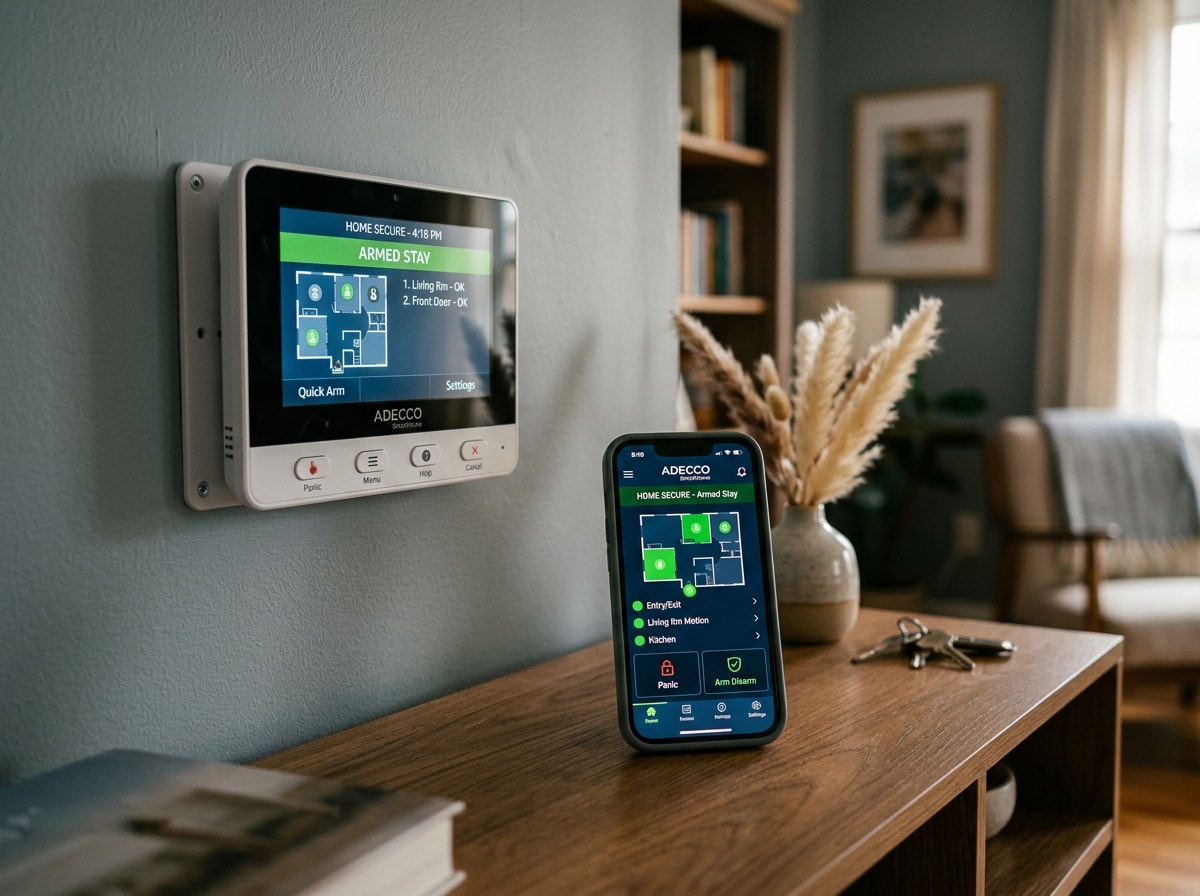
Homes sit more vulnerable when families are away for work, school, or travel, because routines become predictable and lights stay off at the same time every evening. Smart home security closes that gap with lighting on timers, door-lock status checks, and remote camera check-ins from your phone, so you can monitor the house without asking a neighbor to physically check on it.
Strengthen the Human Layer
Hardware alone can't replace a street that knows what normal looks like. Neighbors who recognize each other's routines are more likely to notice an unfamiliar car idling or a stranger at a side door, and to say something before it escalates. This layer costs nothing and complements the locks, lighting, and cameras above rather than replacing them. Swapping phone numbers with two or three nearby households is often enough to get it started.
Round Out Your Plan With Fire and Life-Safety Prep
Home security extends beyond intrusion into fire and life safety, and this is the layer homeowners skip most often. Build a household escape plan with two exits from every room, post a list of emergency contacts where everyone can find it, and test smoke alarms on a schedule. The National Fire Protection Association recommends that households practice their home fire escape plan twice a year, making the drill as realistic as possible .
What Cincinnati's Terrain Means for Your Security Plan
Cincinnati's hillside lots and multi-level homes create access points a flat-lot security checklist doesn't account for. A walkout basement, a second-story deck with ground access from a sloped yard, or a detached garage below street level all count as entry points, even though they're easy to overlook when you're only thinking about the front door.
Walk your property the way an intruder would: from the back, from the side yard, and from any point where the grade brings a window or door closer to ground level than it looks from the street. If a deck, patio, or hardscape feature creates a hidden approach to your house, lighting that specific path is usually a bigger security win than adding another camera. For a deeper look at layered security planning by budget, see this guide to shopping for a home security store in Cincinnati, and browse Nitescapes Cincy for the lighting and landscape side of the plan.
Ready to find your property's blind spots? Get a free estimate and we'll walk the exterior with you, zone by zone. We also serve homeowners throughout Cincinnati, OH and the surrounding communities.
About the Author
This guide was written by the team at Nitescapes Cincy, a Cincinnati-based outdoor lighting, landscape, and hardscape contractor that installs motion-sensor lighting, entry-point lighting, and landscape lighting systems across the Cincinnati metro. Questions about a specific property can go through our contact page.
FAQ
What is the average cost of home security?
DIY kits often run $200 to $600 upfront with no monthly fee. Professionally monitored systems typically add $20 to $60 in monthly monitoring fees on top of installation costs. Outdoor lighting upgrades, which many homeowners skip, usually cost less than a single month of monitoring and address the entry points burglars scout first.
What is the best anti-theft security system for my home?
There's no single best system. The right choice depends on your budget and your home's specific risk factors, including terrain, visibility from the street, and how often the house sits empty. Comparing camera-only setups against full alarms with smart-lock integration is a better starting point than chasing a "best" label.
What are some ways to make my home more secure?
Combine reinforced entry points, window locks, exterior lighting, cameras, and a monitored alarm. These work best together as layered security, not as single fixes picked in isolation.
Does a security system increase home value?
A monitored system rarely changes a home's appraised value, but it's often viewed as a buyer amenity in a competitive listing. Many homeowners also qualify for a homeowners insurance discount once a monitored system is installed; the Insurance Information Institute lists looking for private insurance in high-risk areas for coastal storms, fires, or crime among its broader cost-saving guidance, and security upgrades factor into that same risk picture insurers evaluate.
Does Cincinnati's hilly terrain change how I should plan home security?
Yes. Walkout basements, below-grade garages, and decks with ground-level access from a sloped yard all create entry points a flat-lot checklist misses. Walk your property from the back and sides, not just the front, before deciding where cameras and lighting go.
Do Cincinnati homeowners get an insurance discount for monitored alarms?
Many insurers offer a discount for monitored alarm systems, though the amount varies by carrier and policy. Confirm the exact percentage and documentation requirements with your insurance agent before assuming a specific discount applies.
What equipment do most Cincinnati homeowners start with?
Most start with a reinforced front door lock, a motion-sensor light at the primary entry, and at least one camera covering the driveway or front door. Lighting is typically the fastest and least expensive upgrade to add once those three are in place.