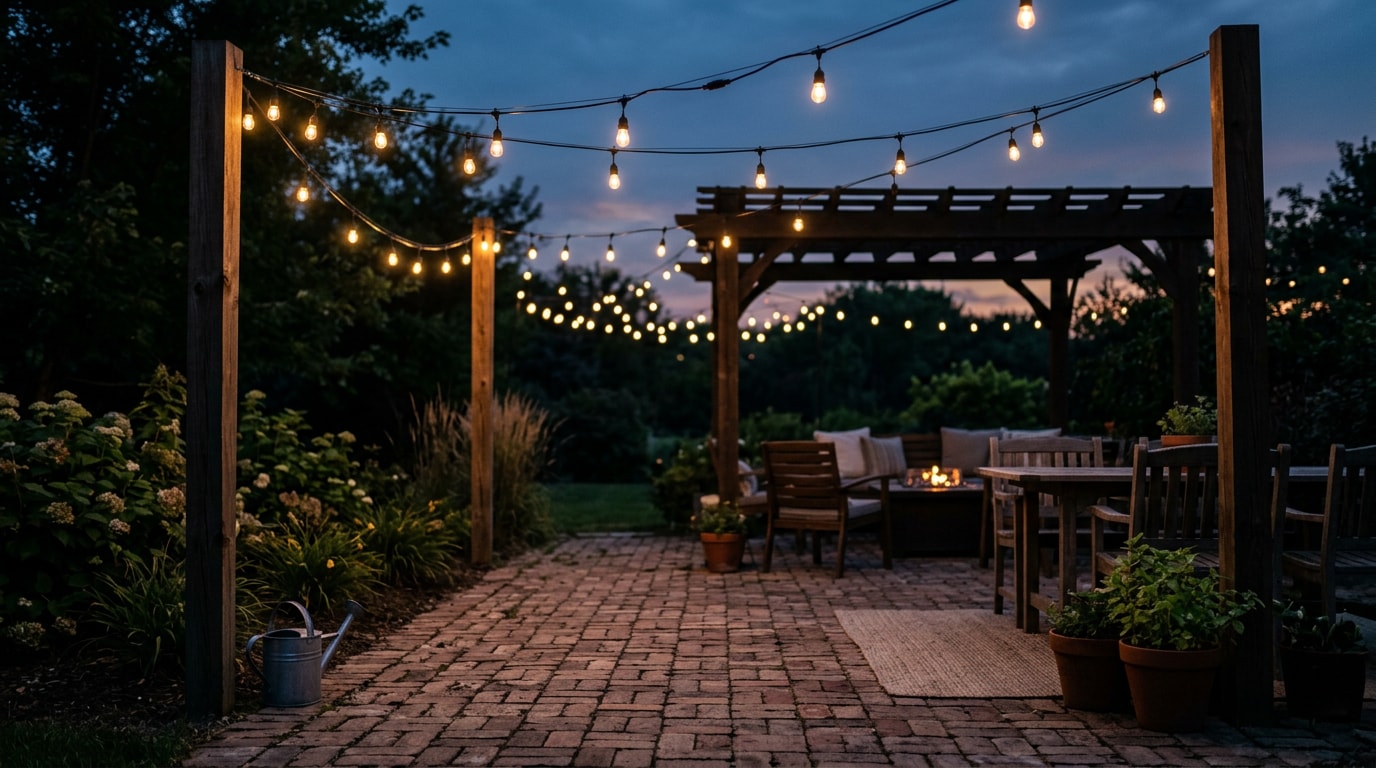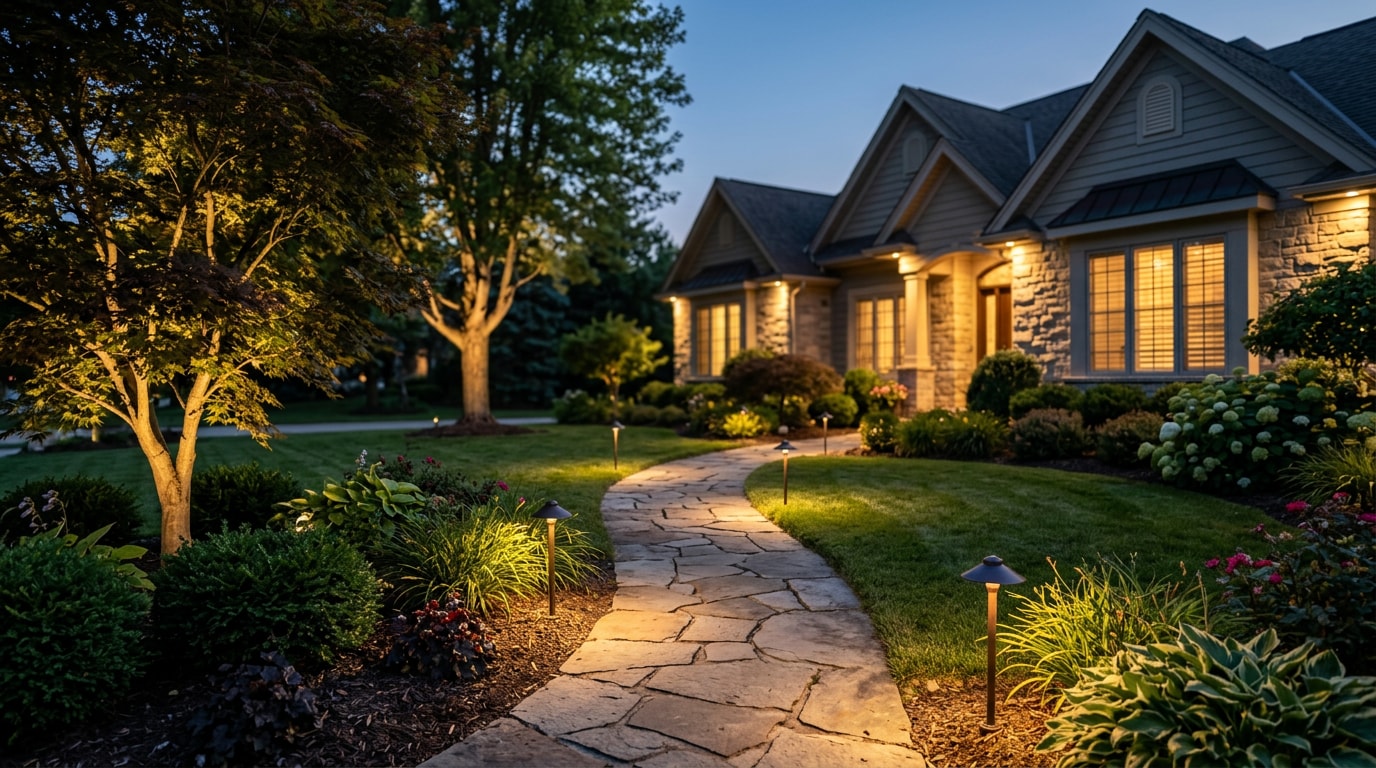
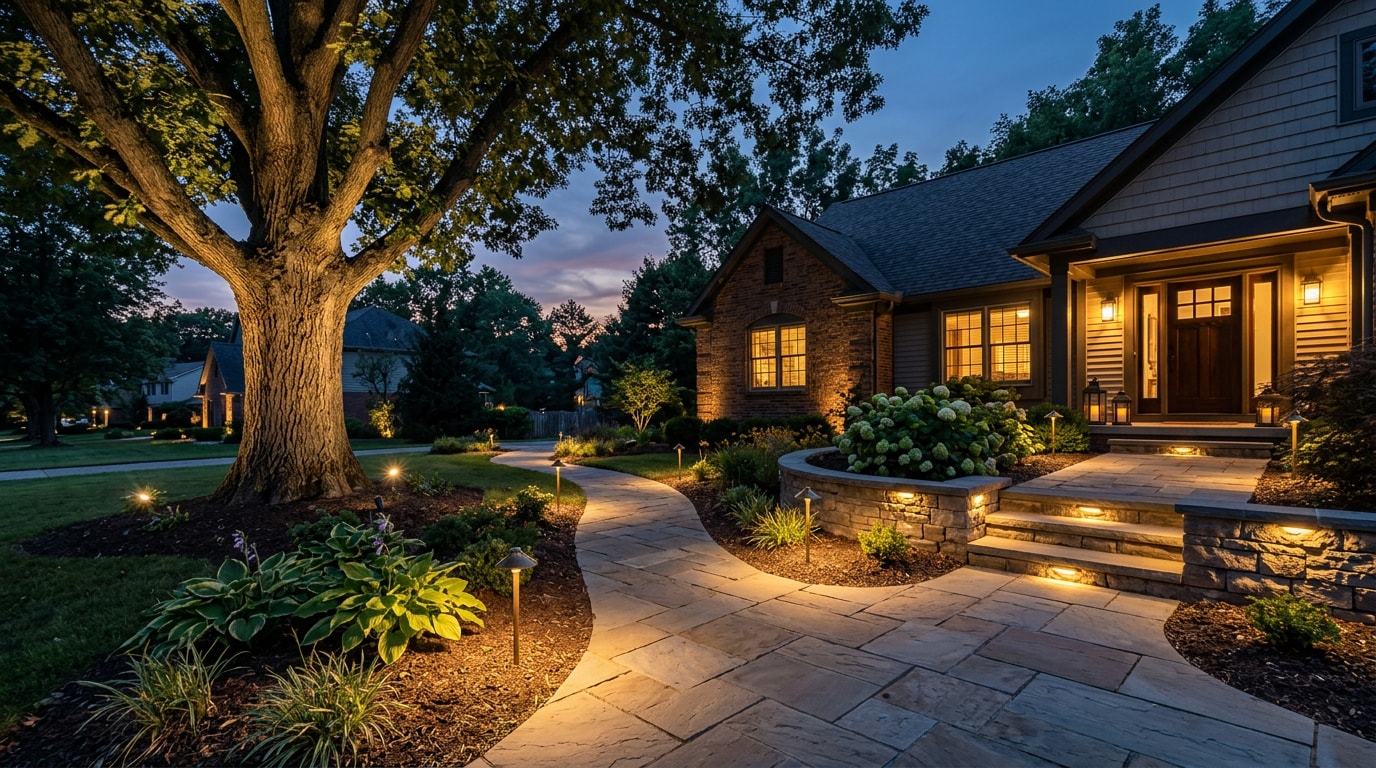
Landscape lighting installation in Madeira, OH comes down to a handful of decisions made before anyone picks up a shovel. The right transformer, properly sized wire, and a layout built around your actual lot separate a system that still looks sharp in five years from one that flickers out by its second summer.
What a Professional Landscape Lighting Installation Includes
A full installation isn't just "plug in some lights." It follows a fairly consistent sequence, whether the crew is lighting a quarter-acre front yard or a wooded half-acre lot backing up to a ravine.
- Site walk and design, done once in daylight and once after dark, to map hardscape, trees, and problem shadows.
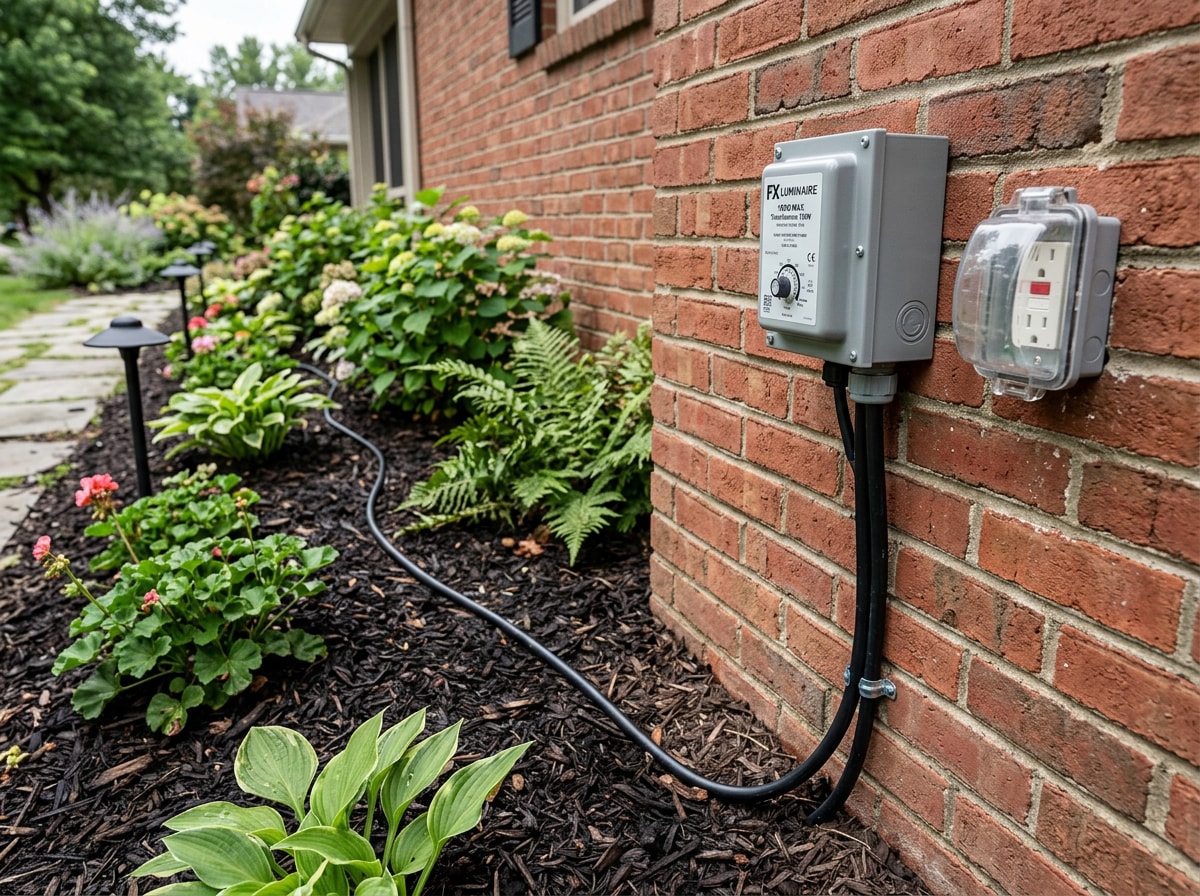
- Transformer placement, usually on an exterior wall near a GFCI-protected outlet.
- Wire runs and trenching, sized to the load and buried at a depth that holds up through winter.
- Fixture installation and aiming, placing each light and adjusting the beam angle.
- Testing and fine-tuning, checking voltage at the farthest fixture and adjusting timers or photocells.
Skipping the design step is the most common shortcut that causes problems later, since fixtures installed without a plan often end up overlapping, underpowered, or aimed at nothing in particular. Our outdoor LED lighting installation page breaks down how this process typically runs from first call to final walkthrough.
Cost of Landscape Lighting Installation in Madeira, OH
Pricing depends on fixture count, how many zones the system is split across, and whether you're using standard aluminum housings or upgraded brass and copper. A small front-entry package costs far less than a whole-property system covering a backyard, driveway, and mature trees, so broad cost assumptions aren't very useful until a layout is actually scoped.
| Project Scope | Typical Fixture Count | What's Usually Included |
|---|---|---|
| Entry & Walkway Package | 4-8 fixtures | Path lights along the front walk, one or two accent lights at the entry |
| Mid-Size Yard System | 10-18 fixtures | Front and side yard coverage, tree uplighting, step lighting |
| Full-Property System | 20+ fixtures | Backyard, driveway, multiple trees, moonlighting, and security zones |
Timeline follows similar logic. Many residential jobs wrap in a single day once the layout is finalized, but larger properties with trenching or driveway crossings can stretch into two or three visits. If you want pricing matched to your actual lot rather than a generic estimate, get a free estimate and a crew can walk the property before quoting anything.
Planning Your Layout: Which Parts of a Madeira Yard Deserve Light
Before any digging starts, a good layout maps the yard and prioritizes which zones actually earn a fixture, instead of lighting every square foot of the property. Walkways, entries, mature trees, and architectural details like stone facades or columns typically outrank open lawn or back fence lines.
This is where a daytime-only plan tends to fall short. A proper layout benefits from a site visit once during the day to note hardscape and plant placement, and once after dark to see where shadows fall and where glare off windows becomes a problem.
For a Madeira yard with mature trees and sloped front entries, a thoughtful layout often means fewer fixtures placed more deliberately, not more fixtures everywhere. Our outdoor lighting layout planning service covers how that walk-through typically works before any wire gets buried.
Fixture Types Used in Madeira Installations
Once the layout is set, fixture choice does the rest of the work. Most residential systems draw from five core categories, each suited to a different part of the yard.
Pathway Lighting
Path lights line walkways and driveway edges, giving guests a clear route after dark. Evenly spaced path lights also add a welcoming glow that reads as intentional rather than scattered.
Uplighting
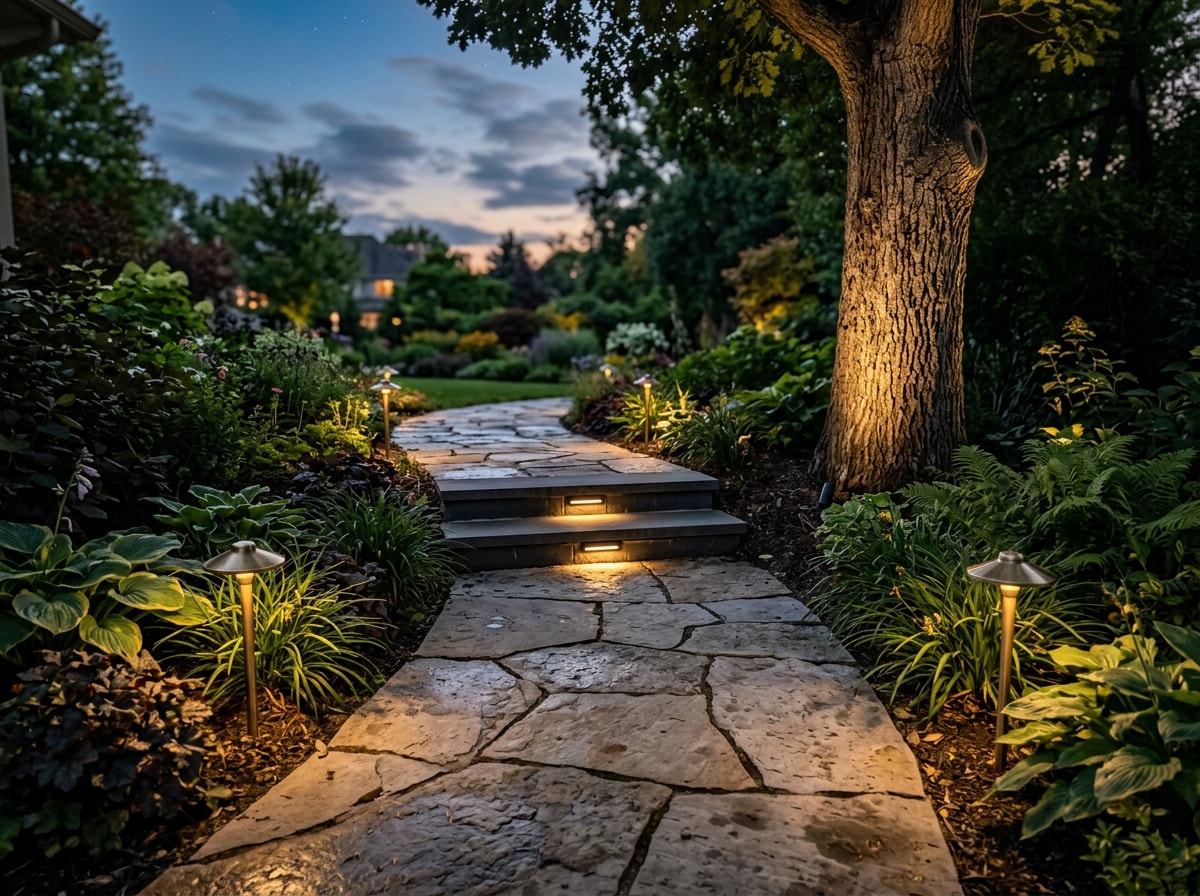
Uplighting places a fixture at the base of a tree, wall, or column and aims light upward, creating shadow and texture. It's one of the most common techniques for highlighting mature trees and architectural features like stone chimneys or porch columns, and it's a core part of our hardscape lighting design work.
Accent Lighting
Accent fixtures draw the eye to a single focal point, like a fountain, statue, or specimen garden bed. Used sparingly, this keeps a yard from looking flat after sunset, and it pairs naturally with patio lighting design when the focal point sits near an outdoor living area.
Step Lighting
Built into risers or mounted low along stairs, step lighting reduces fall risk on outdoor stairs and transitions between patio levels. It's a small addition with an outsized safety benefit, especially on multi-level Madeira lots.
Moonlighting
Moonlighting mounts a fixture high in a mature tree and points it downward, mimicking the soft, dappled look of real moonlight across the lawn and beds below. It's subtler than uplighting and works well over larger open areas.
How Low-Voltage Wiring and Transformers Work
A low-voltage system takes standard 120-volt household current and steps it down to a safer 12-volt circuit using a transformer, usually mounted on an exterior wall near an outlet. From there, a main direct-burial cable carries power out to each fixture, branching as needed across the yard.
Transformer sizing generally follows an 80% rule: add up the wattage of every fixture on the system, then choose a transformer rated roughly 20-25% above that total. This leaves headroom and keeps the unit from running at its ceiling every night. Wire gauge and run length work together to control voltage drop, the gradual loss of power as electricity travels down a wire.
| Wire Gauge | Typical Safe Run (Moderate Load) | Voltage Drop Risk Begins |
|---|---|---|
| 12-gauge | Up to roughly 80-100 ft | Around 100 ft with 100W+ on the run |
| 10-gauge | Up to roughly 150-200 ft | Around 150+ ft with similar loads |
If fixtures at the far end of a run look noticeably dimmer than the rest, undersized wire or an overloaded run is usually the cause. The transformer's 120-volt primary side also needs to plug into a GFCI-protected outlet, a requirement spelled out in the National Electrical Code (NFPA 70), which governs outdoor and low-voltage wiring nationwide. If your property already has lighting wired in but you're troubleshooting a dim zone, our breakdown on how landscape lighting gets wired walks through common failure points.
Choosing Weather-Resistant Fixtures for Madeira's Climate
At NiteScapes Cincy, we've wired and serviced low-voltage systems across Madeira's wooded, sloped lots for years, and the installs that hold up all start with the same material decisions. Madeira's weather runs from wet, storm-prone springs into humid summers, then settles into repeated freeze-thaw cycles through winter, and that cycle is hard on cheap fixture housings.
Cincinnati-area engineering weather data puts the region at roughly 57 freeze-thaw cycles per year, which is enough repeated expansion and contraction to crack painted aluminum or plastic housings over a few seasons. Sealed, corrosion-resistant materials like brass or copper hold up far better.
Low-voltage LED bulbs are the other half of weather resistance. They run cooler than older halogen bulbs, which reduces housing stress and extends the working life of seals and gaskets exposed to moisture. Independent testing from the U.S. Department of Energy's outdoor lighting program backs this up, showing LED fixtures hold their output and efficiency better over time than older lamp types. Our outdoor lighting maintenance service is built around this freeze-thaw rhythm rather than treating "weather-resistant" as a generic label.
DIY or Professional Installation
A simple single-zone path-light kit along one walkway is a reasonable DIY project for most homeowners with basic tools and patience. The calculation changes once a system grows beyond a single zone, crosses a driveway or other hardscape, or involves uplighting mature trees with longer wire runs and higher wattage loads.
A short checklist helps clarify which category a project falls into:
- Number of zones: One zone with a handful of fixtures is DIY-friendly; three or more zones usually benefits from professional load balancing.
- Hardscape crossings: Running cable under a driveway, patio, or sidewalk typically requires conduit and careful planning, a point where mistakes get expensive to fix.
- Tree uplighting involved: Mature trees often sit farther from the transformer, raising voltage drop risk and making wire gauge selection less forgiving.
- Mixed fixture types: Combining path lights, uplights, and step lights on one system means balancing wattage across runs, not just adding fixtures as an afterthought.
If your project checks two or more of those boxes, a quick walk-through with a lighting consultation costs little and can prevent a costly rewire later.
Outdoor Lighting for Safety and Security
Beyond curb appeal, outdoor lighting is a practical safety concern for most households. Lighting walkways and driveways removes the guesswork for anyone arriving after dark, while stair and entryway fixtures cut down on trip hazards around uneven steps or raised thresholds.
Motion-sensor floodlights add another layer, particularly around backyards, garages, and side entries that don't get regular foot traffic. Security lighting doesn't need to be harsh or constant. A motion trigger near a garage door or side gate is often enough to discourage unwanted visitors without lighting the whole yard all night.
Walkway lighting and security fixtures are frequently installed together since they share the same low-voltage system and wiring runs. Check our projects page to see completed examples of both working side by side, or visit our Madeira, OH service area page for details on scheduling a site visit.
FAQ
What's included in a professional landscape lighting installation?
A design walk-through, transformer placement near a GFCI outlet, buried wire runs sized to the load, fixture placement and aiming, then a final test to check voltage at the farthest light. Skipping the design step is the most common reason systems underperform later.
How much does landscape lighting installation cost in Madeira, OH?
Cost scales with fixture count, number of zones, and material grade. An entry-and-walkway package runs far less than a full-property system covering a backyard, driveway, and several mature trees, so an on-site walk-through gives a far more accurate number than a flat estimate.
What size transformer do I need for landscape lighting?
Add up the total wattage of every fixture planned for the system, then choose a transformer rated about 20-25% above that number. This headroom, often called the 80% rule, keeps the transformer from running at its limit and leaves room to add fixtures later.
How far can low-voltage lighting wire run?
Run length depends on wire gauge and total wattage on that circuit. Thicker 10-gauge wire supports longer runs than 12-gauge before voltage drop becomes noticeable, especially on runs carrying more than 100 watts.
Is low-voltage landscape lighting energy efficient?
Yes. LED landscape lights use a fraction of the electricity older halogen low-voltage fixtures required, while producing comparable or better brightness, and they hold up better in outdoor conditions over time.
What is the rule of thumb for outdoor lighting design?
Layer it: combine ambient light for general visibility, task lighting for walkways and stairs, and accent lighting for trees or focal features. No single fixture type should carry the whole yard, since the layered mix is what makes an outdoor space feel balanced after dark.
Ready to put a plan on paper? Get a free estimate and we'll walk your Madeira property before recommending a single fixture. You can also browse our full lighting contractor services or start from our homepage to see everything we handle for outdoor living spaces.