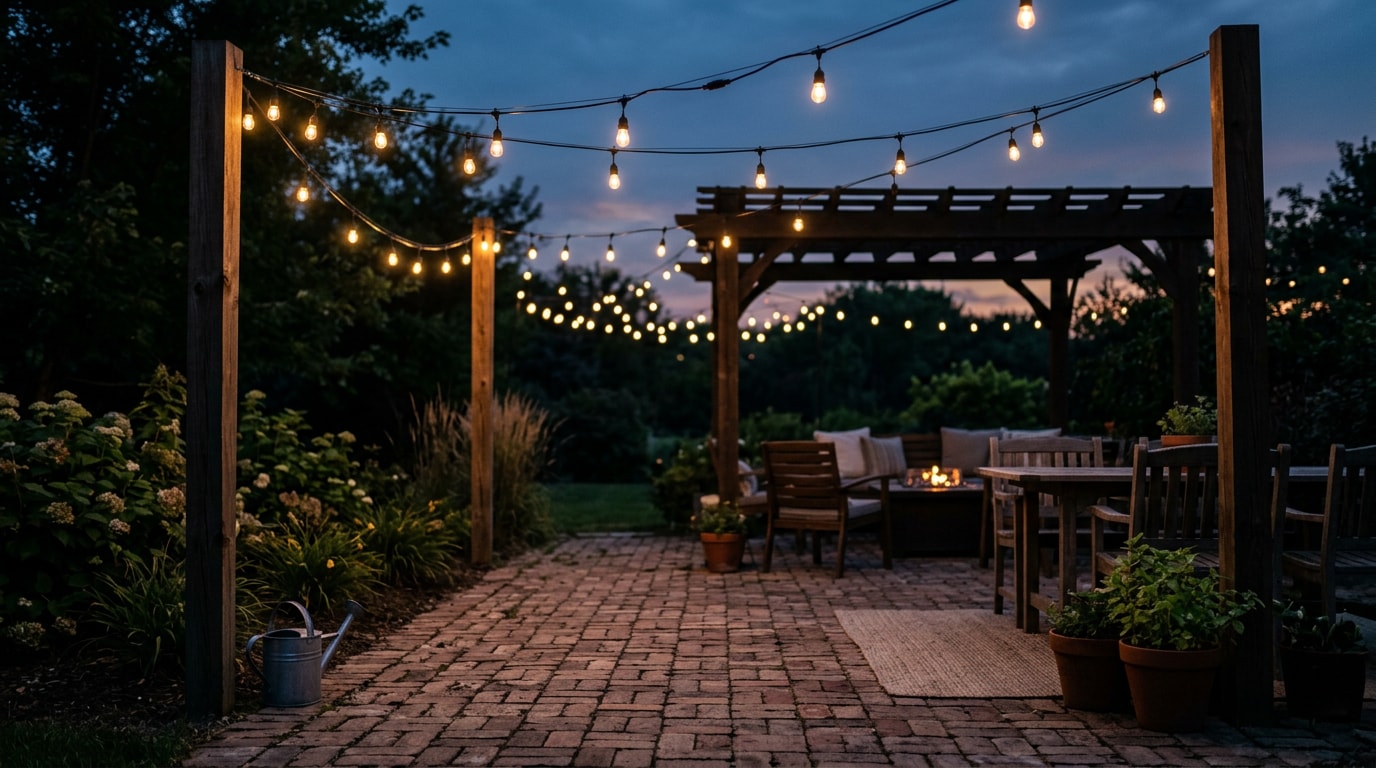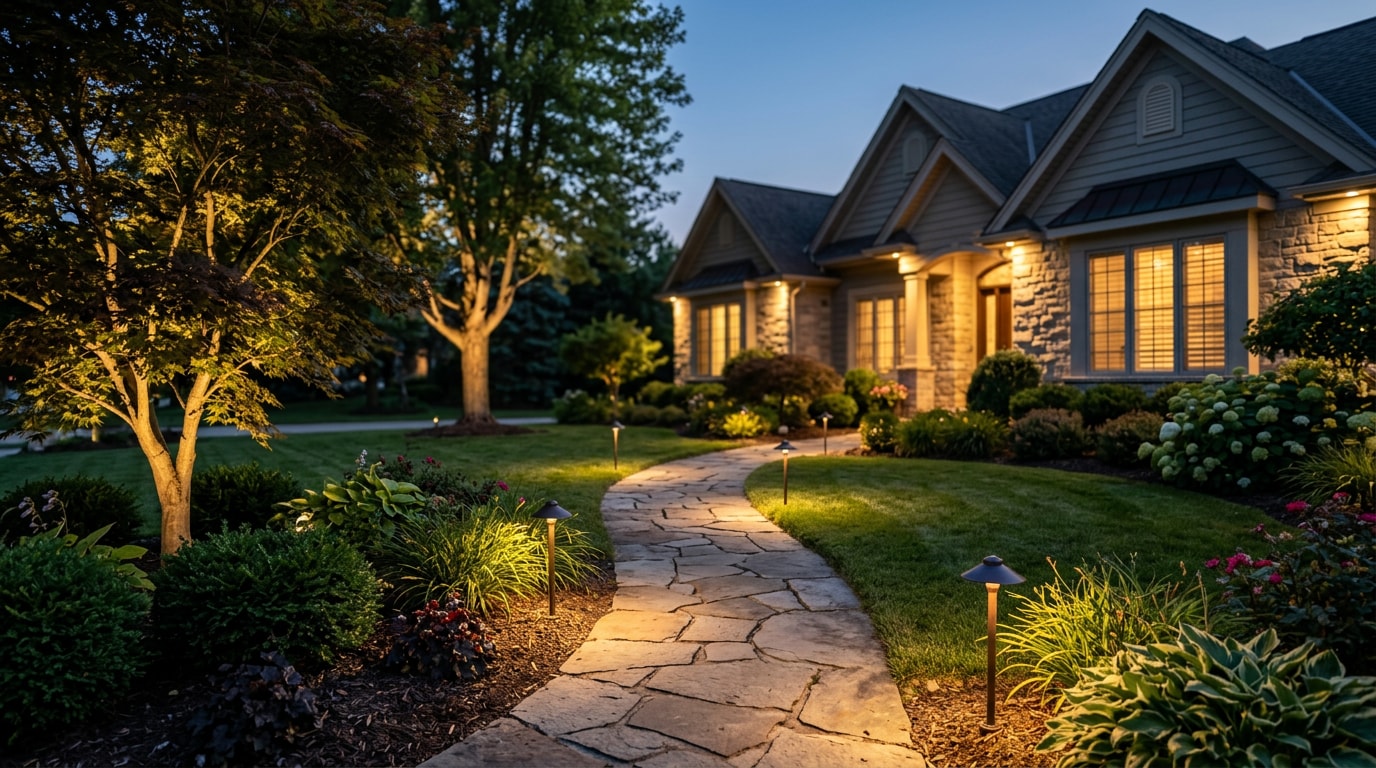
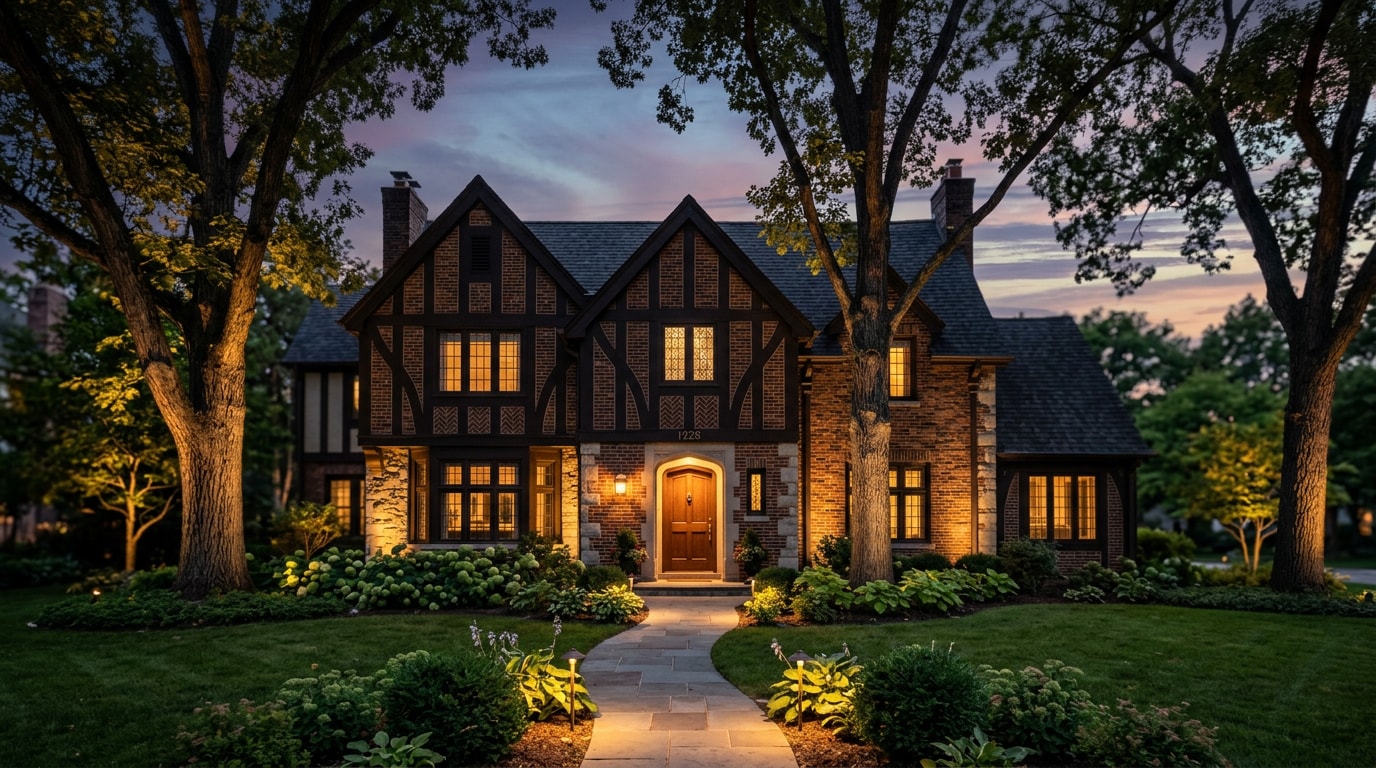
Getting landscaping lights wired correctly in Hyde Park, OH starts with the yard itself, not a fixture catalog. Hyde Park (ZIP 45208) is an affluent Cincinnati east side neighborhood built around Hyde Park Square, lined with large early-1900s homes on established, tree-shaded streets. Get those bones right first and the fixtures practically pick themselves.
Landscape Lighting for Hyde Park Homes
Most properties here already have the hard part done: mature trees, deep planting beds, and established landscaping that a good lighting plan can simply highlight.
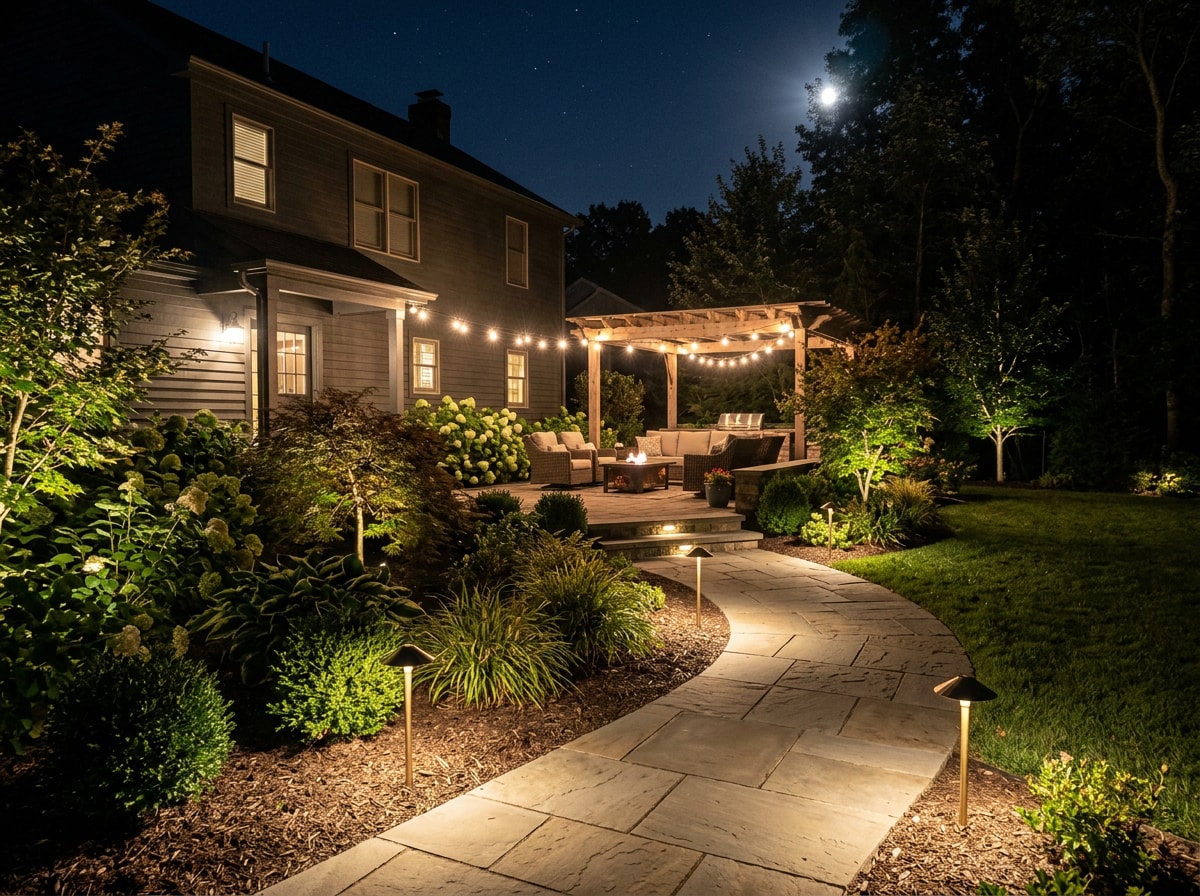
A pair of uplights at the base of an old oak or beech can turn tree uplighting into a centerpiece. A low wash through the beds and a lit path give the whole property a finished edge after dark. Low-voltage lighting keeps that look safe and energy-efficient year-round.
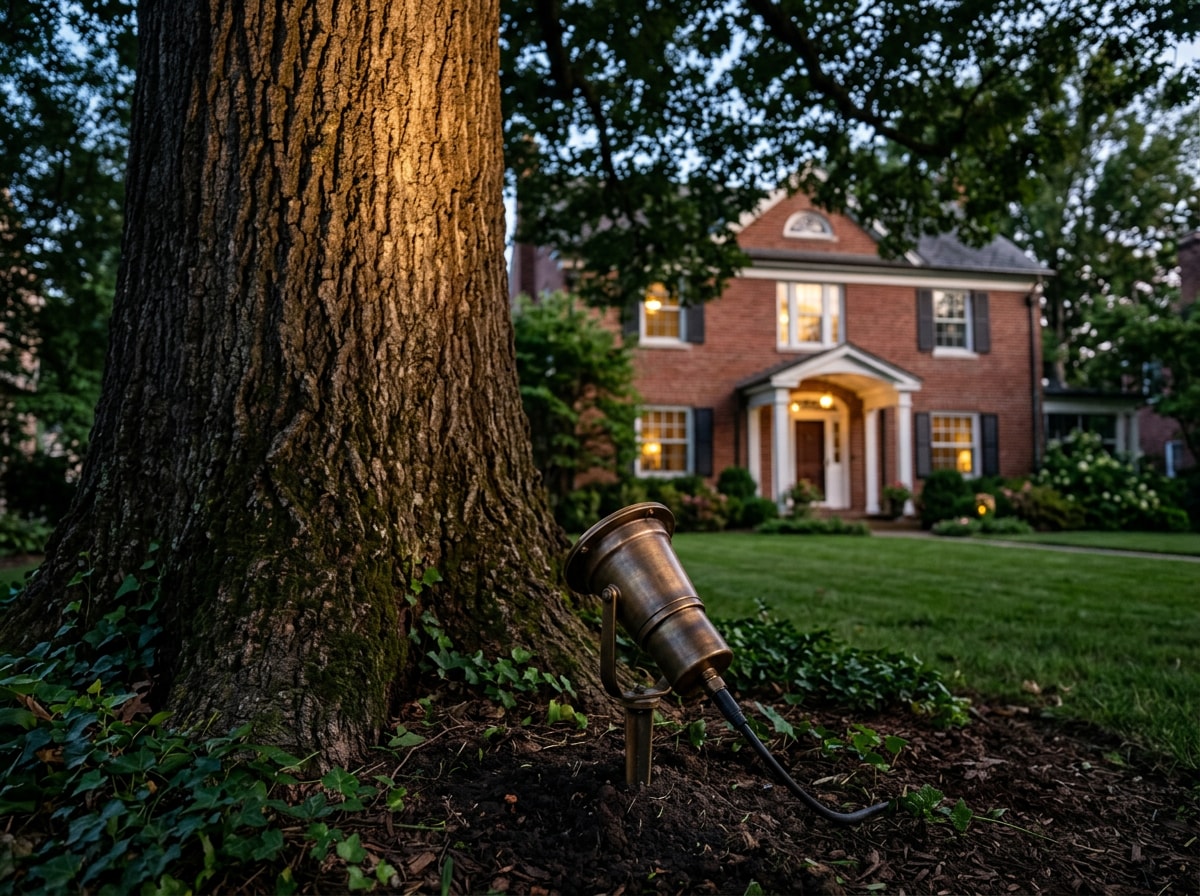
Homeowners researching landscape lighting design services for the Hyde Park area typically want a plan built around what they've already got, not a generic template. We've wired enough yards along streets near Erie Avenue and Observatory to know that the biggest layout mistake isn't fixture choice, it's lighting every tree the same way instead of picking two or three focal points and letting the rest stay dark.
Hyde Park Architectural Lighting for Older Homes
Century-old Tudor, colonial, and brick foursquare homes respond especially well to wired accent lighting. Soft uplighting does wonders for brick facade lighting, and it lets gables, dormers, and entries contrast against the night sky instead of disappearing into it.
The "wired" part matters here too. Older home wiring often needs updating before new fixtures go in. A proper install uses weather-rated, low-voltage LED systems on code-compliant circuits, with upgrades to any outdated exterior wiring Hyde Park Tudor and colonial homes tend to carry. Our hardscape lighting design work on these older lots almost always includes a check of the exterior junction box before a single fixture gets staked.
Why Professional Outdoor Lighting Is Worth It
A professional, properly sized system holds up to Ohio winters and summers without fading, flickering, or burning out early, something plug-in kits rarely manage. Fixtures built from brass and copper resist corrosion.
LED systems also draw very little power even running several hours a night. LED lighting enabled 1.1 quads of energy savings in 2017, resulting in $12 billion in savings for U.S. consumers , which is part of why the U.S. Department of Energy continues tracking LED adoption as a national energy-savings priority.
| Factor | DIY Plug-In Kit | Pro Low-Voltage Wired | Line-Voltage Hardwired |
|---|---|---|---|
| Upfront cost | Low | Moderate | Higher |
| Typical lifespan | 1–3 seasons | 10–15 years | 15–20+ years |
| Code compliance | Rarely inspected | Must meet low-voltage code rules | Permit + licensed electrician required |
| Who can install | Homeowner | Pro recommended | Licensed electrician only |
Types of Landscape Lighting for Hyde Park Properties
A full system usually combines a few fixture types, not just one:
- Accent and tree uplighting – highlights trees, stonework, and facades for drama after dark
- Path lighting – marks walkways and steps for safe footing at night
- Patio and deck lighting – sets the mood for outdoor gatherings
- Security lighting – covers entry points and dark corners
LED systems use a fraction of the power older halogen setups did and rarely need a bulb change. If an existing system has gone dark or patchy, outdoor lighting repair usually starts with diagnosing the transformer, wiring, and fixtures before deciding whether to repair or upgrade.
Our Outdoor Lighting Installation Process
A licensed crew typically walks the property with the homeowner first, plans a layout around how the yard actually gets used, and explains flat-rate pricing before any work begins.
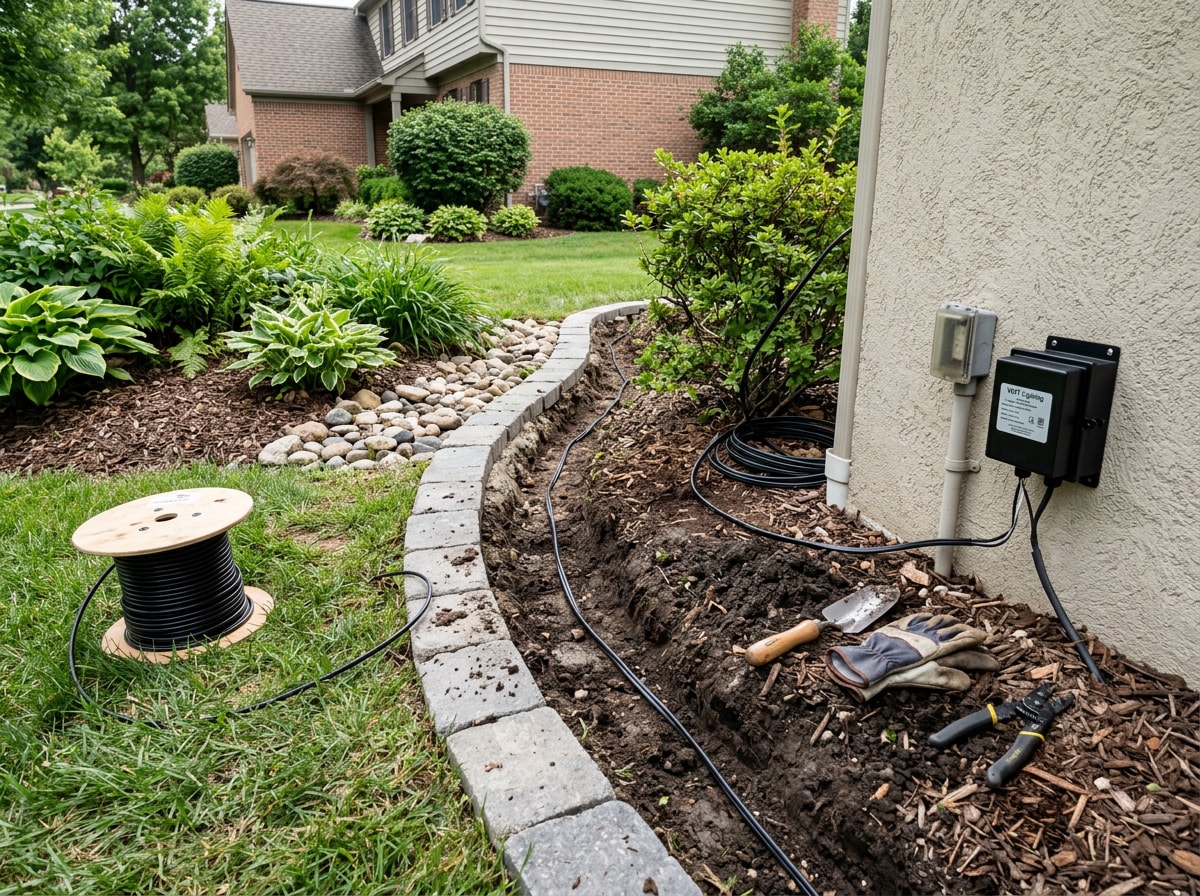
From there, installers evaluate sightlines, choose weather-rated fixtures, and run code-compliant wiring to each location. Fixtures get mounted securely, voltage gets balanced across the run, and the whole layout gets tested before the crew leaves. For larger properties, we sometimes recommend a separate outdoor lighting consultation first so the layout is locked in before any trenching starts.
Ready to start? Get a free estimate for your property.
Load Planning That Prevents Failures
Flickering fixtures and early bulb burnout almost always trace back to poor load planning rather than bad bulbs. Sizing the transformer and circuits correctly to the total fixture wattage keeps a system running at steady brightness without straining the panel.
As a simplified example, a transformer rated for 300 watts shouldn't be loaded past roughly 80% (about 240 watts) of fixtures. That headroom avoids voltage drop on longer runs. Pick a transformer rated for 25% more than the total wattage of lights you intend to use, equivalent to loading the transformer to no more than 80% of its rated capacity , which is the same math worked in reverse.
GFCI protection is also required on the circuits feeding these transformers. The 2020 edition of the NEC now requires GFCI protection on residential outdoor outlets , and low-voltage wiring still needs a minimum burial depth, though exact figures vary by jurisdiction. The NEC is the benchmark standard for electrical design, inspection, and installation of systems in residential, commercial, and industrial occupancies , which is why most licensed installers default to its minimums even where local code hasn't caught up.
Homeowners should confirm specifics with their local permitting office, since requirements can differ by city. Our team also walks new clients through this during an outdoor LED lighting installation so there are no surprises on inspection day.
FAQ
Is Low Voltage Lighting Safe?
Yes. Low voltage lighting is considered safe because it runs through a transformer that steps household power down to around 12 volts, far below the level that poses a shock hazard. That's why it's the standard for residential landscape lighting nationwide.
Do You Repair Existing Outdoor Lighting?
Most licensed installers diagnose and repair existing transformers, wiring, and fixtures rather than replacing everything. Older systems can often be upgraded to LED at the same time for better efficiency and brighter, more even coverage.
Do You Need an Electrician for Landscape Lighting?
It depends on the system type. Low-voltage lighting generally doesn't legally require a licensed electrician, though one is recommended for safety, while line-voltage work almost always does because it ties into a home's main electrical panel.
How Deep Do You Bury Landscape Lighting Wire?
The minimum burial depth for low-voltage wires under 30 volts is 6 inches, including landscape, pool, spa, and fountain lighting . Some installers go deeper near walkways or driveways for added protection. Exact minimums can vary by local code, so it's worth confirming with your local building or electrical authority before digging.
How Much Does Landscape Lighting Cost in Hyde Park, OH?
Pricing depends heavily on fixture count, property size, and whether existing wiring needs updating. As a national reference point, the cost to install landscape lighting averages $3,500, with most homeowners paying from $2,000 to $6,000 . Older Hyde Park homes with outdated exterior wiring sometimes land toward the higher end of that range because of the extra electrical work involved. The only way to get an exact number for your property is a walk-through, which is why we offer a free estimate instead of a flat per-fixture rate.
Do I Need a Permit for Landscape Lighting?
Most low-voltage systems don't require a separate electrical permit, but line-voltage work tied into the home's panel usually does. Check with the local permitting office before work begins, especially on older Hyde Park properties where panel upgrades sometimes come up during the same project.
Want to see what a wired lighting plan looks like on a property like yours? Visit our homepage or browse recent projects in Hyde Park and nearby Mariemont and Indian Hill for more examples.