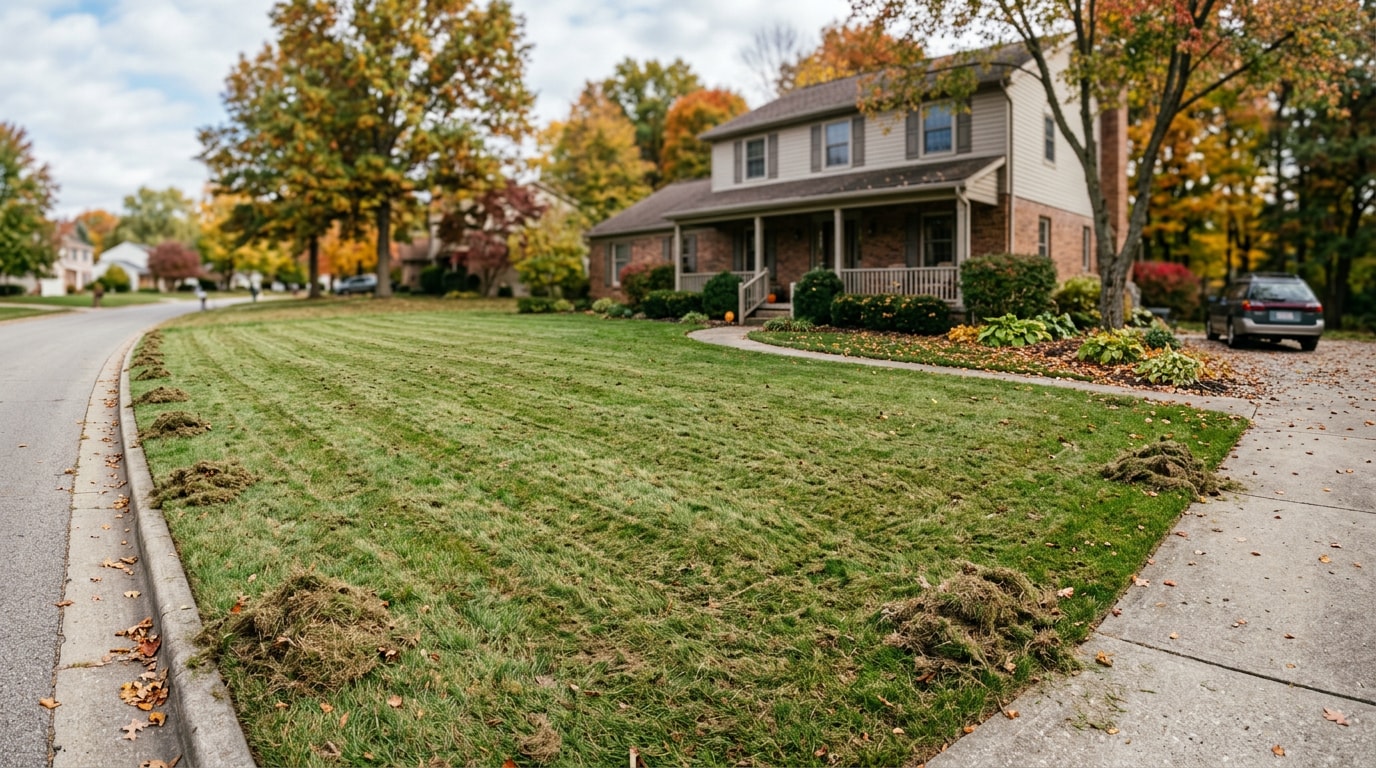
If your lawn feels spongy underfoot or water pools on the surface instead of soaking in, you may need lawn thatching services in Mason, OH before the problem spreads to weak, disease-prone turf. This guide covers how to check your own lawn in five minutes, what professional dethatching actually costs in 2026, and when aeration alone solves the problem instead.
Signs Your Lawn Needs Dethatching
A few symptoms tend to show up before thatch becomes a real problem.
- Your lawn feels spongy or bouncy when you walk across it
- Grass blades look thin or weak despite regular watering
- Water pools on the surface instead of soaking in
- Pest or disease activity increases, since thatch creates a damp, sheltered environment
That said, many of these same symptoms point to soil compaction rather than thatch. If your lawn sees heavy foot traffic or sits on Warren County's clay-heavy soil, compaction could be the real culprit, and our Landscape Maintenance team can check for both during one visit rather than guessing from the surface.
The Five-Minute Thatch Test
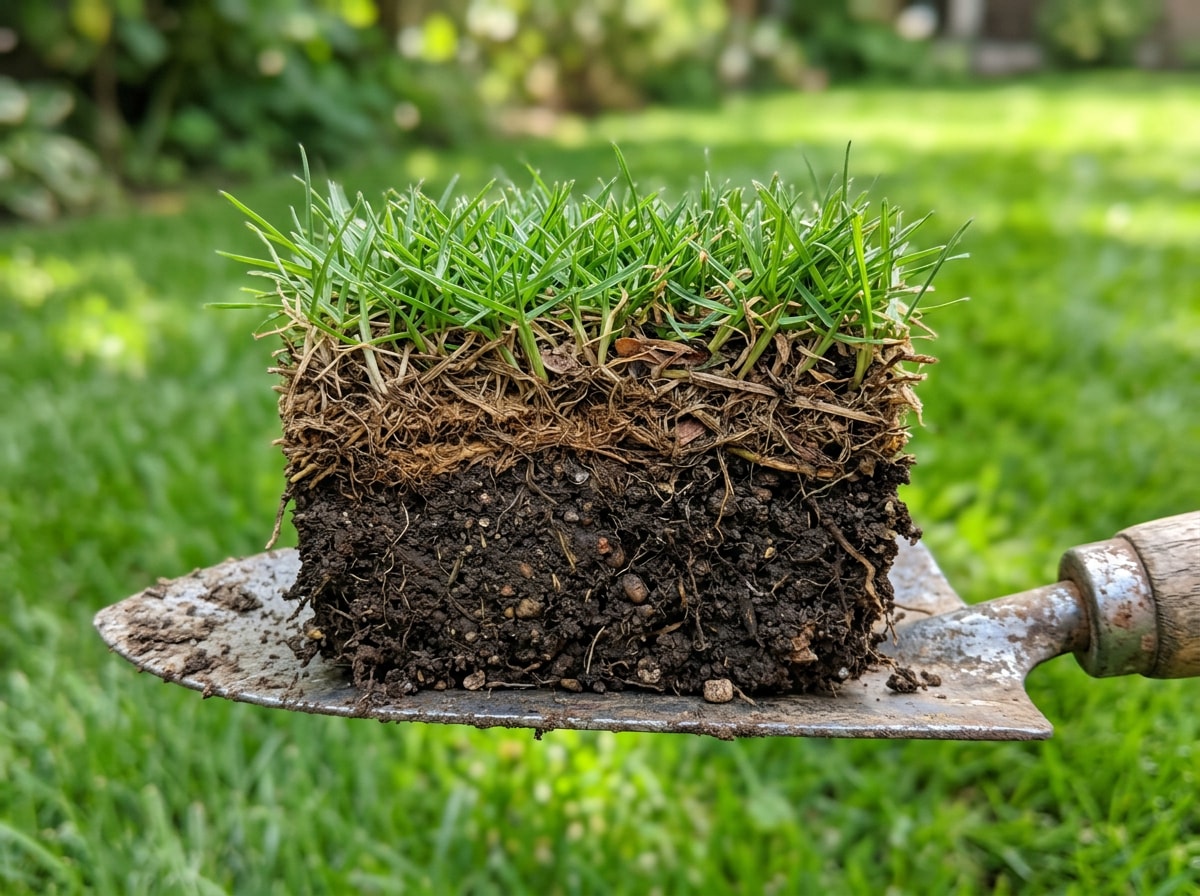
The fastest way to know if you actually have a thatch problem is to measure it yourself. Cut a small wedge from your lawn with a spade or trowel, three to four inches deep, and look at the layer between the soil and the green grass.
- Under ½ inch: leave it alone, it's helping your lawn, not hurting it
- ½ inch to ¾ inch: borderline territory where aeration alone might solve the issue
- Over ¾ inch: a strong candidate for professional dethatching
This matches the threshold used by turf researchers: a thatch layer greater than half an inch can block water, air, and fertilizer from reaching the roots and invite disease, according to Penn State Extension's guide to managing lawn thatch.
What Is Lawn Thatch, and Why It Builds Up
Lawn thatch is a layer of dead grass stems, roots, and organic debris that collects between the soil surface and the green blades above it. Grass clippings from mowing rarely cause thatch buildup. Clippings are mostly water and decompose quickly, while thatch forms from slower-to-break-down plant tissue rich in lignin, which is why it piles up faster than it breaks down, per Penn State Extension.
A thin layer under about half an inch actually benefits your lawn. It helps retain moisture and moderates soil temperature. Problems start once that layer gets thicker, cutting off water and nutrients from the roots.
Dethatching vs. Aeration vs. Power Raking: Which Does Your Lawn Need?
| Service | What It Removes | Aggressiveness | Best For |
|---|---|---|---|
| Core aeration | Soil plugs to relieve compaction | Low-moderate | Compacted clay soil, light thatch |
| Power raking | Thatch via rotating blades/tines | Moderate-high | Thatch over ¾" on sturdy turf |
| Dethatching (manual/mechanical) | Thatch layer, surface debris | Moderate | General thatch removal, less turf stress |
Warren County lawns add a local wrinkle. Tall fescue, common in Mason yards, tolerates dethatching reasonably well since it's a bunch-type grass. Kentucky bluegrass, also common locally, spreads by rhizomes and is more prone to thatch buildup in the first place, which is why Ohio turf specialists point to older bluegrass lawns as the ones most likely to need a true dethatching pass rather than aeration alone, per Ohio State University Extension's Turfgrass 101 guide.
If your test came back under ¾ inch, core aeration is usually the gentler first move. If you want a deeper comparison of aeration and overseeding timing for this region, our aeration and overseeding guide for Loveland, OH homeowners walks through the same early-fall window that applies to Mason yards.
Lawn Dethatching Cost in Mason, OH (2026)
Dethatching cost depends on lawn size (often priced per 1,000 square feet), the method used, and local labor rates. For an average Mason-area residential lawn, professional dethatching typically runs $125 to $350, with larger properties or heavier thatch pushing costs higher.
| Lawn Size | Typical Professional Cost |
|---|---|
| Under 5,000 sq ft | $100 – $200 |
| 5,000 – 10,000 sq ft | $175 – $300 |
| Half acre or larger | $300 – $500+ |
Larger lawns usually see a lower per-square-foot rate, while smaller lawns may carry a flat minimum service fee. Mason-area pricing tends to track closely with broader Cincinnati-metro rates, since labor and equipment costs are fairly consistent across the region.
If you're already weighing dethatching against other fall cleanup work, request a quote through our contact page and we'll tell you honestly if your lawn needs it or if aeration will do the job for less.
DIY vs. Professional Dethatching Cost
Renting a power rake or dethatcher usually costs $60 to $100 for a few hours, which sounds cheaper than hiring a pro, until you factor in your own time, the physical effort, and the real risk of damaging grass or irrigation lines with unfamiliar equipment.
Professional dethatching costs more upfront but includes proper equipment calibration, debris cleanup, and the know-how to read your specific turf type. Scotts' guide to aerating and dethatching notes that aeration puts less stress on a lawn than dethatching, which is part of why we check compaction first before recommending the more aggressive service.
When and How Often to Dethatch Your Lawn
Cool-season grasses like tall fescue and Kentucky bluegrass, the dominant types around Mason, recover best when dethatched in early fall or early spring, when the grass is actively growing and can bounce back quickly. Ohio State University Extension's turf guidance for the region points to mid-to-late September as the ideal window for Kentucky bluegrass lawns specifically.
Dethatching during summer heat or winter dormancy stresses the lawn with little time to recover.
As for frequency, most lawns don't need dethatching every year. Every two to three years is typical for average Mason-area lawns, though sandy or heavily irrigated lawns may build thatch faster. Cool-season grass lawns should generally keep thatch under one-third of an inch, slightly tighter than the half-inch threshold often cited for warm-season turf, according to Oklahoma State University Extension's thatch management fact sheet.
How Professional Lawn Dethatching Works
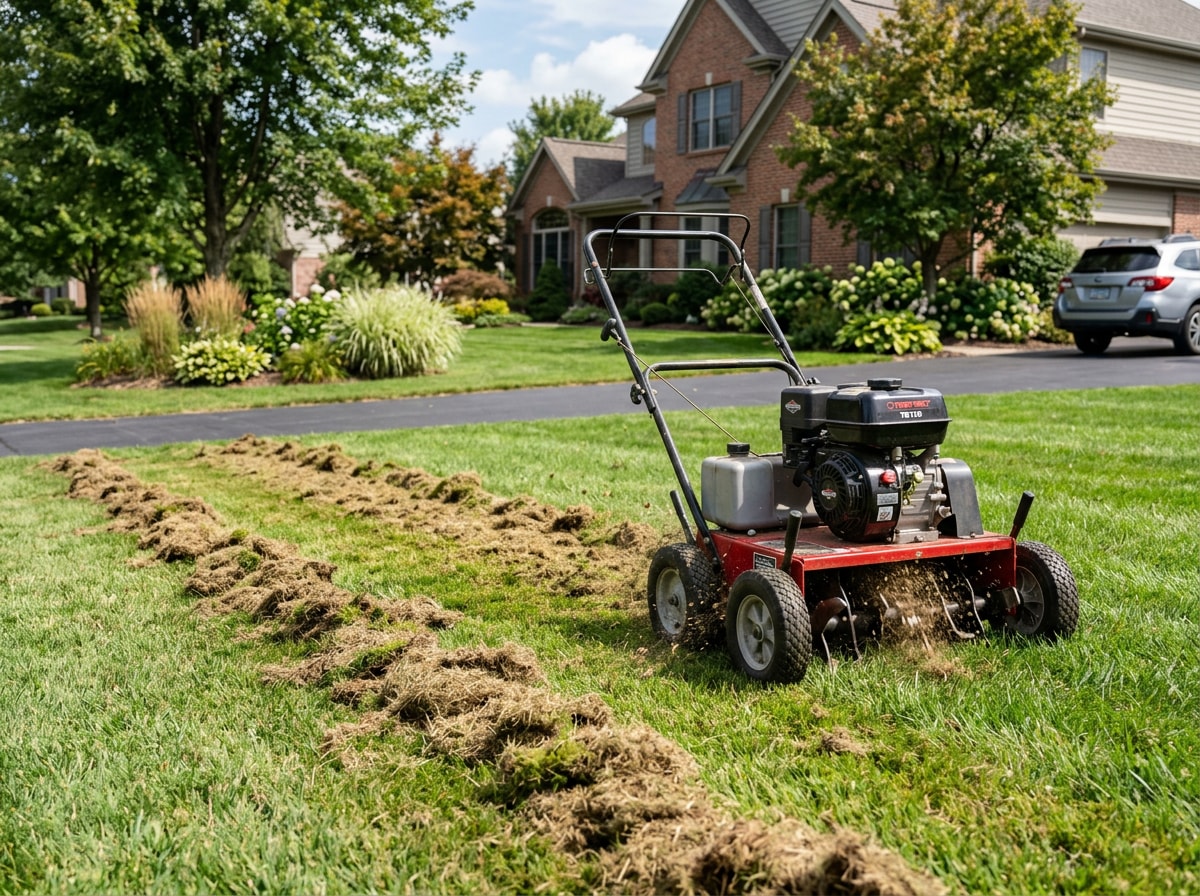
A typical dethatching visit starts with mowing the lawn shorter than usual and flagging sprinkler heads, cables, and other obstacles. The crew then runs a dethatching machine across the lawn in multiple passes, pulling up the organic debris layer from the soil surface.
Once the thatch is loosened, the crew rakes and bags the debris, leaving the lawn looking rough temporarily. That's normal. Aftercare typically includes a deep watering to help the turf recover and encourage new growth into the opened-up soil.
Lawn Assessment and Prep
Before any equipment touches the lawn, a proper inspection checks thatch thickness, grass type, and soil moisture. When our crews are already on-site for outdoor space maintenance or hardscape work, we'll often run the same five-minute thatch test ourselves before recommending anything, because skipping that step is how homeowners end up paying for a service they didn't actually need.
Book Your Lawn Dethatching Service in Mason, OH
If your lawn tested over three-quarters of an inch of thatch, or you're simply unsure which service fits your yard, the next step is a professional inspection rather than guessing. We serve Mason and the surrounding Warren County area as part of our broader landscaping and outdoor maintenance work.
Get a free estimate and we'll confirm what your lawn actually needs before any equipment runs. You can also visit our homepage to see the full range of landscaping and outdoor living services we provide across Mason and Cincinnati.
FAQ
Is it better to aerate or dethatch?
For most Mason lawns dealing with compacted clay soil, aeration is the better first step. Dethatching should be reserved for lawns where thatch measures over three-quarters of an inch, since aggressive dethatching on a healthy lawn can cause unnecessary stress.
What's the difference between dethatching and aerating?
Dethatching removes the organic debris layer sitting on top of the soil, while aeration pulls small soil plugs to relieve compaction underground. They address different problems, though lawns sometimes need both in the same season.
How much does lawn dethatching cost in Mason, OH?
Professional lawn dethatching typically costs between $125 and $350 for an average residential lawn, depending on size, method, and local labor rates. Half-acre or larger properties can run $300 to $500 or more.
How often should I dethatch my lawn?
Most Mason-area lawns only need dethatching every two to three years, not annually. Sandy soil or heavily irrigated lawns may build thatch faster and need more frequent attention.
Can dethatching damage my lawn?
Yes, if it's done at the wrong time or too aggressively. Dethatching stresses the grass, so timing it for early fall or early spring, when the lawn is actively growing, is what keeps recovery fast instead of leaving bare patches.
Can I dethatch my lawn myself?
Yes, DIY dethatching is possible with a rented power rake, but it carries a real risk of damaging grass or irrigation components. Most homeowners get better, safer results hiring a professional, especially on lawns with sprinkler systems or mixed grass types.