Low maintenance front yard landscaping in Liberty Township, OH starts with a hard truth: most "easy" front yards fail in year one because they were planned for someone else's soil. Get the plant choices, grading, and hardscape right for this area's clay-heavy ground, and the weekly mowing-edging-replanting cycle mostly disappears. Here's what actually holds up here, not just what looks good in a catalog photo.
Why Low Maintenance Looks Different in Liberty Township
Two things decide how much work a front yard demands before you ever pick a plant: how much lawn you're keeping, and whether the beds are built for the water this area actually gets.
Butler County sits in USDA Hardiness Zones 6a, with lows between -10°F and -5°F, and 6b, with lows between -5°F and 0°F , which rules out a lot of plants sold as "universal" low-maintenance picks at big-box stores. Zone matters less than drainage, though. Most of the township sits on dense clay that holds water far longer than the loam gardening blogs usually assume, so a bed that drains fine in a sandier Cincinnati suburb can sit waterlogged here through a wet April.
In the yards we've reworked around Wetherington and Four Bridges, standing water after spring storms is the single biggest reason "low-maintenance" beds fail in their first season, not plant selection. Walk the yard after a hard rain before you buy a single plant. Note where water pools, how long it takes to drain, and how much direct sun each bed gets in July versus October.
A landscaper can run a quick drainage and sun-exposure check before anything goes in the ground, which saves a full replant later. If you want a sense of how this plays out on an actual property, our projects page shows completed Liberty Township-area yards.
Low Maintenance Front Yard Landscaping Ideas
Three levers control the workload: how much lawn you have, how much hardscape replaces high-upkeep beds, and whether the plants fit the site instead of fighting it.
Shrink the Lawn
Grass is the highest-maintenance surface in most front yards. Widening planting beds by even a few feet on each side cuts mowing time and removes the awkward strips that always look patchy.
- Ground cover or ornamental grasses handle tree lawns and narrow parking strips better than turf, with no edging and no spring reseeding.
- Widening an existing bed is a weekend DIY job with a spade and edging material.
- Full conversions that need drainage work are where clay soil makes professional grading worth the cost, especially if water already pools along the edge.
Landscape maintenance crews see this pattern constantly: smaller lawns with well-built beds need less seasonal attention than a full lawn with a few scattered flower islands.
Use Stone Where Grass and Plants Struggle
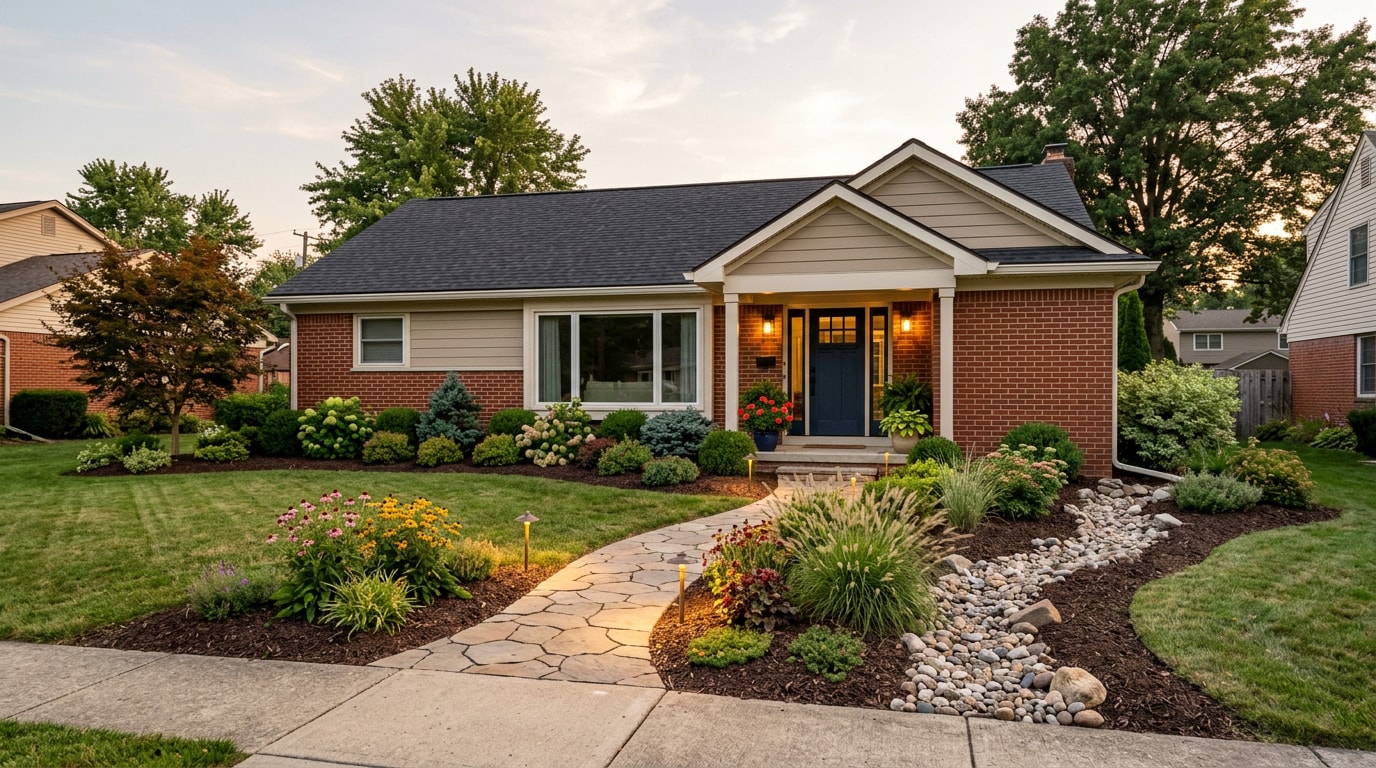
Decorative stone earns its keep under downspouts, in deep shade, and anywhere water runs fast after a storm. A dry creek bed or a cluster of boulders handles runoff without a mower or a weekly hose.
Given how often this area sees heavy spring rain landing on slow-draining clay, these trouble spots show up in nearly every front yard eventually. A dry creek bed along a downspout path functions as drainage first and decoration second.
A Low-Maintenance Plant Palette for Zone 6a
A solid palette leans on species proven in Butler County's conditions rather than whatever is trending in a national gardening roundup.
| Plant | Type | Light Needs | Why It Works Here |
|---|---|---|---|
| Boxwood | Evergreen shrub | Sun to part shade | Dense, slow-growing, tolerates clay once established |
| Inkberry holly | Evergreen shrub | Sun to part shade | Native, holds structure through winter |
| Panicle hydrangea | Flowering shrub | Full sun | Blooms on new wood, forgiving of late frost |
| Dwarf fothergilla | Flowering shrub | Sun to part shade | Fall color, compact habit for foundation beds |
| Catmint | Perennial | Full sun | Long bloom window, deer-resistant |
| Coneflower | Perennial | Full sun | Drought-tolerant once rooted, self-seeds lightly |
| Black-eyed Susan | Perennial | Full sun | Reliable color through late summer |
| Little bluestem | Ornamental grass | Full sun | Deep roots help with clay drainage over time |
| Hellebore | Perennial | Shade | Blooms in late winter before most shade plants wake up |
| Coral bells | Perennial | Part to full shade | Foliage color without constant deadheading |
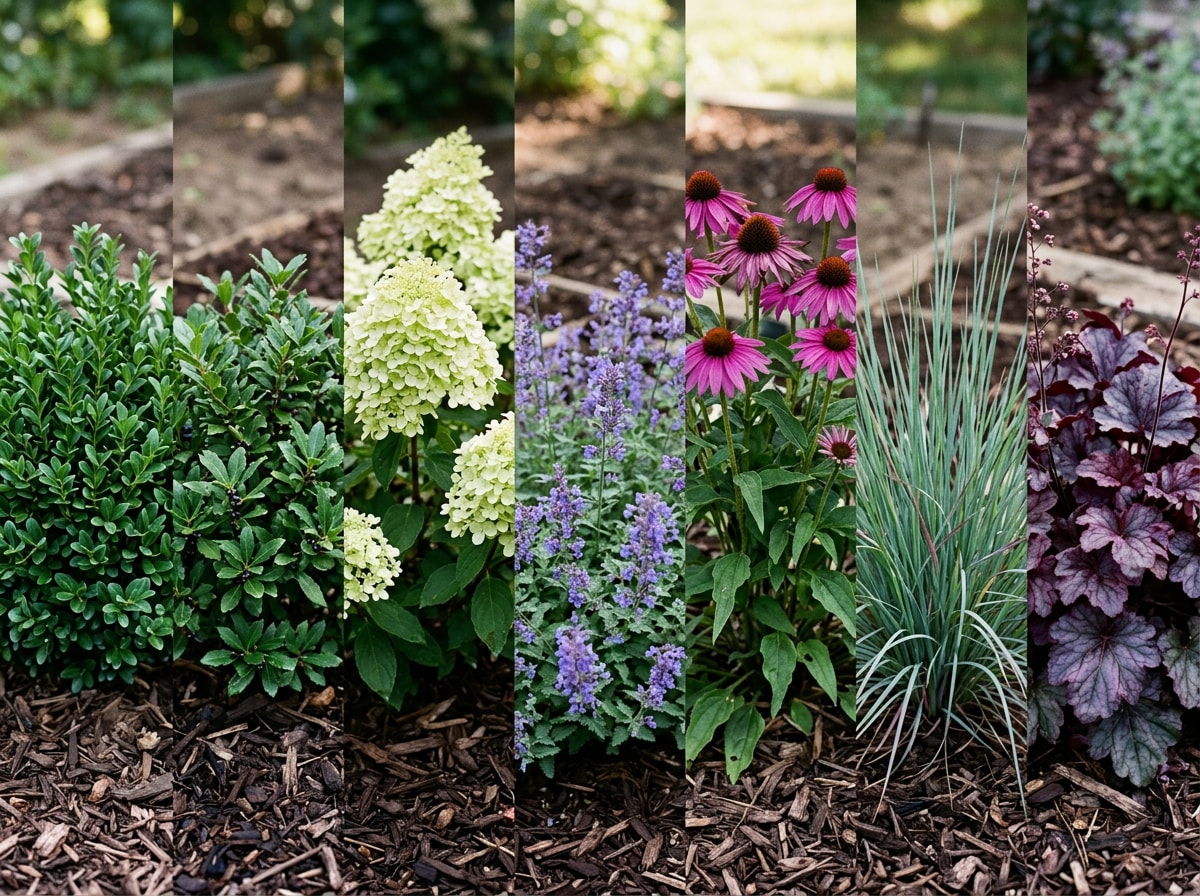
Many of these species tolerate clay because their roots spread wide rather than deep, which also helps them resist the freeze-thaw heaving that can crack shallower-rooted plants each winter. Soil and moisture conditions vary across Ohio from site to site, and using the "right plant, right place" approach is essential , according to Ohio State University Extension. Most plants on this list are also deer-resistant, which matters in the township's wooded subdivisions.
Front Yard Upgrades That Boost Curb Appeal Without Adding Work
Curb appeal and low maintenance aren't opposites. They just need to be installed correctly the first time.
Build a Walkway That Handles Freeze-Thaw
A paver walkway set over a properly compacted base can flex slightly through Ohio's freeze-thaw cycles instead of cracking the way a poured slab sometimes does. The base matters most, and clay soil makes it harder to get the depth and drainage layer right without experience.
A hardscape installation built this way is one of the lowest-maintenance upgrades you can make to curb appeal. Once it's set, there's no resealing and no seasonal patching, just an occasional sweep.
Layer Foundation Plantings for the Long Term
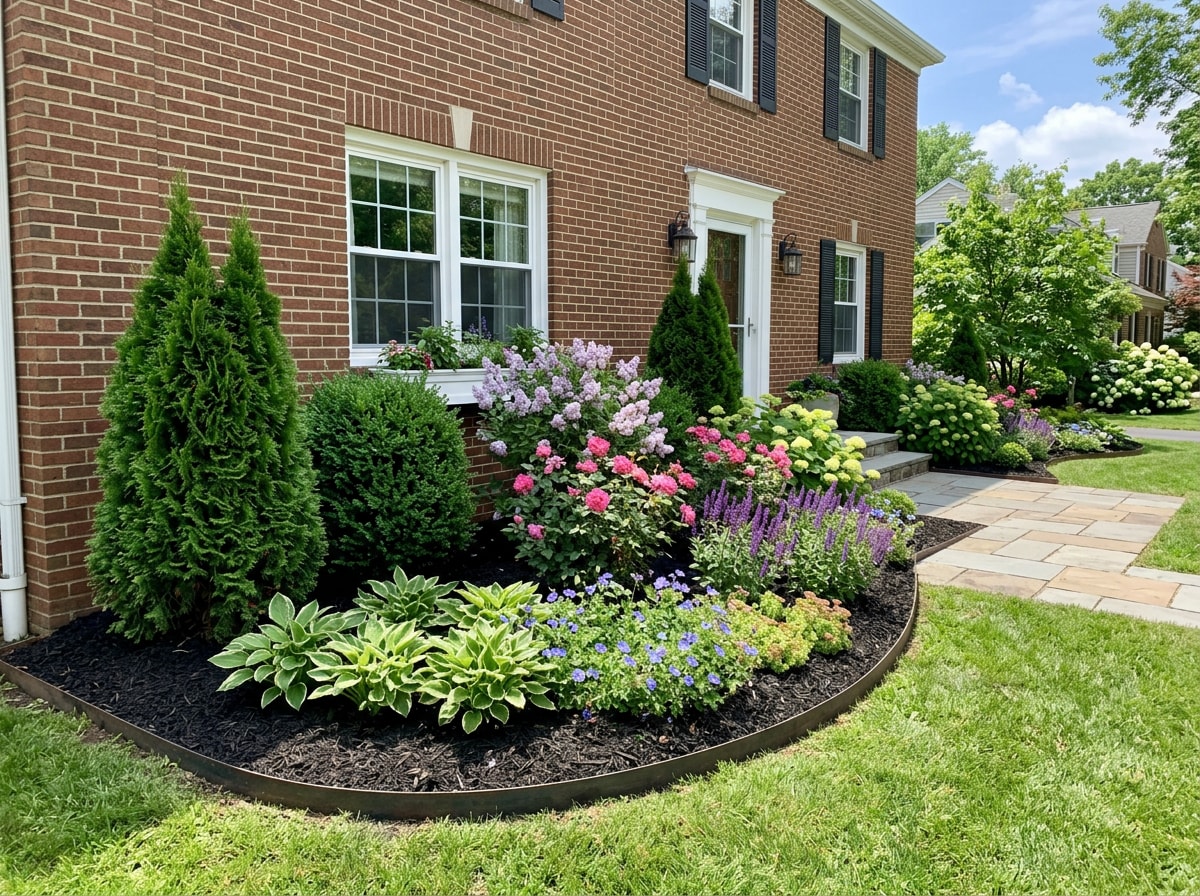
Skip the single row of matching shrubs along the house. A layered look, taller evergreens at the corners, mid-height shrubs filling the middle, ground cover along the front edge, reads as finished and holds up better over time.
The detail most homeowners miss is mature plant size. A shrub that looks right at planting can outgrow its spot within five years, which means more pruning, not less. Spacing for the mature footprint up front prevents that maintenance creep entirely.
Add Lighting That Needs Almost No Upkeep
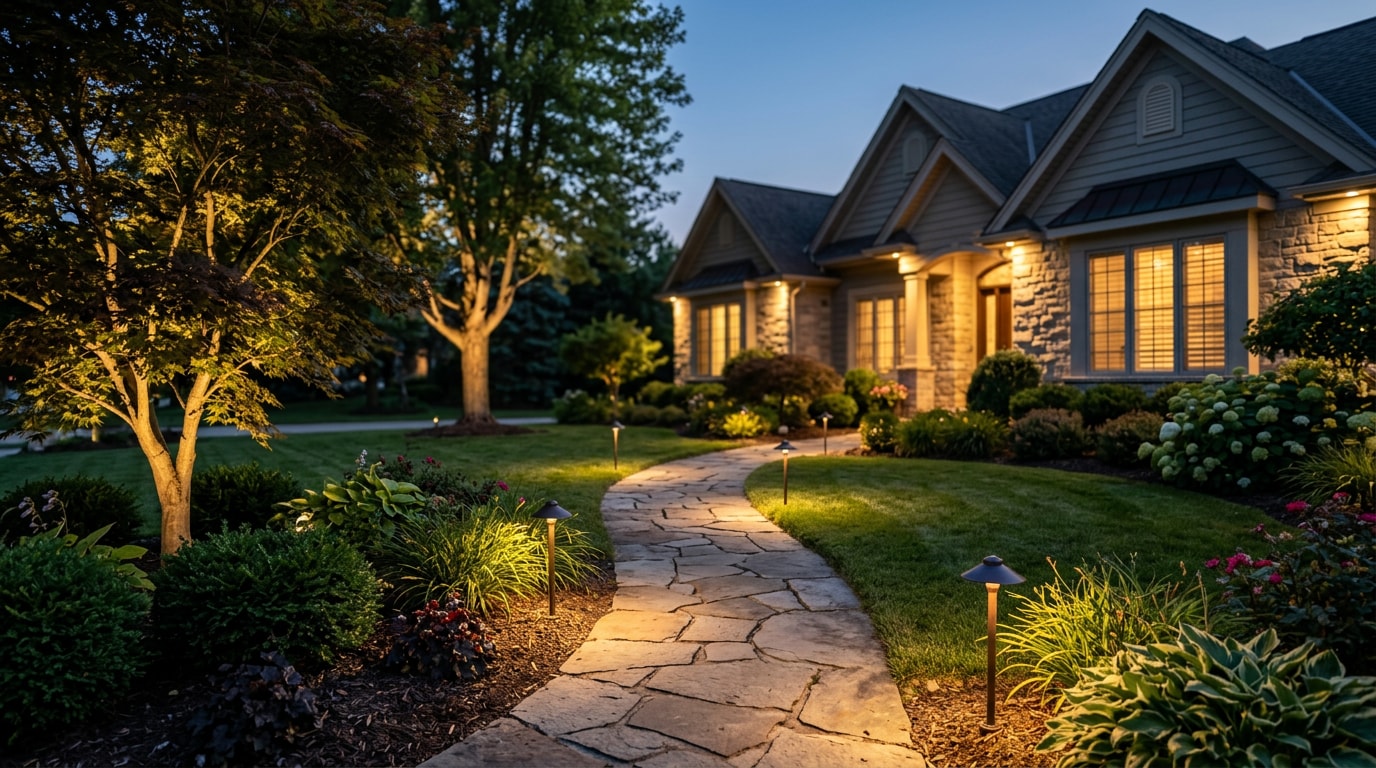
Low-voltage LED fixtures highlight a walkway or planting bed after dark without the bulb-changing and rewiring that older halogen systems require. For a front yard that's already low-maintenance during the day, well-placed outdoor LED lighting installation extends the curb appeal into the evening with minimal added upkeep. A garden lighting design plan can tie fixtures into the layered beds instead of treating lighting as an afterthought.
Native Beds and Structural Upgrades That Age Well Here
Native Perennial and Pollinator Beds
A front bed built around native perennials needs less water and fewer inputs once established, because the plants are already adapted to local rainfall and soil. Purple coneflower, black-eyed Susan, and bee balm carry midsummer color, little bluestem adds fall texture, and feather reed grass holds structure through winter.
Native plants are adapted to the environmental conditions in which they evolved, so when grown in their home region they're often less likely to suffer from pests or typical weather than many ornamentals , according to the Xerces Society. That matters for a yard you don't want to babysit every weekend.
Retaining Walls and Raised Bed Edging
Where a yard needs structure, a slope, a raised bed, a grade change near the driveway, the material choice affects both looks and upkeep. Dry-stacked limestone or fieldstone integrates naturally with the landscape, while segmental concrete block costs less and holds up just as durably, though it reads as more constructed.
Retaining walls above a certain height, and any new outdoor electrical circuits for lighting, typically require a permit from Liberty Township's building department, so it's worth a quick call before breaking ground. A hardscape installation specialist can recommend which material fits a given budget and slope.
Ideas for Sloped and Shady Front Yards
Low terraced walls turn an awkward, hard-to-mow slope into level, plantable beds, which is a common fix in Liberty Township's rolling-terrain subdivisions where front yards often pitch down from the house toward the street. Terraces prevent erosion by shortening a long slope into a series of shorter, more level steps, which lets heavy rain soak into the soil rather than run off , per the USDA Natural Resources Conservation Service. Shorter walls are manageable DIY projects, but taller walls need proper engineering for drainage and frost depth, which is where professional installation earns its cost.
Shady slopes add erosion risk on top of mowing difficulty, since grass thins out under tree cover and bare soil washes during storms. Outdoor space maintenance service can catch early erosion signs before a slope needs major regrading.
Choosing the Right Combination for Your Yard
The right mix depends on whether you're starting fresh or fixing an existing yard. A blank-slate lot often does well with a stone walkway, layered foundation beds, and one specimen tree as an anchor point. An established yard usually needs more targeted fixes, a retaining wall for a drainage problem, or native beds replacing tired, overgrown shrubs.
Not every low-maintenance idea carries the same long-term workload:
| Front Yard Feature | Long-Term Maintenance Level |
|---|---|
| Native perennial beds | Low once established |
| Ground cover / reduced turf | Low |
| Stone hardscape (paths, dry creek beds) | Very low |
| Retaining walls | Very low |
| LED landscape lighting | Very low |
| Layered foundation shrubs | Low to moderate (pruning) |
| Seasonal annual color rotations | High |
Native beds, ground covers, and stone hardscape settle into a low-upkeep routine within a season or two. Seasonal color rotations and heavily layered annual plantings look great but demand consistent hands-on attention all year. Weighing that tradeoff upfront saves a lot of frustration later. For a plan tailored to your yard, a free estimate is the fastest way to get specifics for your property.
Our crew at Nitescapes Cincy includes Ohio Certified Nursery Technicians who have spent recent seasons regrading, replanting, and relighting front yards throughout Liberty Township, from Wetherington to Four Bridges, so the drainage and plant notes above come from actual callbacks, not a catalog. If you're weighing turf reduction against a full redesign, see our homepage for the full range of landscaping and lighting services we bring to these projects, and our guide on aeration and overseeding timing if you're keeping some lawn and want it healthier with less input.
FAQ
What are the best plants for front yard landscaping in Ohio?
Knockout Rose, Crape Myrtle, and Muhly Grass are reliable picks for Ohio's growing conditions and need minimal upkeep once established. They pair well with the deer-resistant, Zone 6a shrubs and native perennials covered in the plant palette above.
How much does front yard landscaping cost in Ohio?
As a general reference, a starter front yard project typically runs $500 to $2,000, a moderate redesign $2,000 to $7,000, and a premium project with hardscape and lighting $7,000 or more. These are broad statewide ranges, not Liberty Township-specific quotes. Soil conditions, slope, and material choices all move the number, so a free local estimate is the only way to get an accurate figure for your property.
When should I plant front yard landscaping in Ohio?
Spring (March to May) and fall (September to October) are the best planting windows. Summer plantings often need supplemental watering during dry stretches in July and August, especially in beds still establishing root systems in clay soil.
What trees work best in Liberty Township front yards?
Crape Myrtle, Japanese Maple, and Redbud are strong choices. Crape Myrtle brings summer flowers and fall color, Japanese Maple works well as a standalone focal point near an entry, and Redbud offers an early spring bloom with a more native-leaning plant list.
Do I need a permit for a retaining wall or lighting project in Liberty Township?
Often, yes. Retaining walls above a certain height and any new outdoor electrical circuits for landscape lighting typically require a permit from the township's building department. Check current requirements before starting a wall, patio, or wired lighting project, or ask your contractor to confirm during the estimate.