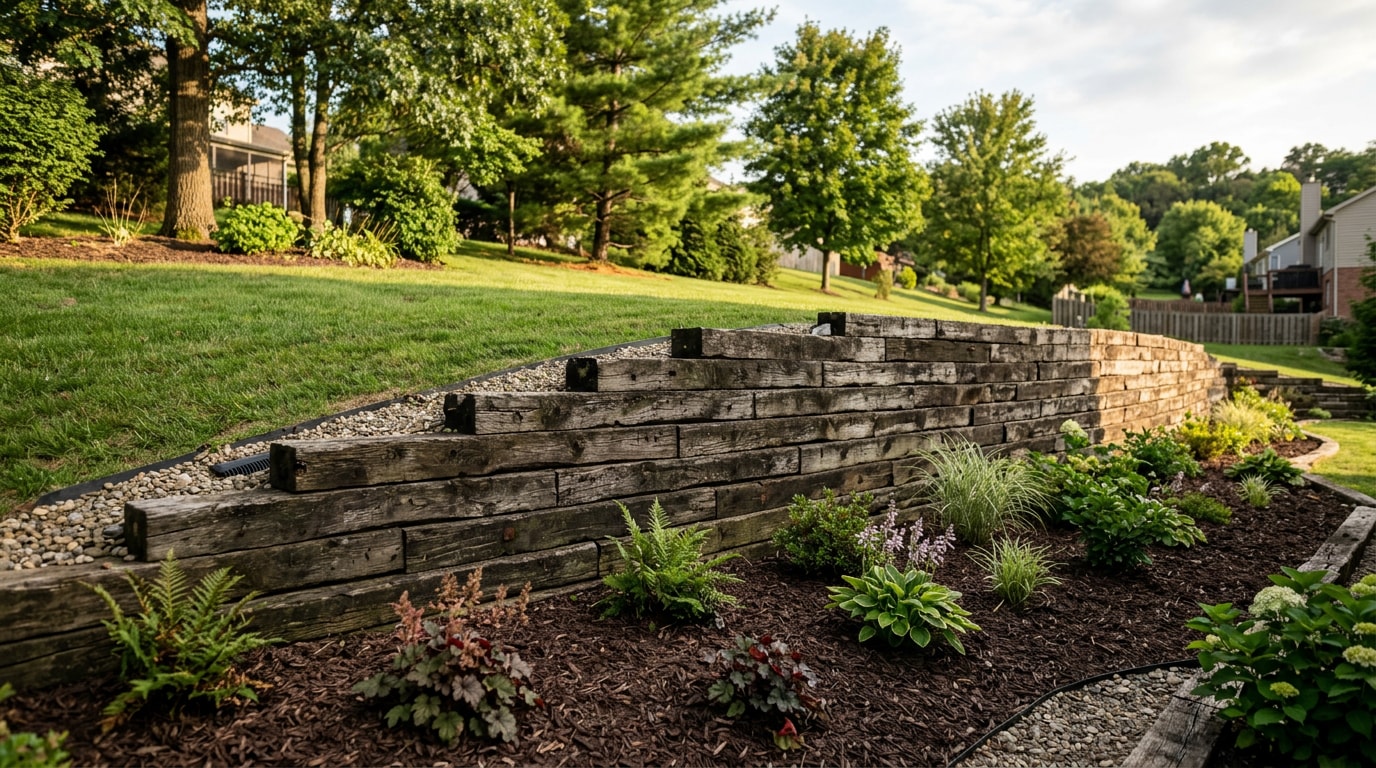
Railroad ties for landscaping in Cincinnati, OH can save money and add rustic character to a yard, but the city's clay soil, hillside lots, and specific permit rules decide whether a tie wall holds up or fails early. This guide covers suitability, permits, installation, local failure patterns, and real 2026 costs, so you don't repeat the mistakes behind so many aging tie walls around town.
Are Railroad Ties Right for Your Cincinnati Landscaping Project?
Before ordering a truckload of ties, confirm the material actually fits your project. Railroad ties aren't a universal landscaping product. The right call depends on project type, site conditions, and how much contact people, pets, or food crops will have with the wood.
Good-Fit and Poor-Fit Projects
Railroad ties work well for:
- Low borders and rustic garden edging
- Simple steps
- Modest grade changes of a foot or two, where failure is cosmetic rather than dangerous
They're a poor fit for:
- Tall retaining walls
- Heavy structural loads
- Raised vegetable beds or play areas, where safety and food-contact concerns outweigh the rustic look
In a hilly city like Cincinnati, OH, that distinction matters. Steep lots in neighborhoods like Clifton, Price Hill, or Mount Adams often tempt homeowners toward taller walls. That's exactly where clay-soil slopes put the most pressure on a material that was never engineered for structural retaining. Reserve ties for smaller grade changes, and use garden borders or raised beds only where food contact isn't a concern.
Handling, Contact, and Upkeep
Railroad ties are heavy, bulky, and awkward to move. Plan for truck access and extra hands before delivery day. Handling them usually means wearing gloves, since splinters and surface residue are common even on newer stock.
Upkeep is ongoing, not a one-time task. Expect periodic inspection for rot, shifting, and insect activity. Reclaimed ties with an unknown treatment history should stay away from edible beds, play areas, and anywhere people have frequent skin contact, since you can't always confirm what was used to treat them.
Planning and Permits for a Railroad Tie Wall in Cincinnati
Moving from "should I?" to "how do I start?" takes more steps here than in a flat, sandy-soil market. Permits, site assessment, and material choice all interact with local clay soil and freeze-thaw conditions.
Cincinnati's Retaining Wall Permit Rules
Cincinnati's Department of Buildings & Inspections does not require a permit for residential retaining or garden walls when the grade change is 48 inches or less, measured from the bottom of the footing to the top of the wall, as long as the wall sits at least five feet from any adjoining building or lot line . Walls inside a Hillside District follow additional standards under Chapter 1433 of the Zoning Code , which covers much of the city's steep terrain. Where a footing is required, it must be buried at least two feet six inches below finish grade at the face of the wall .
Don't rely on secondhand numbers for your project. Confirm current thresholds, setbacks, and footing depth directly with the City of Cincinnati's retaining wall informational handout before you dig.
If you're unsure whether your project needs review, a Cincinnati landscaping team can usually tell you quickly based on your wall's height and location.
Site Assessment and Design Layout
Start by measuring the wall's angle and length with a string line and spirit level. Then walk the slope to note drainage paths, soil type, and nearby structures like fences, trees, or utility lines.
A proper site assessment catches problems before they become expensive mid-project surprises, like a hidden low spot that collects runoff. Design layout should account for slope grading on both sides of the wall, not just the visible face. Steeper grades usually call for shorter wall sections or terracing rather than one long run.
Choosing the Right Materials
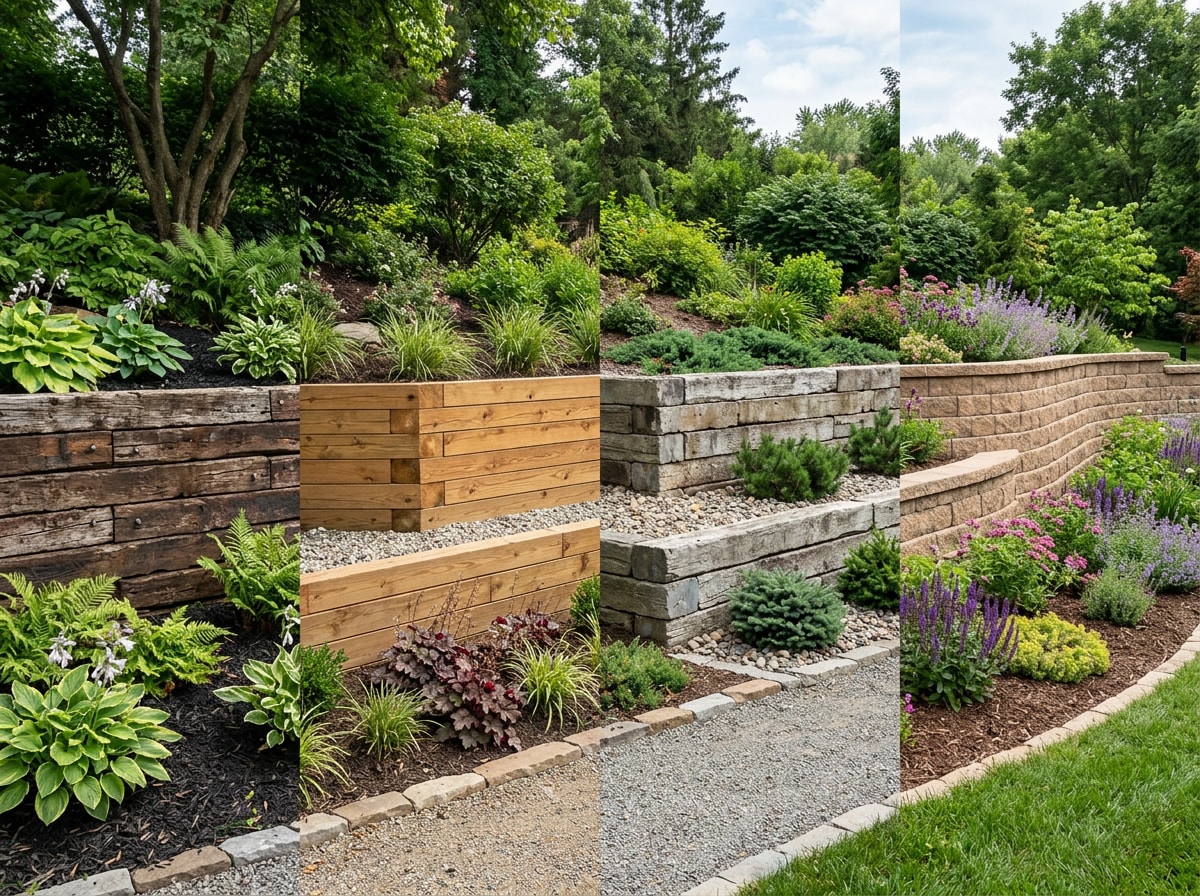
Railroad ties aren't the only option, and they're not always the best one. Timber ties, concrete sleepers, and segmental block each behave differently in Cincinnati's heavy clay soil and freeze-thaw cycles, so it's worth comparing before you commit.
| Material | Typical Lifespan | Est. 2026 Cost per Linear Ft. | Maintenance | Clay/Freeze-Thaw Suitability |
|---|---|---|---|---|
| Railroad ties (reclaimed) | 15–25 years | $18–$30 | Moderate–high | Fair; prone to shifting without drainage |
| Landscape timbers (new) | 10–20 years | $20–$35 | Moderate | Fair; rot risk in wet clay |
| Concrete sleepers | 40+ years | $35–$55 | Low | Good |
| Segmental block | 30–50 years | $25–$45 | Low | Very good |
Railroad ties vs. timber comes down to cost and look versus longevity. Concrete sleepers and segmental block cost more upfront but tend to handle Cincinnati's wet winters and clay expansion better over time. Before buying ties, confirm grade, moisture content, and treatment type; a supplier should tell you whether ties are rated for ground contact. If you're comparing contractors as well as materials, our guide to hardscapers near Mariemont, OH walks through what a full-scope patio, wall, and outdoor living quote should include.
Tip: Start with a Level Trench and Compacted Base
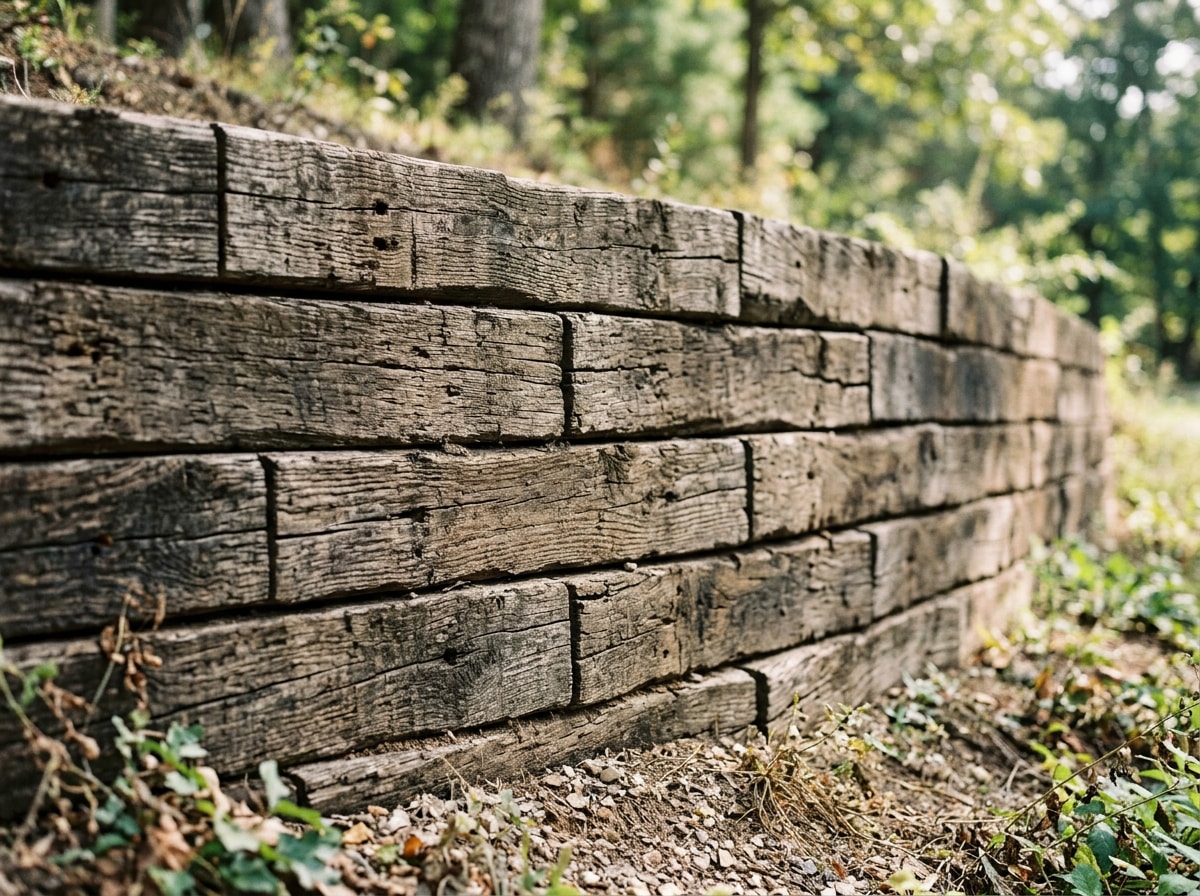
Every successful tie project starts below grade, not above it. For decorative edging, a few inches of compacted base material is usually enough. For anything load-bearing, plan a deeper trench with a thicker gravel base and more aggressive compaction.
Skipping this step is the single most common reason ties shift, lean, or gap over time. An uneven or uncompacted foundation lets moisture collect under the first course, which accelerates rot and settling. Taking an extra afternoon to get trench depth and compaction right pays off for years.
Tip: Stagger the Joints When You Stack Ties
Stack railroad ties the way a bricklayer stacks bricks, offsetting the seams between courses rather than lining them up vertically. Staggering joints distributes weight and pressure across more contact points, which meaningfully improves stability.
This applies whether you're stacking two courses for a planter or building a multi-course wall. Vertically aligned seams create weak points that are more likely to separate under soil pressure or freeze-thaw movement.
Idea: Build a Retaining Wall to Terrace a Slope
Terracing turns one steep, hard-to-use slope into several flatter, plantable levels, a practical fix for Cincinnati's many hillside backyards. Instead of one tall wall fighting the full grade change, multiple shorter walls spread the load and are easier to keep within code.
Keep each wall section to roughly four feet or under where possible, and use deadman anchors, horizontal ties set back into the slope, to resist outward pressure on taller or longer runs. On steeper backyards, two or three shorter terraced walls are usually more stable and less expensive to engineer than one tall one.
Once a terraced wall is in, it also opens up natural spots for low-voltage lighting along the steps and planting pockets. Our hardscape lighting design service covers how to light a new terrace safely for nighttime use.
Tip: Never Use Creosote-Treated Railroad Ties Near Edible Garden Beds
The EPA regulates creosote as a wood preservative pesticide, and every currently registered creosote product is classified as Restricted Use . In practical terms, there are no registered residential uses of coal tar creosote or creosote-treated wood , even though many older railroad ties already in circulation were treated with it decades ago.
This matters more than it might seem for older reclaimed ties, since many were treated under looser standards than apply today. If you're repurposing salvaged ties, keep them to non-edible uses: borders, steps, or decorative edging away from food crops. See the EPA's reregistration eligibility decision for creosote for the full restricted-use rationale.
Why Railroad Tie Walls Fail Faster in Cincinnati Than Almost Anywhere Else
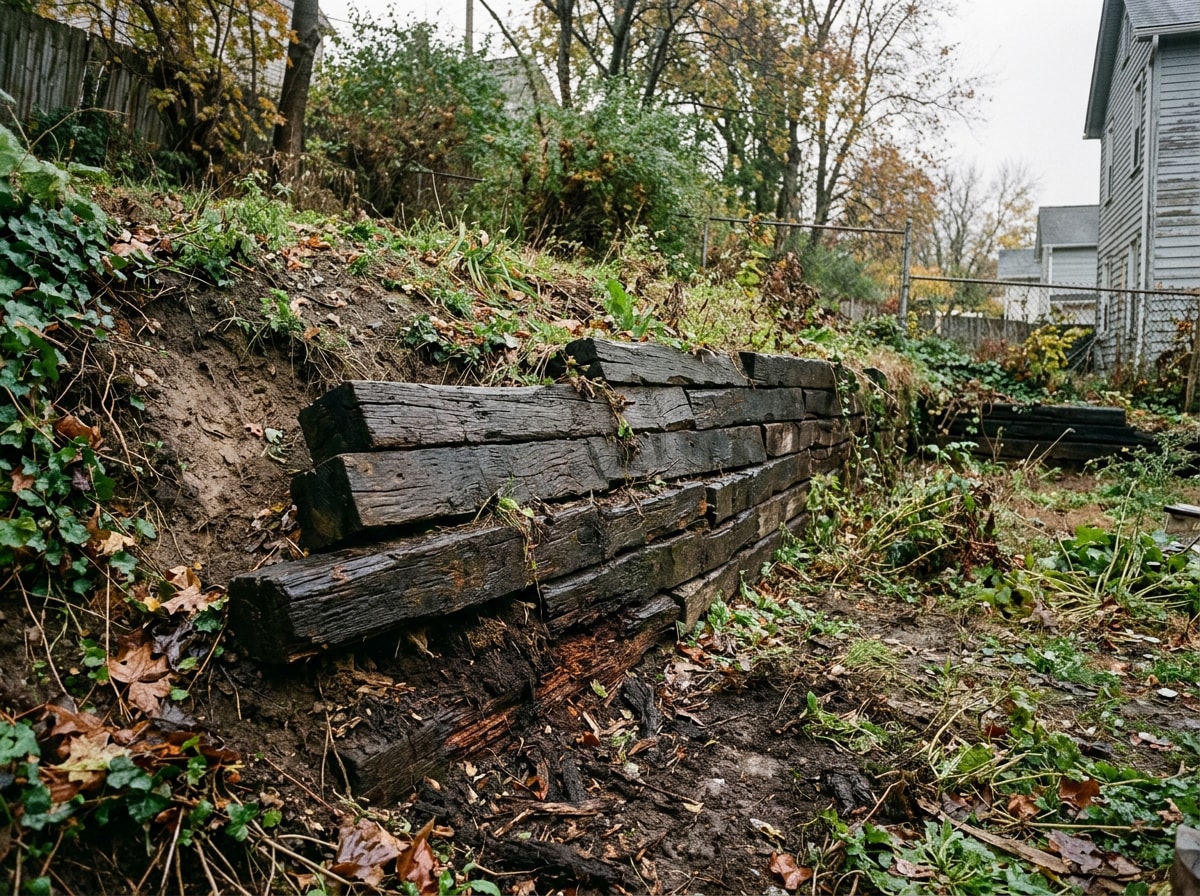
Many of the railroad tie walls still standing around Cincinnati went in during the 1980s and '90s, and a lot of them are reaching the end of their usable life at the same time.
In our own wall replacement projects across Hyde Park, Mount Lookout, and Clifton, we've pulled out ties that looked solid on the outside but had turned to wet pulp in the bottom course. That's the pattern worth remembering: a wall's surface condition tells you very little about what's happening underground.
Hamilton County's own soil mapping explains part of why. Much of the Cincinnati area sits on moderately fine textured soils and Urban land on lacustrine terraces and basins, part of the Markland-Urban land-Patton soil association , soils that expand when saturated and contract as they dry. That movement puts constant pressure on buried ties and anchors. Over enough freeze-thaw cycles, it loosens deadman anchors and opens gaps between courses. Ohio EPA's soil mapping for the Cincinnati area documents these units directly , which helps explain why walls built the same way last longer in drier, sandier parts of the country. See the Ohio EPA's Hamilton County soil background report for the underlying data.
How Railroad Tie Walls Are Replaced in Cincinnati: The Process from Demo to Final Grade
Replacing a failing wall generally follows a predictable sequence:
- Excavate to a footing depth that accounts for Cincinnati's clay soil and local frost line
- Remove old ties, including proper disposal if creosote-treated
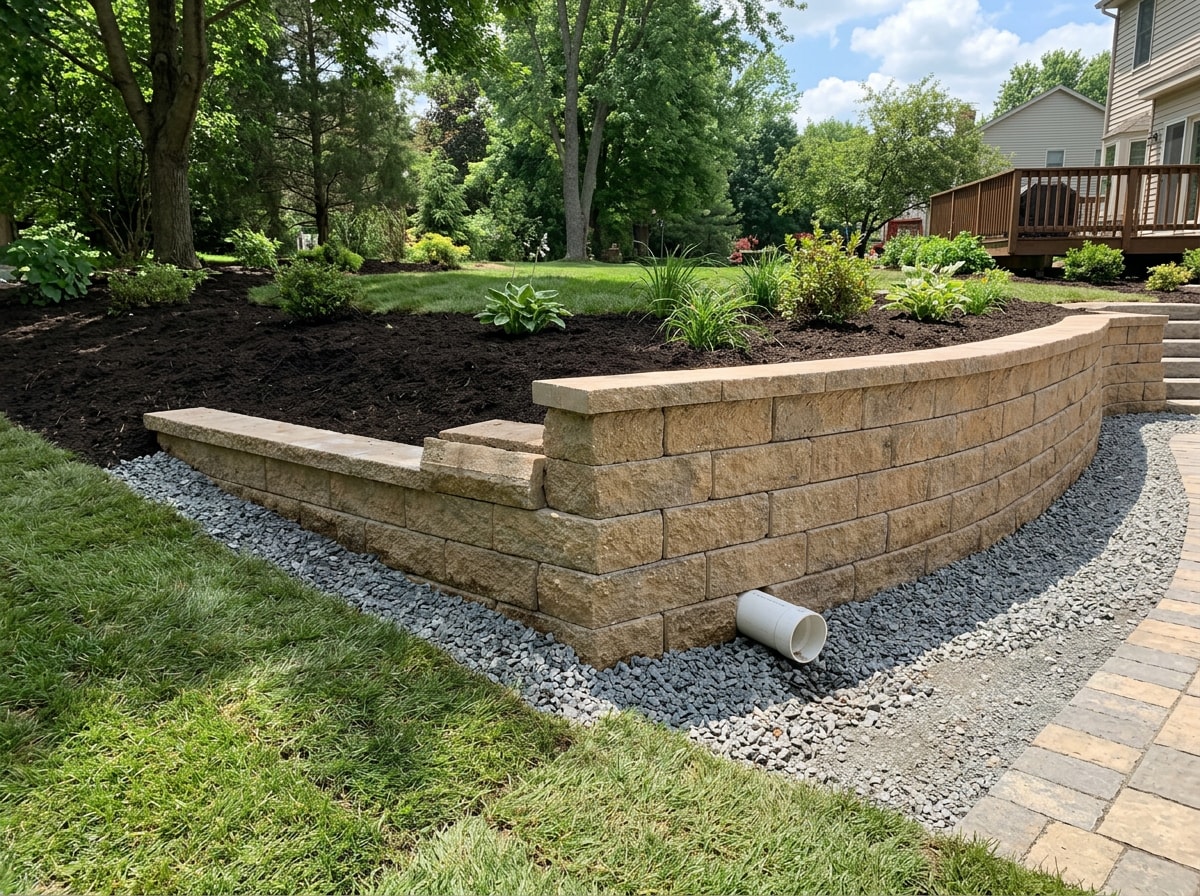
- Install a compacted gravel base along with perforated drain pipe to manage water pressure behind the new wall
- Rebuild using segmental block, poured concrete, or natural stone rather than new railroad ties
These replacement materials hold up better long-term against the same soil and moisture conditions that doomed the original wall. Drainage work during this stage matters as much as the wall material itself. A wall without proper drainage is likely to repeat the same failure pattern within a decade or two. A hardscape installation team typically handles this excavation-to-drainage sequence as one coordinated job rather than a patchwork of separate trades.
Railroad Tie Wall Cost in Cincinnati: What to Expect in 2026
As of 2026, replacing or building a retaining wall in the Cincinnati area typically runs somewhere between $35 and $75 per square foot, though the final number depends heavily on material choice, wall height, and site access. That range usually covers demolition of the old wall, disposal of creosote-treated material, a compacted gravel base, drainage installation, and the new wall construction.
Several variables push costs higher:
- Permits and engineering drawings for taller or tiered walls
- Extensive drainage upgrades for chronically wet yards
- Difficult site access that slows excavation
Getting a written, itemized estimate is the only reliable way to know what a specific project will cost. Get a free estimate based on your yard's actual conditions before committing to a material.
What Cincinnati Homeowners Should Know Before Hiring a Railroad Tie Wall Contractor
Before hiring anyone, verify that the contractor is licensed and insured, and ask about experience specifically with retaining walls in clay soil conditions, not just general landscaping. Credentials matter more here than a polished sales pitch.
Get two or three written estimates and make sure each one covers the same scope: demolition, disposal, drainage, and backfill. That way you're comparing true apples to apples rather than one contractor's bare-bones quote against another's full-service price. A locally established landscaping and hardscape team should be able to walk you through its process and provide references on request.
FAQ
How Tall Can a Railroad Tie Retaining Wall Be in Cincinnati Without a Permit?
A retaining or garden wall doesn't need a permit in Cincinnati when the grade change is 48 inches or less from the bottom of the footing to the top of the wall, and the wall sits at least five feet from a building or lot line. Taller or closer walls need a permit and often an engineer's design, so most homeowners keep single-line tie walls under four feet and build shorter terraces instead of one tall wall.
Are Railroad Ties Safe and Legal to Use for Landscaping?
Reused creosote-treated railroad ties are legal in many areas for non-edible, low-contact landscaping like borders or grade changes. Since creosote has no EPA-registered residential use, ties are restricted or discouraged near food crops, play areas, and water supplies. Some municipalities limit or ban their use outright, so check local rules before installing reclaimed ties.
How Long Do Railroad Ties Last in a Retaining Wall?
Most railroad tie walls last roughly fifteen to thirty years, depending on drainage, soil moisture, and installation quality. Ties can look solid on the surface while rotting from the inside, so age and hidden moisture often matter more than visible condition.
Do I Need a Permit for a Retaining Wall in Cincinnati?
Cincinnati doesn't require a permit for a retaining or garden wall that's 48 inches or less in height, measured from footing to top, and sits at least five feet from a building or lot line. Taller walls, walls closer to a lot line, or anything inside a Hillside District need a permit and usually an engineer's stamped design. Confirm specifics with Cincinnati's Department of Buildings & Inspections before you dig.
What's a Good Alternative to Railroad Ties for a Cincinnati Retaining Wall?
Segmental block and concrete sleepers cost more upfront than railroad ties but hold up better in Cincinnati's clay soil and freeze-thaw winters, often lasting 30 to 50 years versus 15 to 25 for reclaimed ties. If budget is the main driver, new landscape timbers are a middle-ground option, though they still face the same rot risk as ties in wet clay.