Security door stoppers in Indian Hill, OH give homeowners an affordable way to brace a door against kicks, pries, and shoulder hits without touching the existing lock. Wedges, bars, and floor-mounted units each resist force differently, and picking the wrong one for an outswing French door or a sliding patio door leaves the exact gap you were trying to close. Here's how to match the hardware to the door, and what to pair it with for real protection.
What Is a Security Door Stopper?
A security door stopper is hardware that braces a door shut from the inside, built to resist someone pushing, kicking, or prying it open before they ever get to the lock.
That's a different job than a rubber or wall-mounted doorstop, which only holds a door open and offers no resistance to force at all. A security-rated version is engineered around forced-entry resistance; a standard doorstop is engineered around convenience.
During exterior lighting walkthroughs across Indian Hill's larger lots, we regularly see entry doors with no secondary barrier at all, just a deadbolt and a strike plate carrying the full load. A door stopper is a cheap way to change that math.
Types of Security Door Stoppers
Device choice depends on your door, hinged, sliding, or outswing, and how much protection you actually need.
Wedge & Portable Door Stoppers
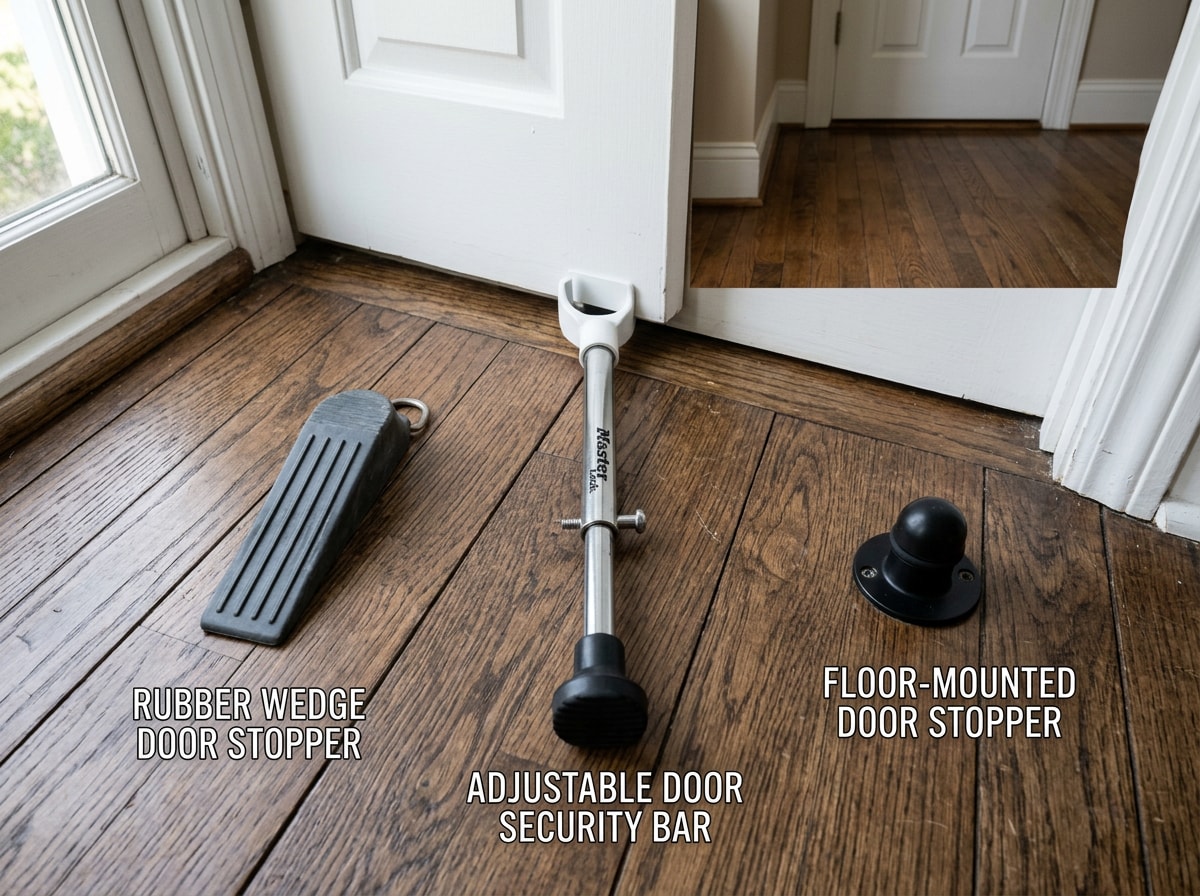
A wedge door stopper slides under the door and tightens with pressure as someone tries to push it open. It requires no tools, which makes it a favorite for renters, travelers, and short-term rentals. A rubber wedge is cheap and easy to pack, but it isn't a substitute for permanent hardware on a primary entry door.
Door Security Bars
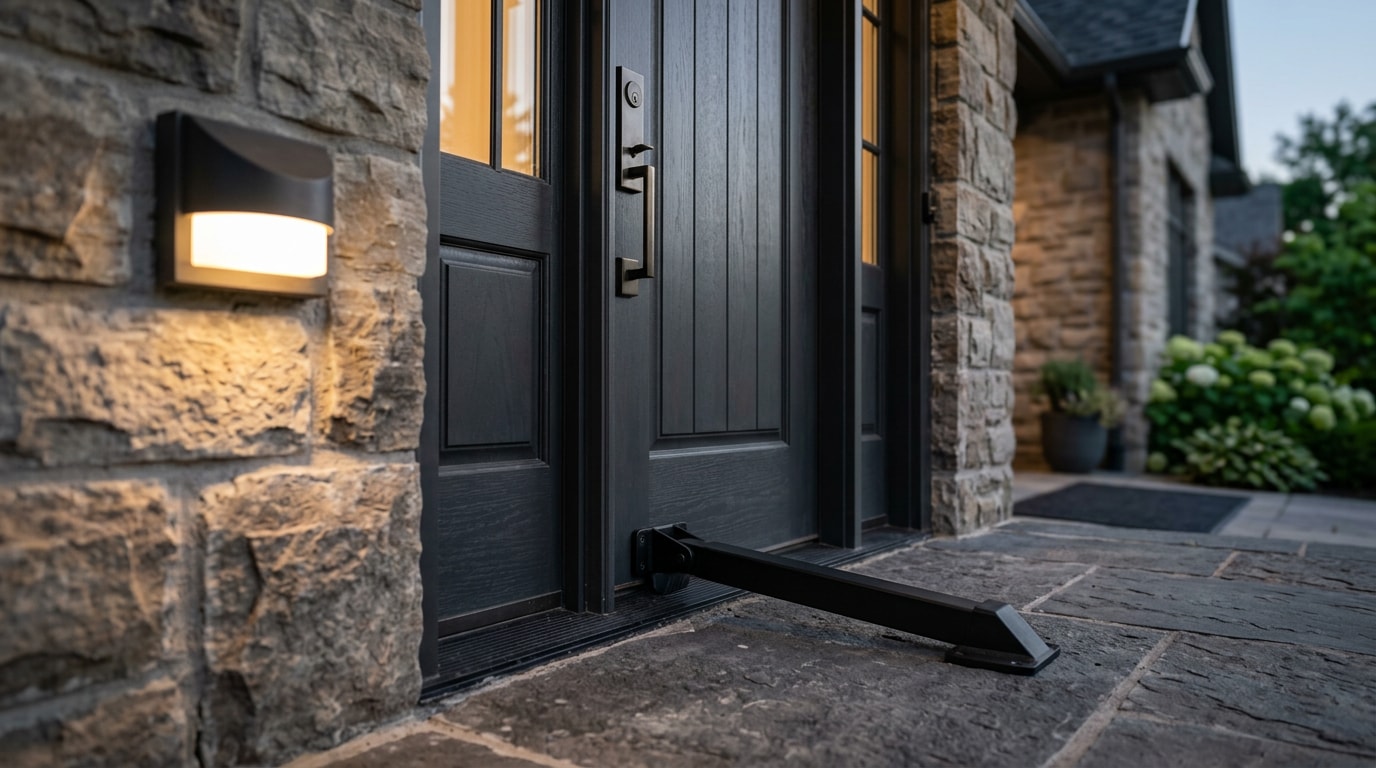
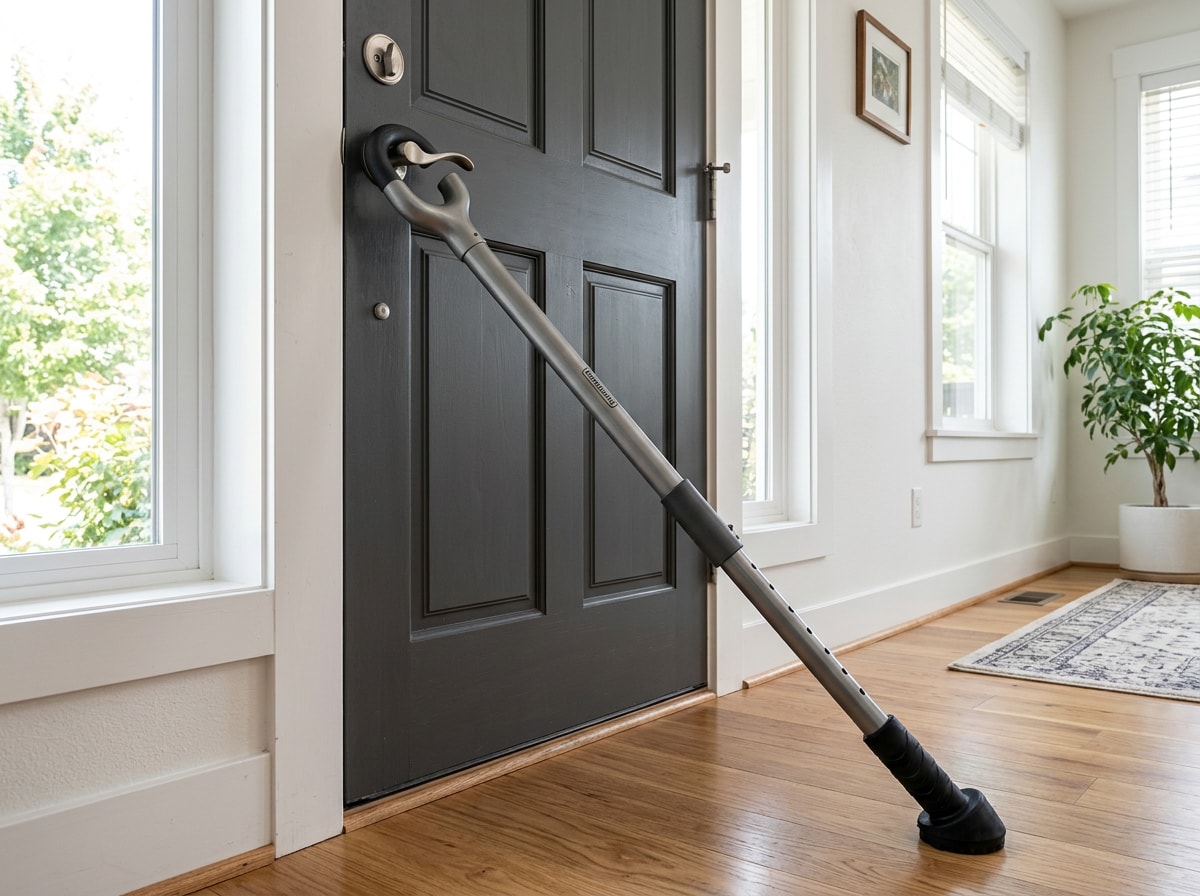
A door security bar braces diagonally between the door and the floor, transferring force from an intruder into the floor instead of into the door frame. This matters most on doors where the frame itself is already weak or has shifted over time. Bars work best on doors that don't need fast, frequent opening, like a side entry or a basement walkout.
Mounted & Electronic Door Stoppers
Floor-mounted and wall-mounted stoppers bolt into place for permanent resistance. Magnetic stops hold a door passively without blocking entry, and electronic models add a sensor that triggers a chime or alert if the door moves. A floor-mounted stopper suits anyone wanting a fixed, set-it-and-forget-it solution. Electronic versions suit anyone wanting a smart-home style alert layered on top of the physical barrier.
| Type | Best For | Typical Cost Range | Tools Needed |
|---|---|---|---|
| Wedge / portable | Renters, travel, temporary use | $5–$15 | None |
| Door security bar | Side doors, weak frames, basements | $20–$45 | None to minimal |
| Floor-mounted | Primary entry doors, permanent setups | $25–$60 | Drill, basic install |
| Electronic / alarm | Owners wanting a sensor alert | $30–$100+ | Basic install, batteries |
How Do Security Door Stoppers Work?
Security door stoppers work by bracing against the floor or frame to add friction and resistance, creating a secondary barrier that doesn't depend on the lock itself. That resistance buys time and discourages a casual attempt.
It isn't the same as the testing a certified strike plate goes through. The Builders Hardware Manufacturers Association is the only organization accredited by ANSI to develop and maintain performance standards for locks, closers, exit devices, and other builders' hardware , and that testing covers cycle counts, impact resistance, and strength under repeated force. You can review the ANSI/BHMA standards for door hardware to see what "forced-entry resistance" actually measures in a lab. Most consumer door stoppers aren't tested against that benchmark, which is exactly why they're a supplement to a solid lock, not a replacement for one.
Why Door Stoppers Matter for Indian Hill Homes
Doors are still where most forced entries happen. Damaging or removing a door was the most common type of entry in forcible and attempted forcible entry burglaries , according to Bureau of Justice Statistics research on household burglary victimization. That's the exact failure point a door stopper is designed to address.
Indian Hill's wooded, multi-acre lots add a wrinkle: long driveways and heavy tree cover mean a side or back door can sit out of sight from the street for minutes at a time. A stopper buys exactly that kind of time on doors a passerby would never notice being tested.
The other draw is affordability. A stopper adds a layer of resistance for a fraction of the cost of a lock upgrade, and it works alongside your existing deadbolt instead of replacing it. Renters who can't legally swap locks still get real protection from a portable unit.
Choosing the Right Door Stopper for Your Door
Match the hardware to the door first, then worry about brand or style.
- Hinged doors suit bars and wedges equally well.
- Sliding doors need a track-blocking rod instead of a floor stopper, since there's no swing to brace against.
- Outswing doors are trickier. A bar or wedge braces an inward-swinging door against the floor, but it can't do the same job on a door that opens outward, so mounted or electronic options work better there.
- Older frames common in older Indian Hill homes may need floor-mounted hardware rather than a wedge, since a worn frame won't hold pressure the same way a tight, newer frame does.
One rule overrides all of this: never install a barricade-style device on a door that doubles as a fire exit without checking that it still opens instantly from the inside. Hardware on egress doors must operate without any key, tool, special knowledge, or effort beyond that required for normal operation , per the life-safety code referenced by most local fire codes. You can review the NFPA Life Safety Code requirements before installing anything on a bedroom or basement exit door.
If you're not sure which doors on your property qualify as egress points, our service area page for Indian Hill, OH outlines the kind of property walkthrough we do before recommending any exterior changes.
Pairing a Door Stopper With a Layered Security Plan
A door stopper is one layer. It works best stacked with the parts of home security that actually fall under our trade: light and sightlines.
Motion-activated exterior lighting at entry doors removes the cover darkness gives an intruder testing a door, and it's often cheaper to add than most people expect. If you want that assessed alongside your current hardware, our outdoor lighting consultation looks at every entry point on the property, not just the front door.
Overgrown shrubs next to a side or back door do the opposite of a stopper, they give an intruder cover instead of taking it away. Routine landscape maintenance that keeps sightlines open to doors and low windows closes that gap without any new hardware at all.
For homeowners comparing door-level security options across our service area, our guide on home security doors in Madeira, OH covers the reinforced-door side of this same layered approach.
Ready to see where your property's lighting and landscaping leave a door exposed? Get a free estimate and we'll walk the exterior with you before you spend a dollar on hardware.
FAQ
Can a door stopper prevent forced entry?
A door stopper adds real resistance and can slow or deter an intruder, but it can't guarantee forced-entry prevention against someone determined and well-equipped. Pair it with a solid lock, not instead of one.
Which type of door stopper is best for security?
It depends on the door. A primary entry door usually calls for a floor-mounted or electronic unit; a side door or rental unit does fine with a bar or wedge.
Can you use a security door stopper on an outswing door?
Not a standard bar or wedge. Those brace against an inward swing. Outswing doors need a mounted or electronic stopper instead, since there's no inward motion to block.
Will a door stopper block my exit in a fire?
It can, if installed on the wrong door. Never put a barricade-style stopper on a bedroom, basement, or any door that serves as an emergency exit unless it releases instantly with one motion from the inside.
Are security door stoppers easy to install?
Most wedge and portable models need no tools at all. Bars and floor-mounted hardware involve a basic install, usually a drill and a few screws.
Do door stoppers require maintenance?
Check hardware tightness every few months, clean magnetic contacts, and replace worn rubber parts. If your stopper is part of a wider exterior security setup, our outdoor lighting consultation is a good time to have it looked at alongside your lighting. You can also start at our homepage to see the full range of exterior services we offer.