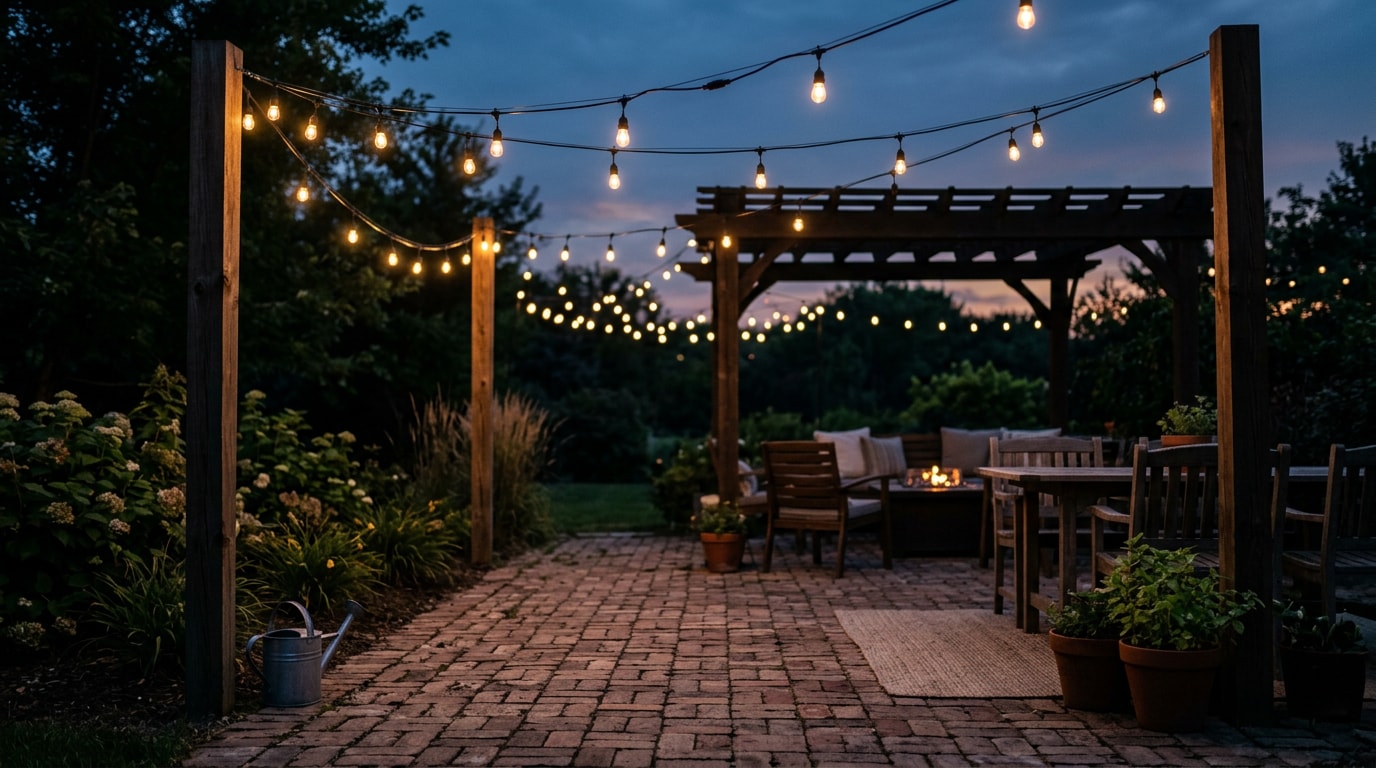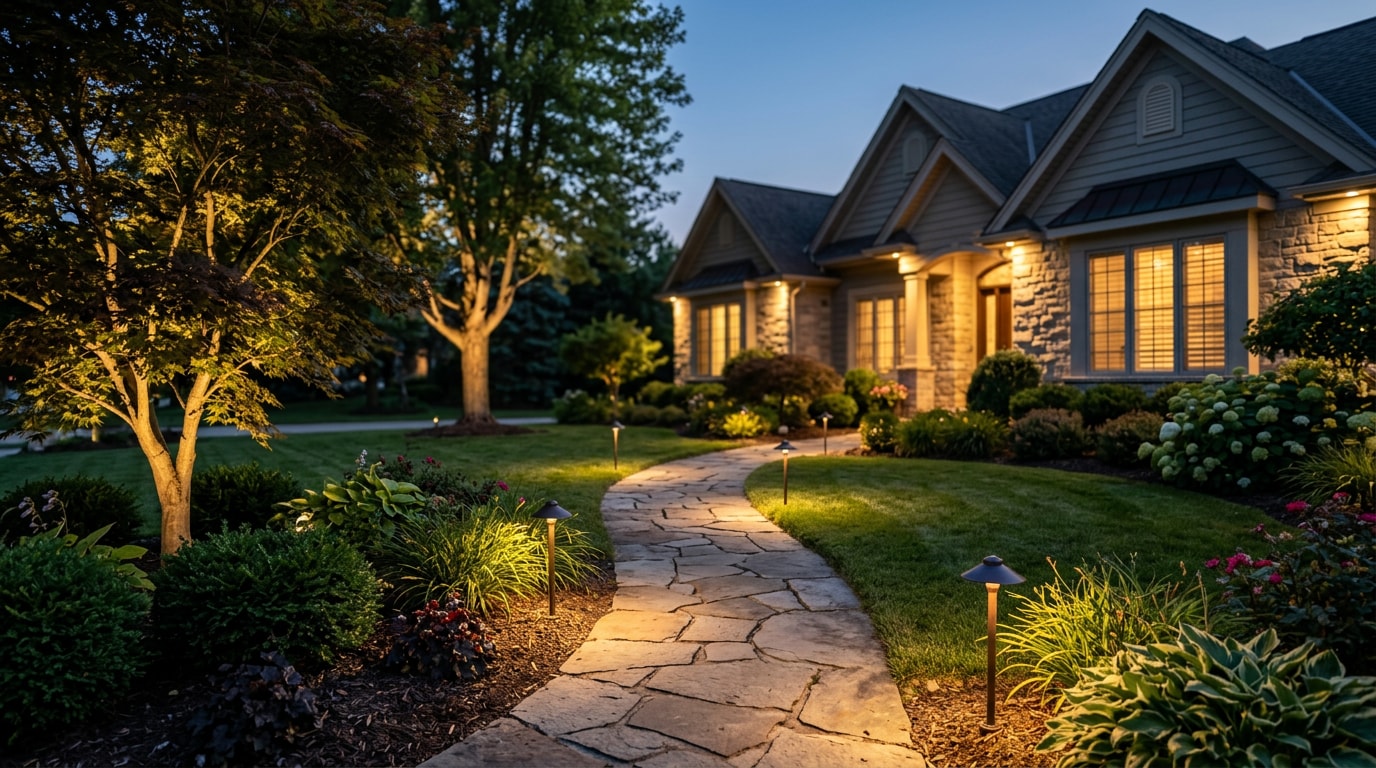
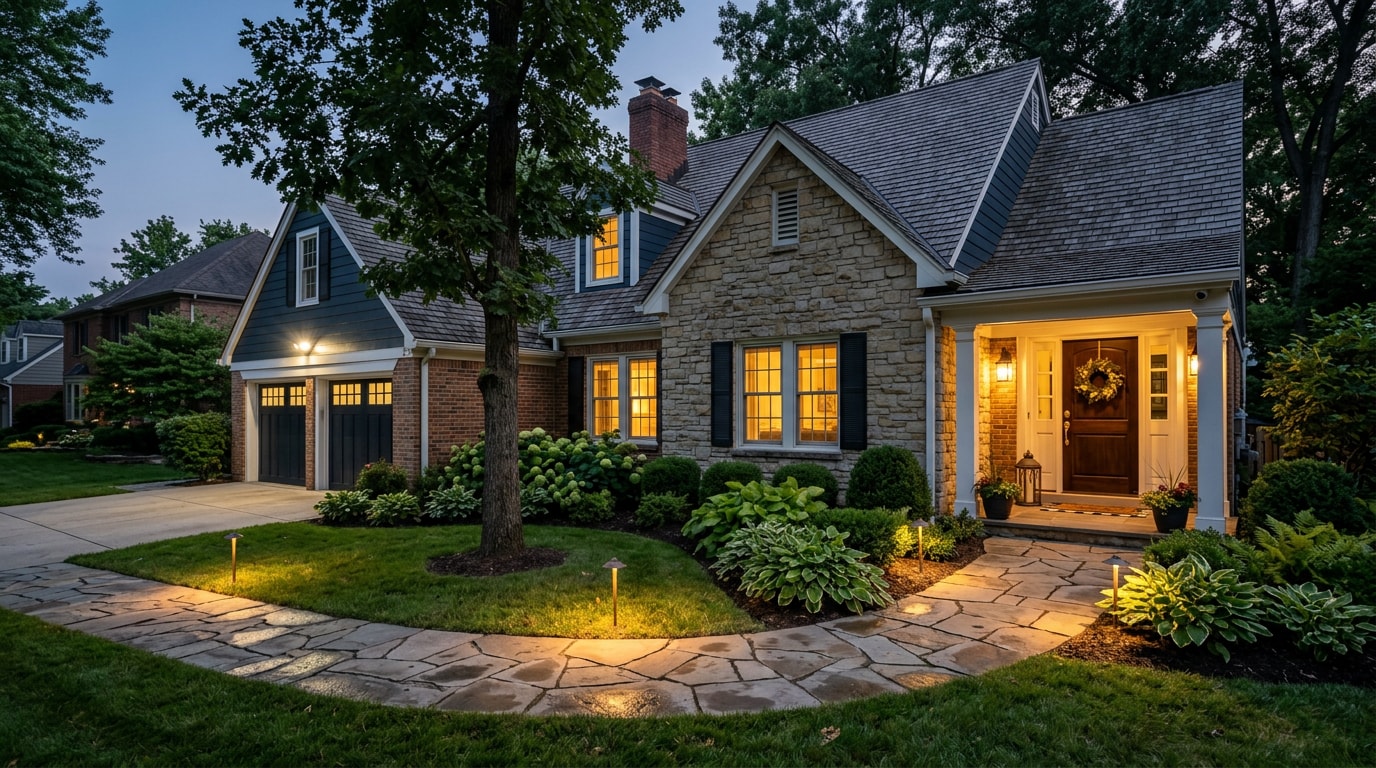
Custom home security in Liberty Township, OH works best when it's built around your actual property, not pulled from a shelf. A quarter-acre lot in a Union Centre subdivision has different blind spots than a wooded half-acre off Yankee Road. This guide walks through what a real custom build includes, the layer most alarm companies skip, and what it should cost.
Liberty Township Homes Don't Fit One Security Template
Liberty Township mixes dense new-build subdivisions, older farmhouses on acreage, and everything between. A packaged alarm kit assumes every house has the same number of doors, the same yard depth, and the same sightlines from the street. That assumption rarely holds up here.
A system built for a compact two-story near a cul-de-sac should look different from one built for a long-driveway property near Millikin Road with a detached garage and a tree line at the back of the lot. Walking the property first, instead of quoting from a generic floor plan, is what actually changes where sensors and cameras end up.
The Layer Most Security Companies Skip: Lighting and Sightlines
Here's what most alarm and camera companies won't tell you: electronics alone don't stop a break-in attempt from happening. They record it or alert you to it, which matters, but the research on deterrence points somewhere else first, at visibility.
This is the piece we focus on because it's our trade. Crime prevention researchers call this concept CPTED, or Crime Prevention Through Environmental Design, and lighting design sits at the center of it. Problem-oriented policing initiatives aimed at residential crime have repeatedly paired improved street and property lighting with other environmental changes, and many of those projects have leaned on CPTED principles to decide where that lighting goes.
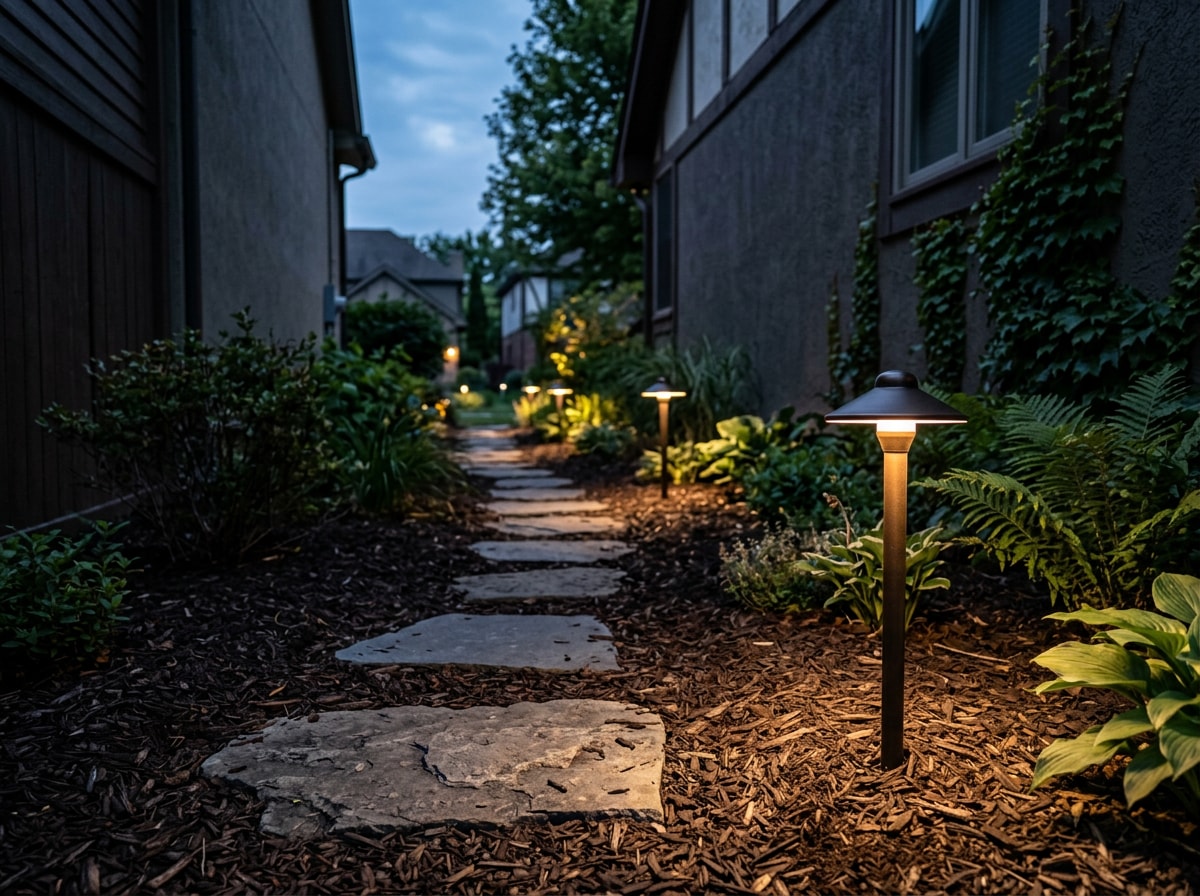
In walkthroughs across Liberty Township's newer subdivisions, we consistently find the same blind spot: the narrow side yard between two houses on a quarter-acre lot, dark enough that a motion sensor camera mounted on the front porch never catches it. A single well-placed fixture along that side path does more to eliminate that hiding spot than adding a second camera pointed at the same empty driveway.
A genuinely custom security plan treats lighting layout as part of the design, not an afterthought:
- Pathway and side-yard lighting removes the shadowed gaps between houses and fences that cameras tend to miss.
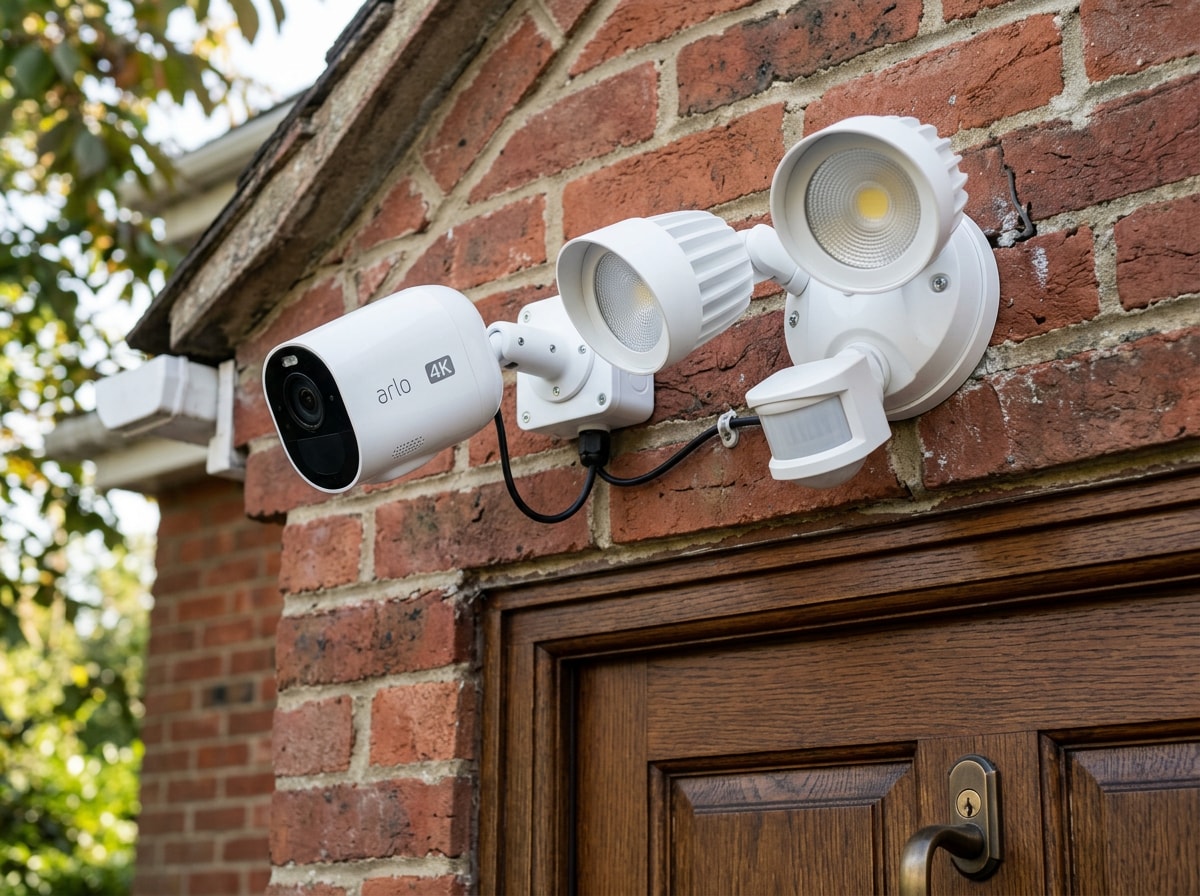
- Motion-activated floodlights at entry points work alongside door and window sensors instead of duplicating them.
- Downlighting near windows and low points of entry keeps those areas visible at night without glare that blinds your own cameras.
If your current plan is all electronics and no exterior lighting, you're missing a documented layer of deterrence. Our outdoor lighting layout planning service exists specifically to map these gaps before a single sensor gets mounted.
What's Actually in a Custom Security Package
A custom package is built device by device around your home instead of sold as a fixed bundle. You choose the sensors, cameras, and monitoring level your property actually needs rather than accepting whatever ships in the box.
Most builds start with three core devices:
- Door and window sensors on ground-floor entry points, flagging any opening while the system is armed.
- Motion detectors covering larger open areas like hallways and living rooms an intruder would have to cross.
- A video doorbell at the front entry for visual confirmation before you open the door.
Once those basics are covered, homeowners typically layer in:
- Cellular backup, which keeps the system connected if a storm or cut line takes out Wi-Fi or landline service.
- Two-way audio, letting you or a monitoring agent speak through a camera or panel in real time.
- Smoke and CO detectors, placed according to National Fire Protection Association guidance. The NFPA recommends installing at least one smoke detector on every level of the home, including the basement and attic, inside every bedroom, and outside each sleeping area.
- 24/7 professional monitoring, which routes an alarm to a staffed center that can contact emergency services within moments, even if you're asleep or unreachable by phone.
Custom vs. One-Size-Fits-All Packages
A standard package typically ships with a fixed number of door sensors, one camera, and a single monitoring plan, regardless of whether your home has three entry points or eight. That rigidity leaves gaps around less obvious openings like basement windows, side doors, or detached garages.
A custom build skips components you don't need and adds coverage where your layout demands it, often for a comparable overall cost.
Compare Home Security Package Tiers
Most local providers organize custom builds into three general tiers. The right one depends on lot size, entry points, and how exposed the property feels after dark.
| Tier | Typical Equipment | Monitoring | Rough Price Band | Best Fit |
|---|---|---|---|---|
| Essentials | Panel, 2-3 door/window sensors, 1 motion detector | Basic or self-monitored | $200-$300 | Smaller homes, condos, starter properties |
| Burglar Buster | Full sensor set, motion detectors, video doorbell, outdoor camera, path lighting | 24/7 professional monitoring | $300-$600 | Mid-size single-family homes |
| Life Safety | Everything above plus smoke/CO/water sensors, two-way audio, cellular backup, full exterior lighting layout | 24/7 professional + life safety dispatch | $600-$900+ | Larger lots, acreage properties, families |
A smaller home close to neighbors may do fine with Essentials. A larger new-build with a long driveway, a detached structure, and a family inside usually leans toward Life Safety, where the lighting layer carries more weight.
What Does a Custom Security System Cost?
Entry-level DIY kits from national brands commonly start in the $200-$300 range for basic equipment, with professional monitoring sitting separately at roughly $20-$60 a month depending on dispatch speed and features. Those numbers are general market reference points, not a quote, since your actual cost depends entirely on device count and camera quality.
Adding exterior lighting as part of a custom build typically adds a few hundred dollars for a basic pathway run, scaling up with fixture count and wiring distance. It's a smaller line item than most homeowners expect relative to what it closes off.
What Drives the Price Up or Down
- Device count — a two-sensor setup costs less than a ten-sensor system with multiple cameras.
- Sensor type — battery-powered sensors install faster; hardwired sensors cost more upfront but need less maintenance.
- Camera resolution — basic cameras versus 4K units with night vision shift the equipment total noticeably.
- Monitoring tier — self-monitoring, standard professional monitoring, and full life-safety dispatch each carry different monthly fees.
Is a Custom Security System Worth It?
Custom doesn't automatically mean more expensive. The value comes from paying for coverage you'll actually use instead of a bundle padded with components that don't match your home.
There's a secondary payoff too. Many insurers offer premium discounts for homes with monitored systems, and some of those discounts extend to documented exterior security upgrades. Industry guidance on trimming homeowners insurance costs notes that policyholders can usually get a discount of at least 5 percent for installing a smoke detector, burglar alarm, or dead-bolt locks, with larger discounts available for more comprehensive monitored systems. That's worth asking your agent about before you finalize a package.
Questions to Ask Before You Sign
Before committing to any installer, ask directly:
- Has someone physically walked your property, or is the quote based on a generic home profile?
- Which entry points are being prioritized, and why those specifically?
- Will the system integrate with smart-home devices you already own, like locks or thermostats?
- Does the proposal address exterior lighting and sightlines, or only electronics?
- How easily can devices be added later as your needs change?
Reviewing local property crime trends through the FBI's Crime Data Explorer can help put your specific risk in context before you decide how much coverage makes sense for your address. We also cover the broader question of whether monitored systems pay for themselves in our Hyde Park home security breakdown, which applies just as directly to Liberty Township households.
If you already have landscaping or hardscape work planned, it's worth coordinating that with your security lighting layout rather than running them as two separate projects. Our landscape lighting designer services and local landscaping guide for Liberty Township cover how those pieces fit together on a single property plan.
How We Approach a Custom Plan
A proper assessment starts outside, not with a catalog. We walk the lot at dusk, note where shadows fall against fences, garages, and side entries, and map that against where sensors and cameras would actually do the most good. That's the basis of our hardscape lighting assessment and outdoor lighting consultation, both of which feed directly into how we scope a security-focused lighting plan before any electronics get installed.
You can see examples of completed lighting and landscape work across our project gallery, and learn more about our full range of services on the NiteScapesCincy homepage.
Ready for a plan built around your actual property instead of a generic box? Get a free estimate and we'll walk your lot with you.
FAQ
Is a custom security system more expensive than a standard package?
Not necessarily. Because you only pay for the sensors, cameras, and monitoring level your home actually needs, a custom build often costs about the same as a standard package, sometimes less, while covering more of your actual risk points.
Does outdoor lighting really deter break-ins?
Lighting works by removing hiding spots and improving natural surveillance, a core principle in crime prevention research. It's not a replacement for sensors and monitoring, but combined with electronics it closes gaps that cameras alone tend to miss, especially in side yards and between structures.
Can I install my own security system, or do I need a professional?
A single wireless camera or sensor is easy to install yourself. A full custom system with multiple interconnected devices, cellular backup, and exterior lighting wired to work together is where professional installation prevents gaps and wiring issues down the road.
What's included in a custom home security package?
Most packages include a control panel, door and window sensors, at least one motion detector, and a monitoring plan. From there, homeowners add cameras, smoke and CO detectors, exterior lighting, and smart-home features based on their property.
Does a custom system include smart home integration?
Yes. Most custom builds connect with smart locks, lighting, thermostats, and garage door controllers, letting you manage security and convenience features from a single app.
How much does a custom home security system cost in Liberty Township?
Costs typically range from around $200 for a basic setup to $900 or more for a fully equipped life-safety system with exterior lighting and advanced monitoring. The final number depends on device count, camera quality, and your chosen monitoring tier. Request a free custom estimate to get exact numbers for your property.
About the Author: This guide was written by the lighting and landscape design team at NiteScapesCincy, a family-owned company serving Liberty Township and the greater Cincinnati area with hands-on property walkthroughs and custom exterior lighting design. Questions about your property? Contact our team.