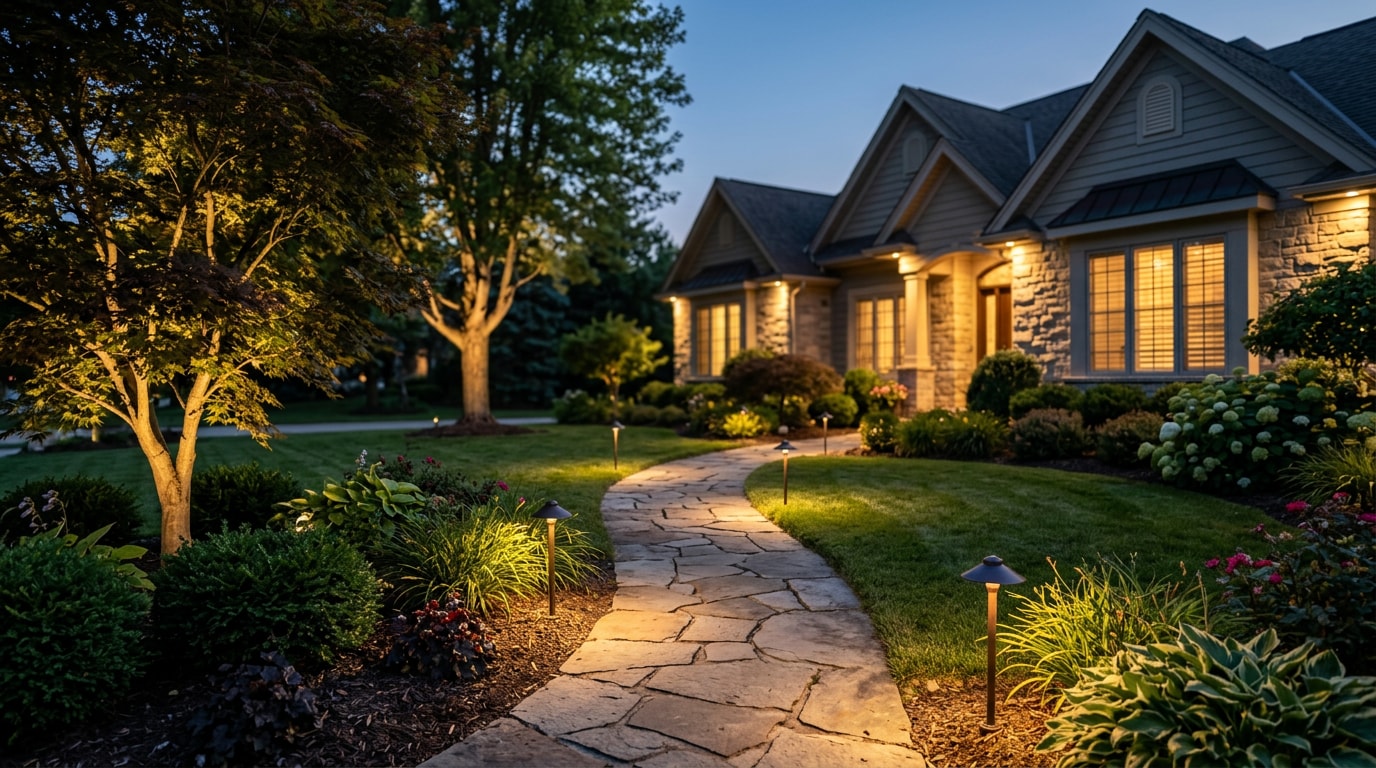
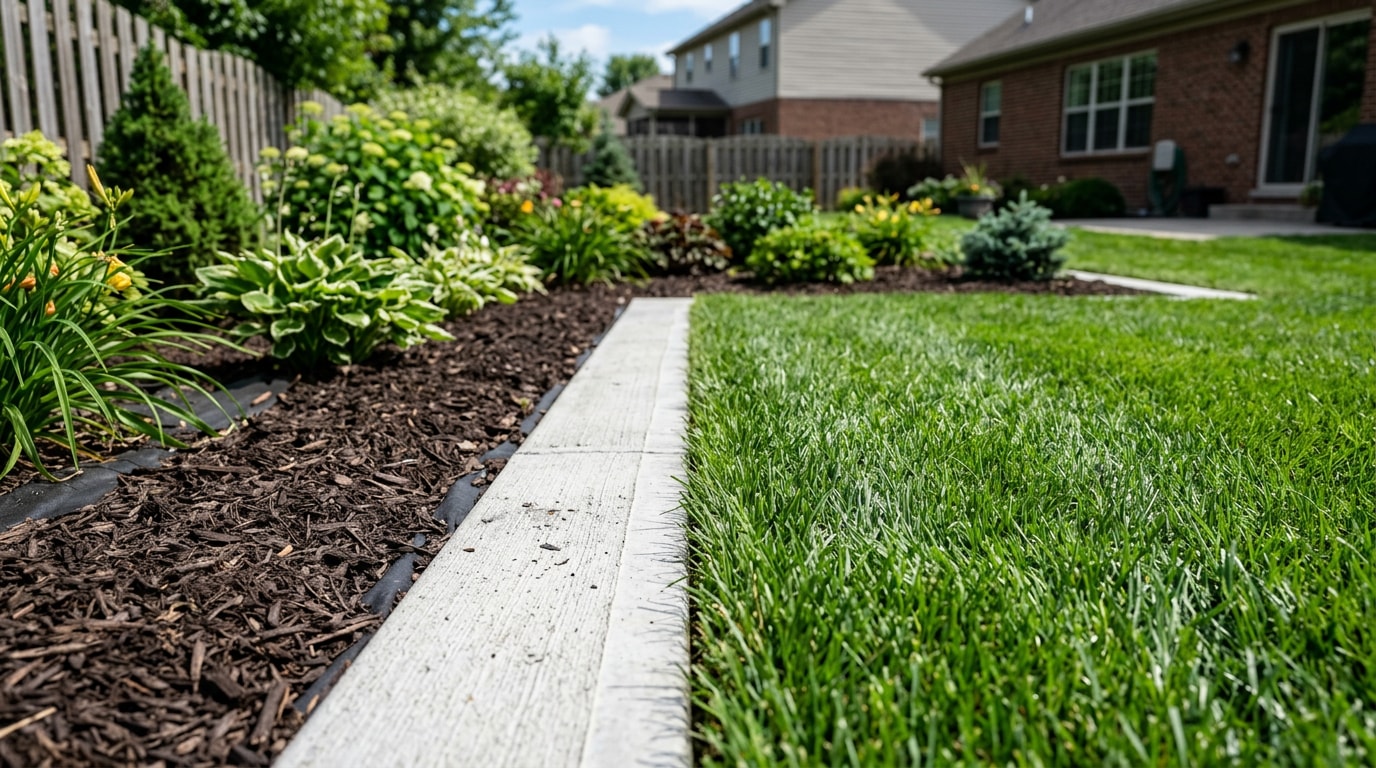
A mow strip in Mason, OH is the narrow band of concrete, paver, or steel edging set flush between your lawn and a bed, fence line, or driveway so a mower wheel can ride the border instead of stopping for a hand trim. It is one of the few landscaping upgrades that pays for itself in saved labor within a season or two. This guide breaks down materials, install specs for our freeze-thaw winters, real cost ranges, and a detail most contractors never mention: how a mow strip can double as the foundation for your landscape lighting.
What a Mow Strip Actually Does for a Mason Yard
A mow strip solves three problems at once. It keeps mower wheels and string trimmers off soft turf edges, it stops mulch and gravel from migrating into the grass, and it gives beds, trees, and fence lines a permanent, clean line that doesn't shift every time the lawn gets mowed.
That last point matters more in established Mason neighborhoods, where mature beds and tree rings have usually lost their shape over the years from repeated edging. A mow strip resets that line once, and it holds.
It also sits at the intersection of two trades. The strip itself is a hardscape element, but it only earns its keep if the turf around it stays healthy, which is a landscape maintenance question. Homeowners who treat the two as one project, rather than hiring separately for edging and then for lawn upkeep, tend to get a cleaner result. Our hardscape installation crews handle the strip itself, and our landscape maintenance team keeps the beds and turf around it looking the way it did on install day.
Mow Strip Materials Compared: Concrete, Pavers & Steel
Three materials cover almost every mow strip in Southwest Ohio. Each has a different cost, repair profile, and lifespan.
| Material | DIY cost (per linear ft) | Professional install (per linear ft) | Best for |
|---|---|---|---|
| Poured concrete | $2–$5 | $8–$15, often with an $800–$1,500 minimum job charge | Long-term durability, fewer repairs over 10+ years |
| Paver or brick | Rarely DIY | $10–$20 | Matching existing hardscape, easy single-unit repairs |
| Steel or aluminum | $2–$4 (materials only) | $8–$16 | Lowest upfront cost, fastest install |
DIY bagged-concrete cost runs $2 to $5 per linear foot for a typical 6-8 inch strip including forms and base, while hiring it out runs $8 to $15 per linear foot with minimum job charges of $800-$1,500.
Paver mow strips can range from $10 to $20 per linear foot, depending on the type of pavers used and the complexity of the installation.
Steel landscape edging can cost $8–16 per linear foot installed for common types and sizes. Pricing on any of these swings with soil conditions, how much old edging has to come out first, and how far a crew has to haul materials on-site, so treat these as planning numbers rather than a quote.
Poured concrete is the default choice we recommend for Mason because it holds a crisp, flush line through freeze-thaw cycles better than stacked units do. Pavers are the better pick when a homeowner wants the strip to visually match an existing patio or walkway. Steel earns its place on tight budgets or temporary situations, but it offers the least mower protection of the three.
Installation Depth, Width & Freeze-Thaw Specs for Southwest Ohio
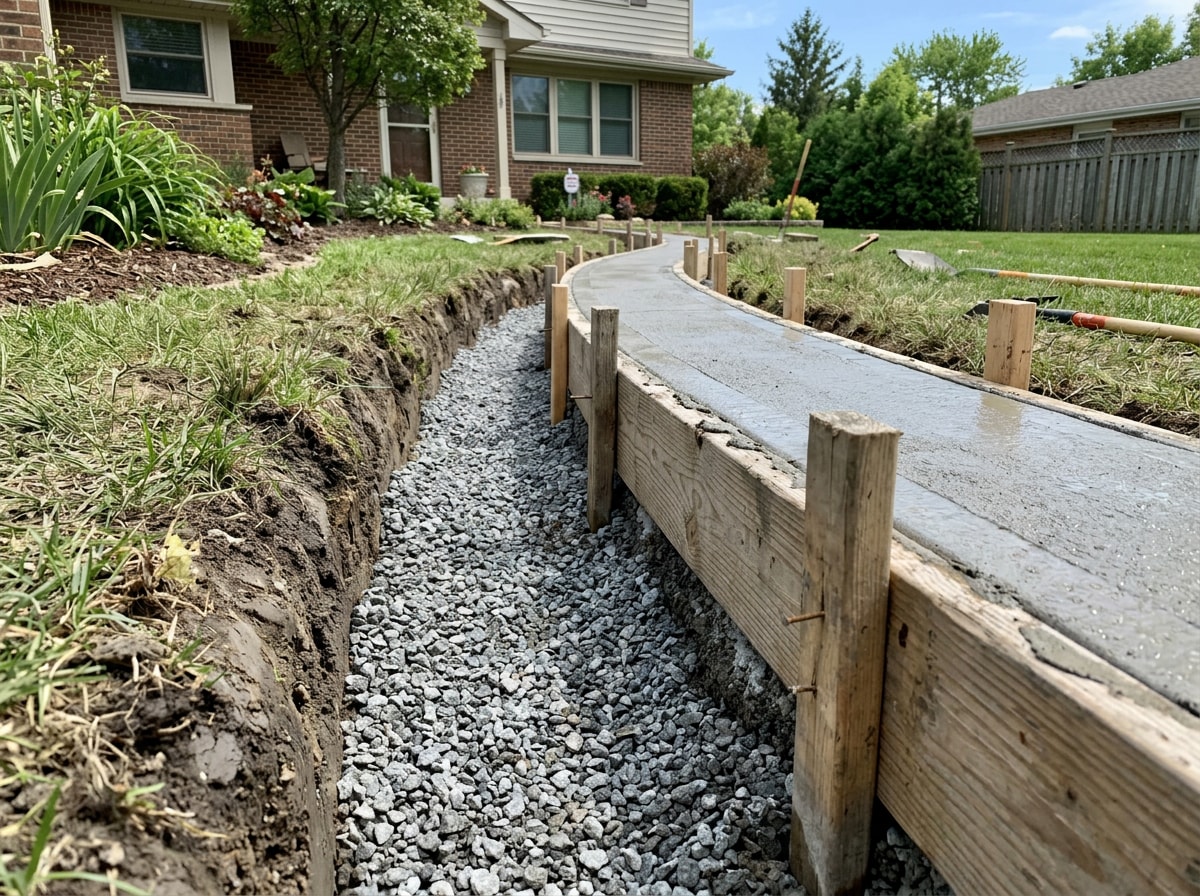
Hamilton and Warren County winters put real stress on anything poured or set in the ground. Skipping proper base prep is the single most common reason a mow strip heaves or cracks within a year or two.
- Base depth: A compacted gravel or crushed-aggregate base, typically 4 to 6 inches deep, goes under the strip before anything is poured or set.
- Strip width: 4 to 6 inches is standard, just wide enough to carry a mower wheel without widening the footprint more than necessary.
- Control joints: Concrete strips need joints cut at regular intervals so seasonal cracking happens at a planned point instead of randomly.
- Edge restraint: Paver strips need a rigid edge restraint on the outside face, or they'll spread apart within a season or two of freeze-thaw cycling.
The paver base is the foundation that supports the pavers, preventing movement, providing stability, ensuring a level surface, and a long life. That principle holds for any mow strip material, not just pavers. The Concrete Masonry & Hardscapes Association publishes base-depth guidance that most reputable hardscape installers in our area follow.
What a Mow Strip Costs in Mason, OH
There's no single "mow strip cost" number that applies everywhere, because linear footage, material, soil prep, and demolition of old edging all move the price independently. What you can plan around is a realistic range: expect concrete to land between $8 and $20 per linear foot installed, pavers between $10 and $20, and steel between $8 and $16, with most residential jobs running one to three days from layout to cure.
A 50-foot run along a front bed is a very different job than 150 feet wrapping a backyard patio and tree rings, so the only way to get an accurate number for your property is a site visit. Request a free estimate and we'll walk the property with you before quoting anything.
The Overlooked Advantage: Mow Strips as a Lighting Foundation
Here's something almost no mow strip guide mentions, because most contractors who pour mow strips don't also design landscape lighting. We do both, and the overlap matters.
A mow strip trench is already open before the gravel base goes in. That's the ideal moment to run low-voltage wiring for path lights, bed accents, or uplights along the same line, because the conduit sits protected under the strip instead of buried a few inches down in open turf where a future aerator, edger, or shovel can slice through it. Fixtures mounted at the edge of a finished mow strip also stay put. There's no soil heave to knock a path light out of plumb the way there is in a bare bed.
If you're already planning a mow strip along a front walk or patio border, it costs very little extra to loop in a lighting designer before the trench closes up. Our hardscape lighting design team and outdoor lighting layout planning service exist specifically for this kind of coordinated project, and in 24 years of hardscape and lighting work across Greater Cincinnati, that's the order we recommend: plan the lighting layout before the concrete goes down, not after. NiteScapesCincy, with 24 years in landscaping, specializes in lighting and sound installations for hardscapes.
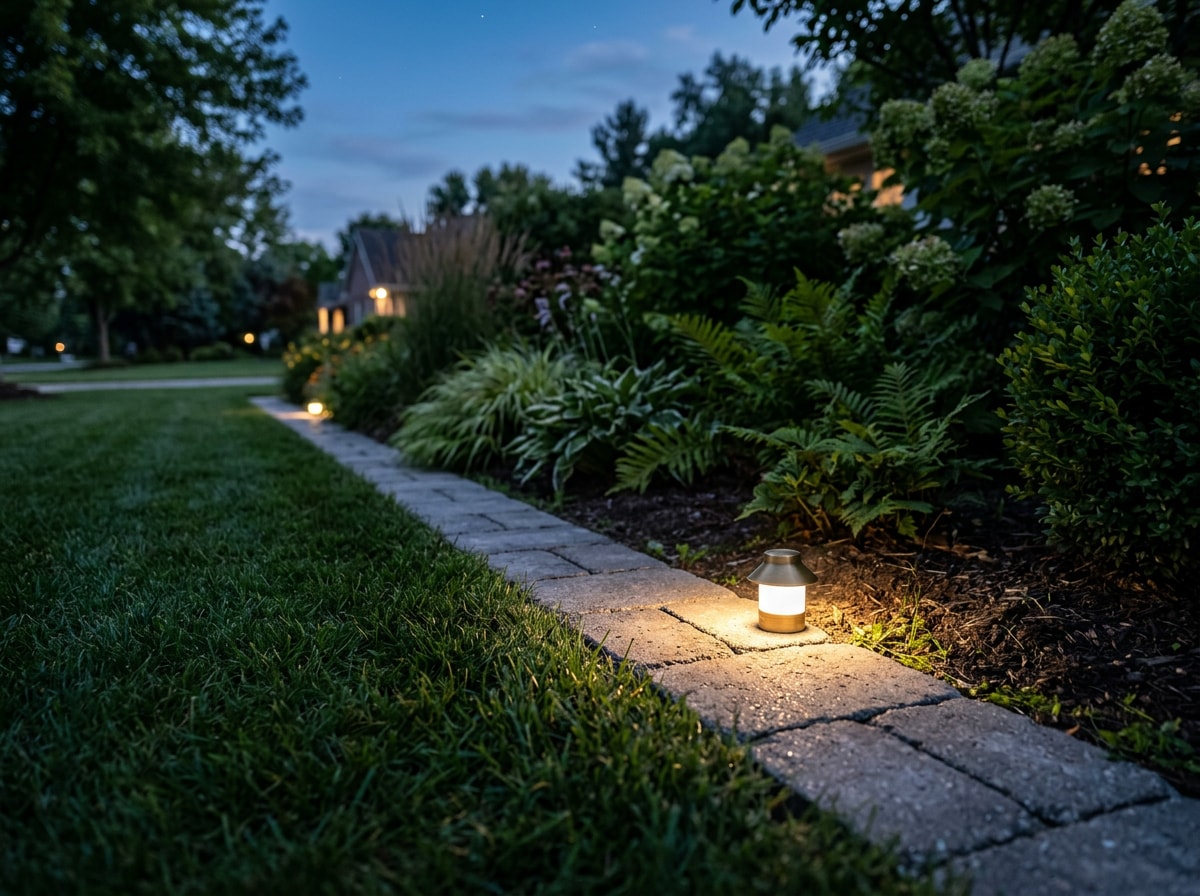
If you're not sure what fixture types or wattages make sense for a given run, our lighting system selection guidance service walks through those choices before anything is installed.
Keeping Turf Healthy Around Your New Edge
A mow strip only looks sharp if the lawn next to it is healthy. Mason sits in the 2023 USDA Hardiness Zone Map, which places Mason, Ohio in Zone 6b (-5°F to 0°F) , a zone that favors cool-season turf: tall fescue, Kentucky bluegrass, and perennial ryegrass, each with slightly different mowing needs.
- Tall fescue is the most forgiving option for Mason's clay-heavy soil and the default choice for new lawns.
- Kentucky bluegrass spreads via rhizomes and can creep over a low-set edge within a season or two, which is worth factoring into how wide you build the strip.
- Perennial ryegrass germinates fast and is usually blended with the other two for quicker establishment.
Mowing frequency depends on the "one-third rule": never remove more than a third of the leaf blade length at once, so if a lawn is kept at 3 inches, leaf blades shouldn't exceed 4.5 inches before mowing. Cutting shorter than that stresses the plant, and thin, stressed turf right next to a mow strip tends to brown faster than the rest of the lawn, which makes the edge look worse, not better.
Maintaining the Strip and the Beds Around It
A mow strip isn't maintenance-free, even if it's close to it. Concrete can crack at a poorly placed control joint, paver edging can settle unevenly in clay soil after a wet spring, and mulch beds behind any strip still need refreshing and weeding to look intentional rather than neglected.
Bundling that upkeep with routine property care is usually cheaper than calling separate crews for separate problems. Our outdoor space maintenance service covers bed edging, mulch refresh, and seasonal cleanup around hardscape features like mow strips, so the edge you paid to install stays sharp instead of slowly disappearing under drifted mulch and overgrown turf. If thinning or thatch buildup is the bigger concern on your lawn, our lawn thatching services guide for Mason, OH covers signs and timing in more detail.
Mason, OH Service Area
We work throughout Mason and the surrounding communities that share similar soil, climate, and HOA landscaping standards, including the 45040 zip code and nearby Deerfield Township. Visit our Mason, OH area page to confirm coverage for your address, or browse our recent projects to see finished mow strip, hardscape, and lighting work in the region.
FAQ
What is a mow strip?
A mow strip is a narrow band of hard material, usually concrete, pavers, brick, or steel, installed flush with the ground between a lawn and an adjacent bed, fence, driveway, or structure. It keeps mower wheels off soft turf edges and stops string trimmers from doing the work by hand along that border.
What does a mow strip cost in Mason, OH?
Plan for roughly $8 to $20 per linear foot installed for concrete, $10 to $20 for pavers, and $8 to $16 for steel, depending on material grade, soil conditions, and whether old edging needs removal first. Get an on-site estimate for an exact number, since linear footage and site access swing the total more than any other factor.
What's the best mow strip material for Ohio's freeze-thaw winters?
Poured concrete over a properly compacted gravel base generally holds its line better through repeated freeze-thaw cycles than stacked pavers or thin steel edging, which can heave or shift if not set deep enough. Pavers are a reasonable second choice because individual units can be reset if one does move.
How deep should a mow strip base be?
Most installers in our region set a compacted gravel base 4 to 6 inches deep under the strip itself, which also runs 4 to 6 inches wide. Skipping or shorting this base is the most common reason a mow strip cracks or heaves within a year or two.
Can a mow strip double as a wiring channel for landscape lighting?
Yes, and it's one of the most efficient ways to add low-voltage lighting. Running conduit through the open trench before the base and strip go in protects the wire from future digging, edging, or aeration, and keeps path light fixtures anchored to a surface that doesn't heave like bare soil.
How much does a standard lawn mow cost in Mason, OH?
Prices vary by yard size and season, but most homes in Mason pay between $35 and $50 per cut for routine mowing from local lawn care providers. NiteScapesCincy focuses on the hardscape and lighting side of the property, including mow strip design and installation, so pair this guide with your mowing provider's quote for the full picture of what a project will cost.
Ready to get a mow strip, hardscape lighting plan, or both scoped for your Mason property? Get a free estimate and we'll start with a site visit, not a guess. You can also explore the full range of services on our homepage.