A security motion detector is the component that decides whether your alarm panel, camera, or exterior light reacts when someone walks up your driveway. In Mason, OH, where many lots back up to tree lines, long driveways, and side-yard walkways, sensor type and placement matter more than any brand name on the box. This guide covers how motion detection technology actually works, where it commonly fails, and how pairing it with the right outdoor lighting closes the gaps an indoor sensor alone leaves open.
How a Security Motion Detector Actually Works
Most residential motion detectors rely on passive infrared, or PIR, technology.
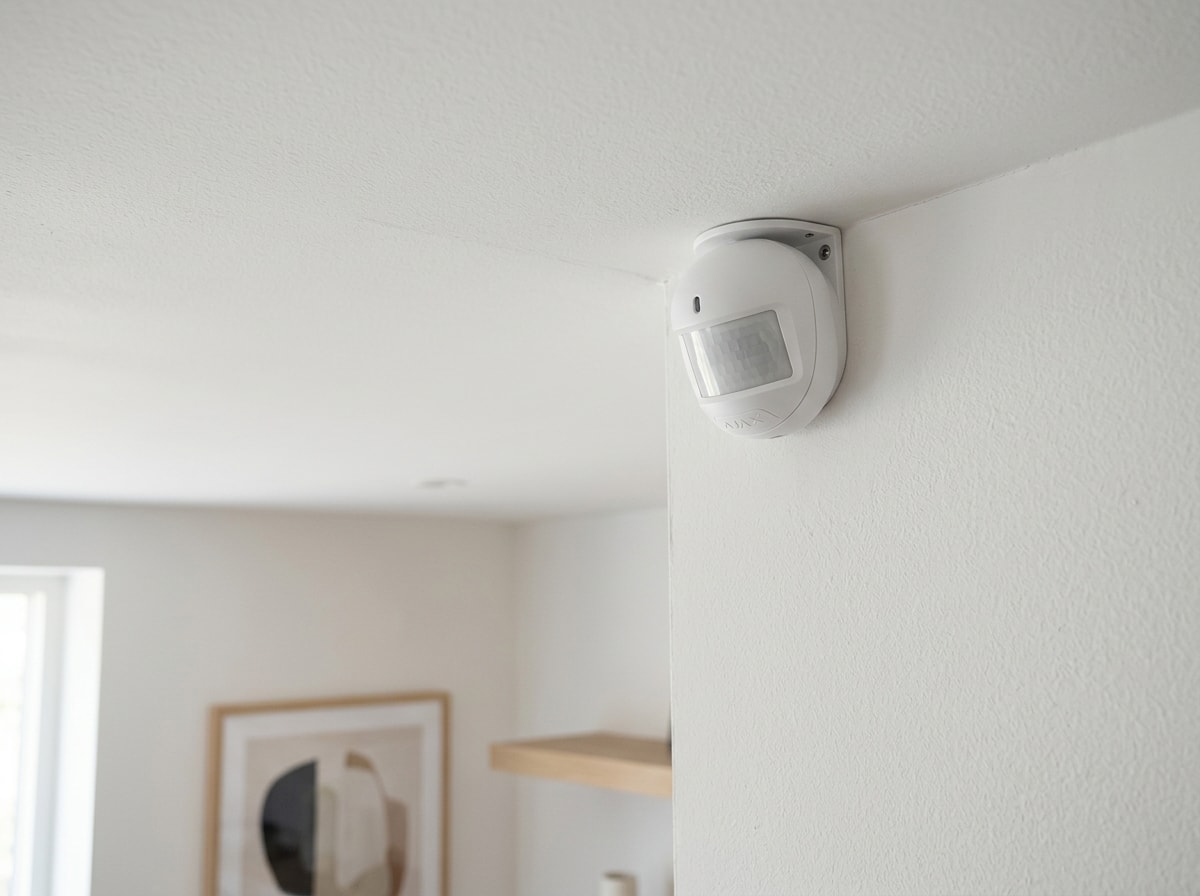
A PIR sensor doesn't send out a signal. It reads the infrared heat signature already present in a room and triggers when that heat pattern changes quickly, such as a person walking through the sensor's field of view.
Three detector types show up in Mason-area homes:
- PIR sensors – the standard, affordable option for most interior rooms. Reliable indoors, with built-in pet-immunity settings that let smaller pets pass without tripping the alarm.
- Microwave sensors – send out high-frequency waves and read the reflection. They cover larger, more open areas but cost more and can occasionally pick up movement through thin interior walls.
- Dual-tech sensors – combine PIR and microwave detection so both have to trigger before an alarm fires. This cuts down on false alarms in rooms with drafts, sunlight shifts, or HVAC vents blowing across the sensor.
Underwriters Laboratories maintains the primary safety standard for these devices. An intrusion detector under this standard consists of one or more unit assemblies of electrical components designed to detect the presence, movement, sound, or other activity of an intruder. Checking for UL-listed equipment is a quick way to confirm a sensor meets a recognized reliability baseline before it goes on a wall.
Where to Place Motion Detectors Around a Mason, OH Home
Placement decides whether a motion detector actually catches the path an intruder would take, or just watches an empty corner.
Priority zones for most Mason floor plans:
- Main hallway connecting bedrooms to the rest of the house
- Living room or family room with ground-floor windows
- Back door and any sliding glass door leading to a patio or deck
- Basement stairwell, especially in walkout-basement homes common in this area
- Attached garage interior door leading into the house
Placement rules that actually hold up:
- Mount in a corner, angled diagonally across the room, for the widest field of view.
- Keep the sensor away from windows, direct sunlight, and heating or cooling vents.
- Avoid aiming it at reflective surfaces like glass doors or mirrors, which can scatter infrared readings.
- Don't block the sensor's line of sight with tall furniture, plants, or hanging decor added after installation.
Indoor motion detectors work as a second layer. If someone bypasses a door or window contact, the interior sensor still catches movement before anyone reaches a hallway or stairwell.
Indoor Sensors vs. Outdoor Motion-Sensor Lighting: Two Layers, One Goal
An indoor motion detector only does its job after someone is already inside. Outdoor motion-sensor lighting works earlier, lighting up a driveway, side yard, or entry path the moment someone approaches, before any door or window is tested.
A systematic review of 13 lighting studies across the U.S. and U.K. found crime decreased by 21% in areas where street lighting was improved, compared with similar areas that saw no lighting upgrade. That same principle applies at the property level. A dark side yard or unlit driveway removes the one variable most intruders rely on: not being seen.
After designing exterior lighting layouts for homes throughout the Mason and greater Cincinnati area, one pattern holds up every time: a single well-aimed motion-sensor fixture at the driveway entrance or side gate stops far more surprise visits than any amount of sensitivity adjustment on an indoor detector. Light exposes intent before an alarm ever needs to fire.
This is where a layout plan matters more than any single fixture. Our outdoor lighting layout planning service maps dark spots, entry points, and sightlines across your property, then places motion-activated fixtures where they'll actually do something instead of just lighting up a tree.
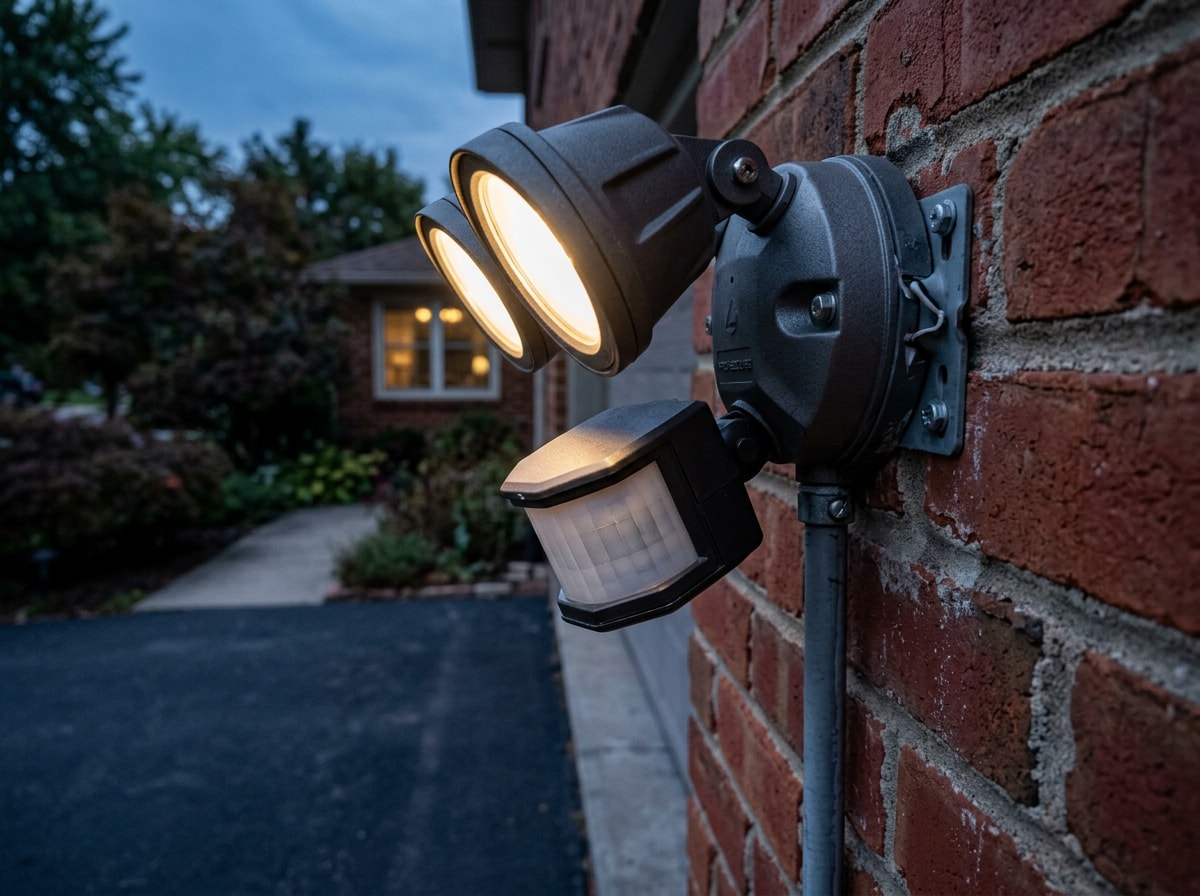
For homes that already run a monitored alarm, exterior lighting isn't a replacement. It's the layer that buys time before the indoor sensor ever needs to react. Our full outdoor LED lighting installation service covers motion-activated fixtures at entry points, driveways, and side yards as part of a complete exterior plan.
For a broader look at how lighting fits into a full home security plan, this layered protection guide for Cincinnati-area homeowners walks through how motion detectors, cameras, and lighting work together.
Common False-Alarm Triggers and How to Stop Them
False triggers are the number-one complaint with both indoor detectors and outdoor motion lights. Most trace back to a short list of causes.
| Trigger | Why It Happens | Fix |
|---|---|---|
| Pets | Standard PIR sensors can misread a cat or large dog as a person | Use a pet-immune sensor rated for your pet's weight |
| HVAC vents | Warm or cold airflow shifts the heat pattern a PIR sensor reads | Reposition the sensor away from direct airflow |
| Sunlight or headlights | Sudden light changes can trigger outdoor motion lights | Angle the sensor downward and away from the street |
| Tree branches or tall grass | Wind-driven movement near the sensor's field of view | Trim back foliage within the detection zone |
| Reflective surfaces | Glass, pools, or metal siding scatter the sensor's read | Avoid aiming the sensor directly at these surfaces |
A sensor that fires too often gets ignored, by homeowners and monitoring centers alike. Getting placement right the first time matters more than any sensitivity dial.
Sensor Technology Comparison
| Sensor Type | Detection Method | Best For | False-Alarm Risk |
|---|---|---|---|
| PIR | Reads infrared heat change | Hallways, bedrooms, most interior rooms | Low to moderate; pets can trigger standard units |
| Microwave | Reflects high-frequency waves | Large open rooms, garages | Moderate; can read through thin walls |
| Dual-Tech | Requires both PIR and microwave to agree | Rooms with drafts, sun exposure, or HVAC vents | Lowest of the three |
Cost Factors for Motion Detection and Security Lighting in Mason, OH
Pricing for a motion-sensor setup depends on a handful of variables rather than a flat number:
- Number of sensors needed to cover entry points, hallways, and high-traffic rooms
- Whether the system is self-monitored or tied to a 24/7 monitoring center
- Wired versus wireless installation, which affects labor time
- Whether exterior motion-sensor lighting is bundled in as a layered addition
Outdoor LED fixtures with motion sensors also cut electricity use compared with lights left on all night. Outdoor lights are some of the most frequently used fixtures in a home, so look for ENERGY STAR lighting that uses motion sensors or photocell technology. That efficiency gain is a side benefit worth factoring into the overall cost of adding exterior coverage.
For an itemized look at what a layout plan costs for your specific property, a hardscape lighting consultation is the fastest way to get real numbers instead of a general range.
Why Layered Coverage Beats a Single Sensor
Burglaries of residential properties accounted for 52.1% of all burglary offenses nationally, according to the FBI's most recent crime reporting data. That's the baseline reason layered coverage, exterior lighting, indoor sensors, and door/window contacts working together, outperforms any single device.
No one sensor catches everything. A motion detector that only watches a hallway misses an intruder who never leaves the porch. A motion light that only covers the front door misses someone cutting through a side yard. The strongest setups treat lighting, indoor sensors, and monitoring as one system instead of three separate purchases.
If you're planning that kind of layout for a Mason property, get a free estimate and we'll walk the property with you before recommending anything.
FAQ
How does a security motion detector work?
Most residential motion detectors use passive infrared (PIR) technology, which reads the heat signature in a room and triggers when that pattern changes quickly, such as a person walking through its field of view. Dual-tech sensors add a microwave component that must also detect motion before the alarm fires, cutting down on false triggers.
Where should motion detectors be placed in a home?
Priority areas are the main hallway, living room, back or sliding doors, basement stairwells, and the garage entry into the house. Mount sensors in a corner, angled diagonally, away from windows, vents, and direct sunlight.
Do motion-sensor lights actually deter intruders?
Research on improved outdoor lighting supports this. A systematic review of street lighting studies found crime dropped by roughly a fifth in areas with lighting improvements compared with similar areas that saw none. A lit driveway or side yard removes the cover an intruder relies on.
Can pets set off a motion detector?
Standard PIR sensors can misread a large dog or cat as a person. Pet-immune sensors rated for your pet's weight solve this without losing coverage of the room.
Is an outdoor motion-sensor light the same as an alarm's motion detector?
No. An alarm's motion detector is wired into a monitoring panel and triggers an alert. An outdoor motion-sensor light simply turns on a fixture when it detects movement. They serve different jobs, detection versus visibility, and work best installed together.
Can renters add motion-sensor security lighting?
Battery-powered and solar motion-sensor fixtures mount without hardwiring, so renters can add coverage to a porch, patio, or side entrance without modifying the property's wiring. Confirm with a landlord before drilling into siding or soffits.
---
Motion detection only works as well as its placement and the layers built around it. If you're in Mason, OH and want a property-specific plan that pairs motion-sensor lighting with the rest of your home's exterior, start on our homepage or browse coverage for your specific neighborhood on our Mason, OH area page.