
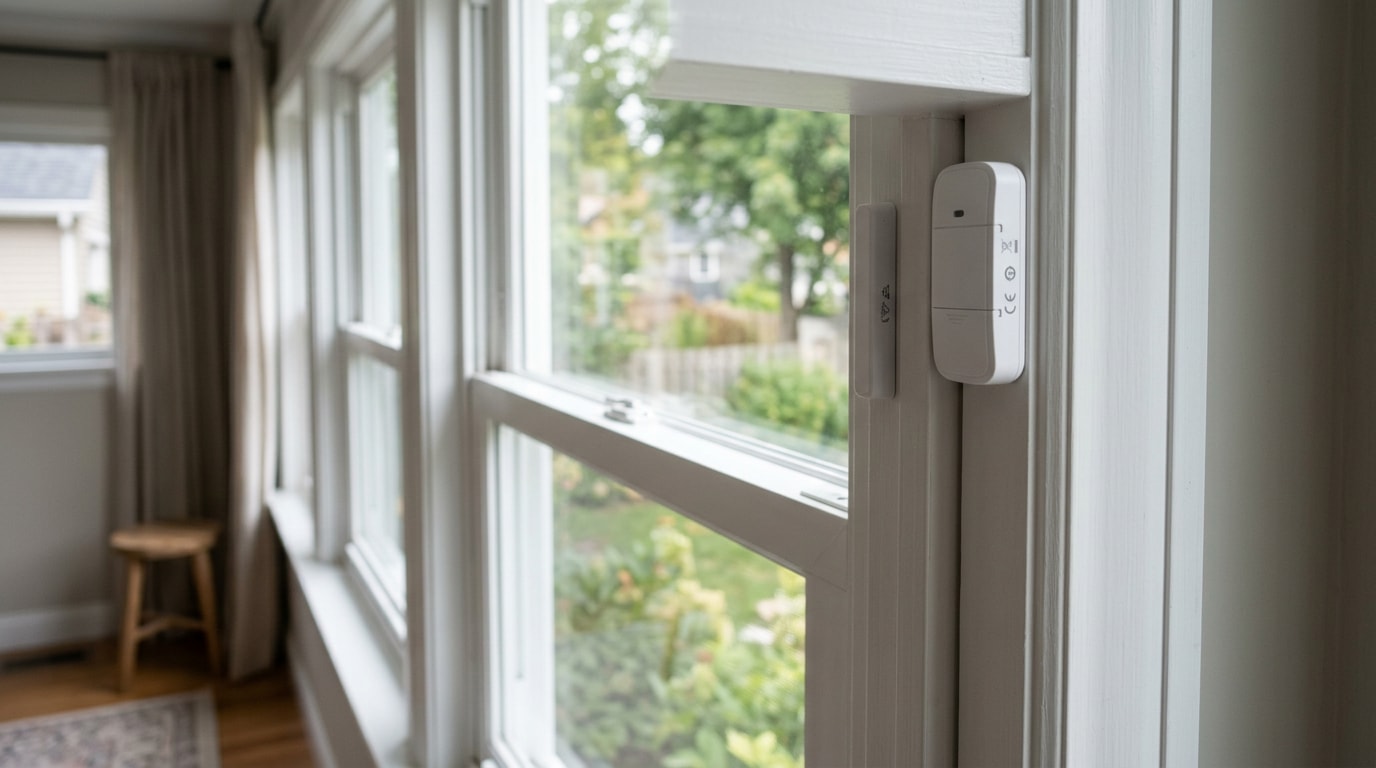
Wireless window alarm sensors in Indian Hill, OH give homeowners a way to cover every window on a property without opening walls or trim. These small devices watch each opening and send an instant signal the moment a window is forced, lifted, or broken. This guide covers how they work, which type fits which window, and how to place and maintain them so they keep doing their job.
How Wireless Window Alarm Sensors Work
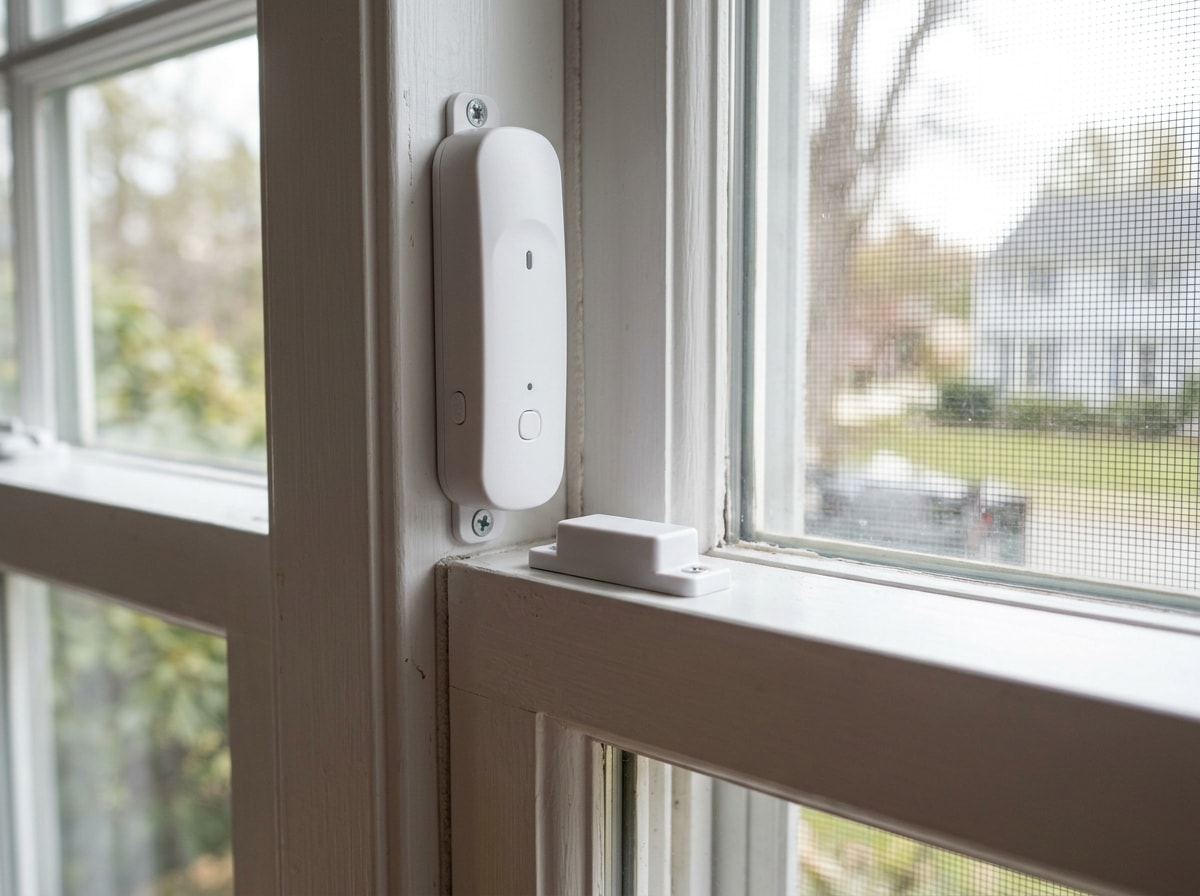
A window alarm sensor is typically a two-piece unit: a reed switch mounted on the frame and a magnet mounted on the sash. When the window is closed, the magnet and switch sit together and complete a circuit.
Open the window even slightly, and the magnet pulls away, breaking the circuit. That break sends a signal over radio frequency to a hub or panel almost instantly, rather than through a hardwired connection run inside the wall.
Why Window Coverage Matters on Larger Indian Hill Properties
Indian Hill's wooded, estate-style lots tend to have more ground-floor window openings than a typical suburban home, from sunrooms to mudrooms to multiple side-yard entries. More openings simply mean more potential entry points to cover.
That matters because forced entry is still a major share of how burglars get in. By subcategory, 55.7 percent of burglaries involved forcible entry, 37.8 percent were unlawful entries, and 6.5 percent were attempted forcible entry , according to FBI Uniform Crime Reporting data. On a property with a dozen operable windows, closing that gap starts with knowing which openings actually need sensors first, something covered in detail below.
Types of Wireless Window Alarm Sensors
Most window sensors fall into three categories, and each one catches a different kind of intrusion attempt.
Magnetic Contact Sensors
A magnetic contact sensor is the most common and affordable option, and it's what most homeowners picture when they hear "window sensor." A reed switch mounts on the frame, and a magnet mounts on the sash, positioned to line up when the window is shut.
Open the window even an inch and the circuit breaks, tripping the alarm. This works on nearly any window style, including double-hung, casement, and sliding windows.
Vibration and Shock Sensors
Vibration and shock sensors detect physical impact on the frame or glass itself, rather than waiting for the window to fully open. That distinction matters for windows that get forced or pried rather than simply lifted.
A shock sensor can pick up the jarring motion of a pry bar against a frame, flagging an attempt before entry is complete.
Glass-Break Sensors
A glass-break sensor listens for the acoustic frequency of shattering glass and triggers an alarm even if it isn't touching the broken pane. Standards bodies like UL test these units specifically for this purpose: glass breakage detectors attach to windows to generate alarm signals if breakage is detected .
These are typically added to fixed windows that don't open, picture windows, or high-value glass where a contact sensor alone can't provide coverage. They work best as a second layer, not the only line of defense.
Wireless vs. Wired Window Sensors
The trade-off comes down to installation effort versus long-term upkeep.
| Factor | Wired Sensors | Wireless Sensors |
|---|---|---|
| Installation effort | High — drilling, fishing wire through walls | Low — surface-mount, no wiring |
| Maintenance | Minimal; power drawn from the system | Periodic battery swaps, often every 1–3 years |
| Retrofit suitability | Difficult in finished, existing homes | Well suited to existing homes |
| Monitoring reliability | Direct electrical connection | Supervised RF check-ins on certified hardware |
Reliability concerns about wireless signals are largely addressed in certified equipment. UL Standards & Engagement published UL 639, the Standard for Intrusion-Detection Units, which features requirements for construction, mounting, and function , so security-grade wireless contacts are tested well beyond consumer-grade radio parts.
Where to Place Window Sensors for the Best Coverage
Start with every window that opens, then prioritize by accessibility:
- Ground-floor windows, since they're the easiest to reach without a ladder
- Windows reachable from a deck, porch roof, or retaining wall
- Windows hidden from street view, including those behind dense landscaping
- Basement window wells and side-yard windows near fences or sheds
- Fixed picture windows or high-value glass, covered with glass-break sensors instead of contacts
Thick shrubs and overgrown foundation plantings around ground-floor windows do double duty for an intruder: they hide the window and muffle the sound of tampering. Keeping sightlines open around window sensors is part of the job, and that's where routine landscape maintenance pairs naturally with a window sensor plan rather than being a separate project.
How to Install Wireless Window Alarm Sensors
- Clean the mounting surface on both the frame and sash. Dust or old adhesive residue weakens the bond and can cause false signals.
- Align the magnet and sensor so they sit directly across from each other when the window is closed, usually within the manufacturer's stated gap tolerance.
- Choose a mounting method. Adhesive works well for rentals or finished trim where drilling isn't ideal; screw-mounting holds up better long-term on heavier-use windows.
- Test before arming. Open and close the window a few times in test mode to confirm the sensor registers both states correctly.
Maintaining Window Sensors Year-Round
A sensor only catches what it's built to detect, an open window, a vibration, or breaking glass. It won't flag a unit that's been quietly bypassed, which is why routine checks matter as much as the hardware itself.
- Check battery status on a regular schedule, not just when a low-battery chirp starts
- Watch for alignment drift as frames settle, shift, or get repainted
- Run a test or chime-mode walkthrough on every sensor a few times a year
- Keep window tracks clear of debris that can prevent a full, flush close
Exterior lighting adds another layer here. Research on convicted offenders backs this up: about 60% of the burglars indicated that the presence of an alarm would cause them to seek a different target , and well-lit, visibly monitored entry points compound that effect. If window areas sit in the dark after sunset, an outdoor lighting consultation can identify which fixtures would do the most to expose anyone lingering near a window.
Choosing the Right Sensors for Your Home
The right mix depends on window type and material, whether a wired system already exists, and how you want alerts delivered, a local chime, a phone notification, or a fully monitored signal. Compatibility with an existing hub or panel narrows the field quickly, since not every sensor talks to every system.
Homeowners building out coverage for the first time generally do best starting with magnetic contacts on every opening window, then layering in glass-break or vibration sensors on higher-risk points. For a closer look at complementary entry-point hardware already covered for Indian Hill homes, see this guide to security door stoppers in Indian Hill, OH.
If you're not sure where to start, a short walk-through of the property is usually faster than guessing. Get a free estimate and we'll map out which windows need coverage first based on your actual layout.
About this guide: This article was prepared by the outdoor lighting and landscape security team at NiteScapes Cincy, who work on exterior lighting, landscaping, and perimeter visibility projects across Indian Hill, OH and have seen firsthand how overgrown plantings and dark entry points undermine otherwise good window sensor coverage. Questions about a specific property can go through our contact page.
FAQ
Are window alarms effective?
Yes. Window alarms work well as both a deterrent and a detection tool, often stopping an intrusion attempt before it progresses. The main limitation is that standard contact sensors only catch opening, not breaking, so pairing them with glass-break coverage closes that gap.
How do you fix a window alarm sensor that won't work?
Most sensor issues trace back to three causes: misalignment between the sensor and magnet, a low battery, or dirt and debris buildup on the contact points. Realigning the pieces and swapping the battery resolves the majority of these calls.
Can window sensors work without Wi-Fi?
Yes. Many dedicated alarm systems rely on their own RF communication between the sensor and a hub rather than home Wi-Fi. This keeps the system functioning even during an internet or router outage.
What security setup do burglars avoid most?
Visible, monitored systems with layered sensors, entry-point contacts plus motion or glass-break detection, tend to deter burglars most effectively. Convicted-offender surveys cited above show that increased risk of detection discourages entry attempts before they're completed.
How much do wireless window alarm sensors cost?
Individual contact sensors typically run in the low double digits per unit for consumer-grade hardware, with security-grade, UL-tested units costing more due to tamper resistance and supervised check-ins. Whole-home coverage cost depends on window count and whether glass-break or vibration sensors are added on top of basic contacts.
How many window sensors does a typical home need?
Plan for one sensor per operable window that's reachable from the ground, a deck, or a roofline, plus glass-break sensors on any fixed or high-value glass nearby. On larger Indian Hill lots with more ground-floor openings, that number is often higher than a standard suburban home.